
As 2025 wound down, four African regions continued to endure terrorist threats: the Sahel, particularly Burkina Faso, Mali and Niger; the Lake Chad Basin, including northern Nigeria and Cameroon; Mozambique’s northern Cabo Delgado province; and Somalia.
A toxic mix of al-Qaida and Islamic State group (IS) affiliates have emerged and spread in the past 15 years. Attacks in the Sahel have grown significantly with terrorists threatening — and sometimes crossing — borders into coastal nations such as Benin and Togo.
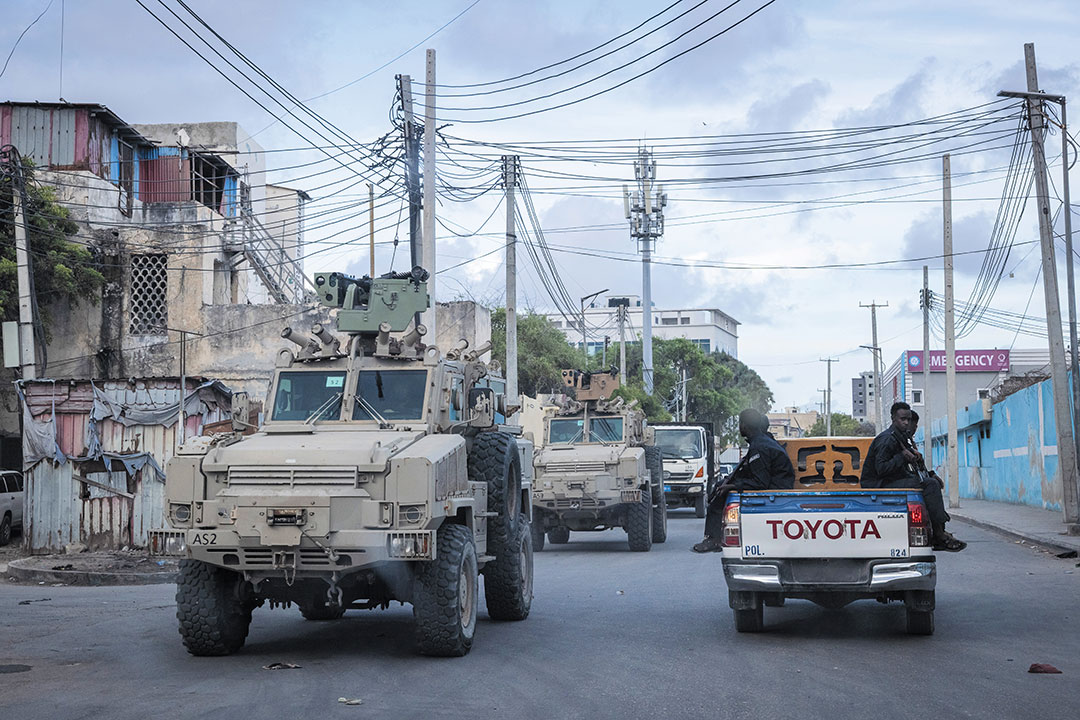
In East Africa, Somali and African Union-backed international forces battle brutal al-Shabaab terrorists. To the south, IS-affiliated terrorists have survived a three-year mission by the Southern African Development Community in Mozambique, which withdrew in July 2024. Rwandan troops remain.
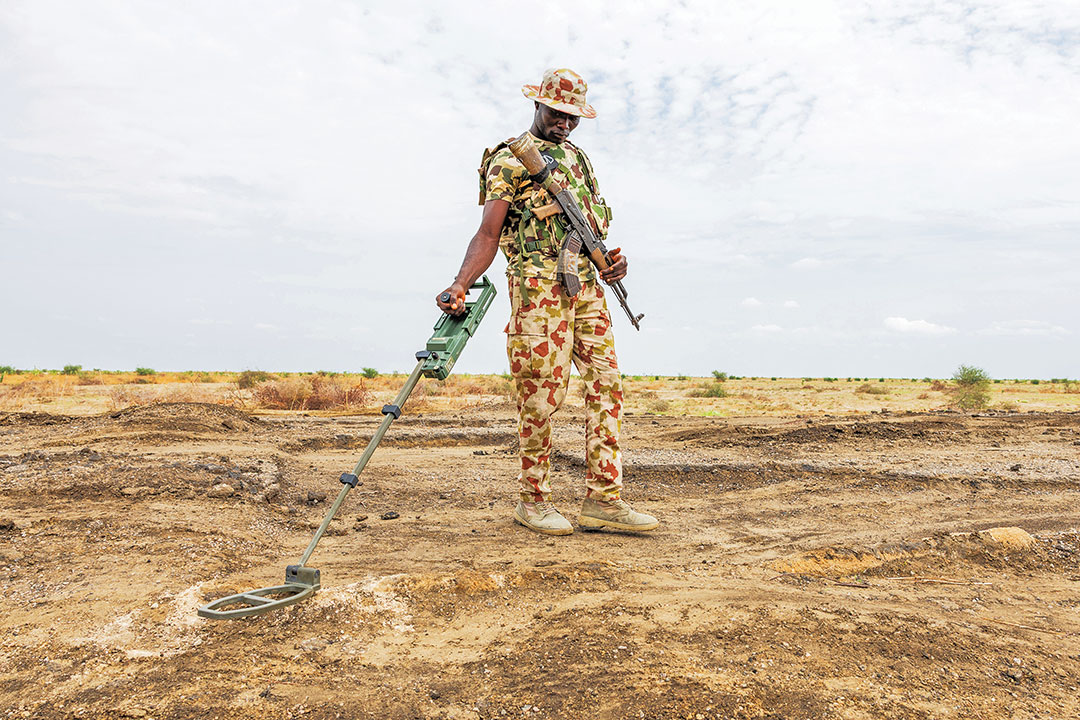
Terrorists also have changed battlefield tactics. Some groups employ jihadist private military contractors seasoned in Iraq and Syria. They offer consulting, training and combat support to make money and spread toxic ideology. Terrorists also are increasingly using drones to match capabilities once reserved for national militaries. Funding for such technology flows from the various international networks and criminal connections terrorists maintain.
Instability Breeds Insecurity
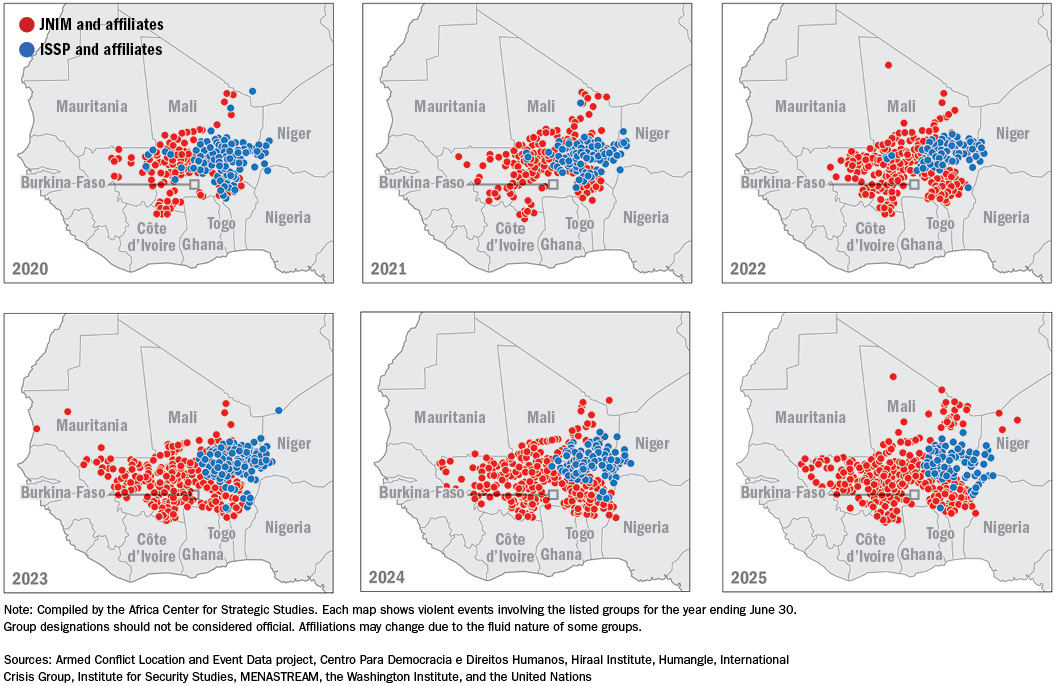
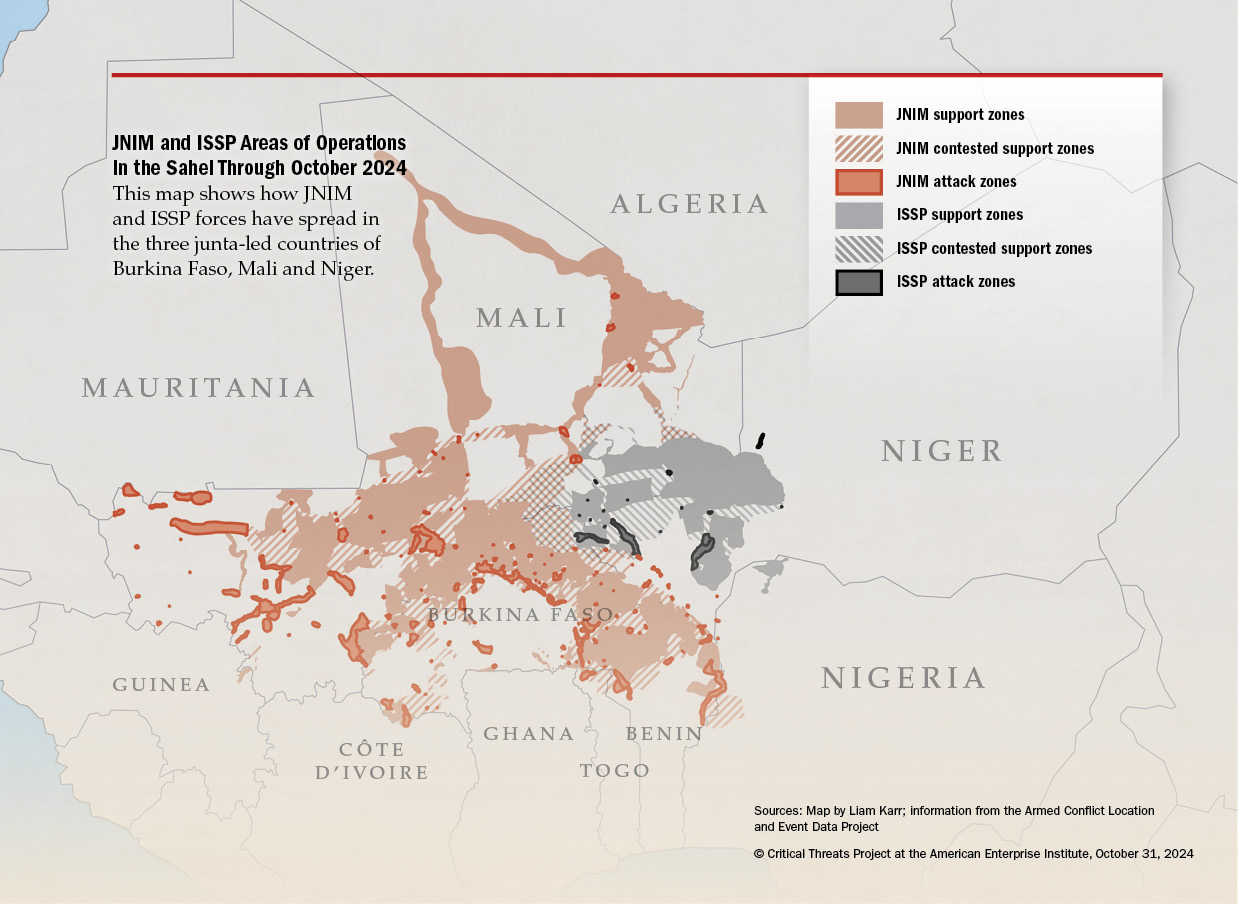
Three Sahel nations — Burkina Faso, Mali and Niger — have had five coups in less than three years. They also have seen a steady increase in terror attacks and the spread of terror groups, particularly Jama’at Nusrat al-Islam wal-Muslimin (JNIM) and IS Sahel Province (ISSP). The coups largely were the result of the perception that civilian governments were failing to stem the rising tide of terrorism. Now, ruling juntas in each country are failing, and terrorists are taking control of key roads, advancing on capitals and threatening fuel shipments.
“If the insurgencies continue gaining strength at their current rate, they will be positioned to force the government out of population centers,” wrote Michael DeAngelo in May 2025 for the Foreign Policy Research Institute. “This would render these countries collapsed states and allow jihadist groups to establish an Islamist state.”
JNIM and ISSP Sahel attacks 2020 to 2025
As civilian governance has given way to military rule in Burkina Faso, Mali and Niger, terrorist attacks have steadily increased. The maps below show the proliferation of attacks by just two major groups.
AFP/GETTY IMAGES
TERRORISM BY REGION
Below is a list of regions where terrorists are most active and what groups are active in each area.
The Sahel
The deadliest and most active group in the Sahel is JNIM, a consortium of radical Islamist terror groups such as Ansar al-Dine, Macina Liberation Front and Katiba Hanifa. JNIM is affiliated with al-Qaida and operates throughout Burkina Faso and Mali. Its 6,000 to 7,000 fighters are blamed for 83% of all Sahel fatalities. They have increasingly threatened West African coastal nations.
The other major player in Sahel terrorism is ISSP. Its 2,000 to 3,000 fighters mostly are active in northern Burkina Faso and western Niger, according to an Africa Center for Strategic Studies report.
Somalia
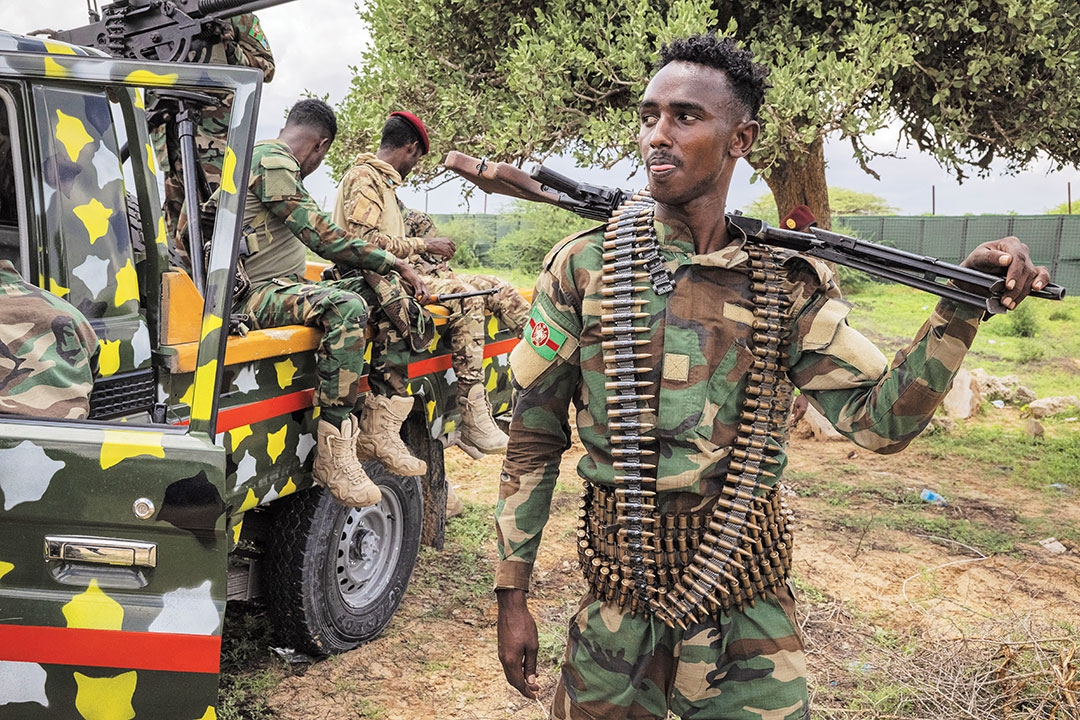
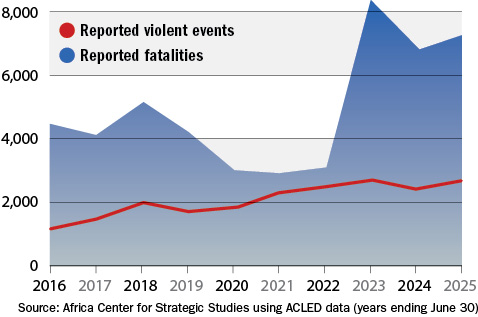
The Horn of Africa nation continues its multiyear struggle against al-Qaida-aligned al-Shabaab, which has 5,000 to 10,000 fighters. The 6,224 fatalities linked to al-Shabaab for the year ending June 30, 2025, are double that of the same period ending in 2022. IS-Somalia, which operates mainly out of the Puntland region in the north, also contributes to insecurity. It has about 1,000 fighters and is considered a global hub for IS administrative and financial operations.
Lake Chad Basin
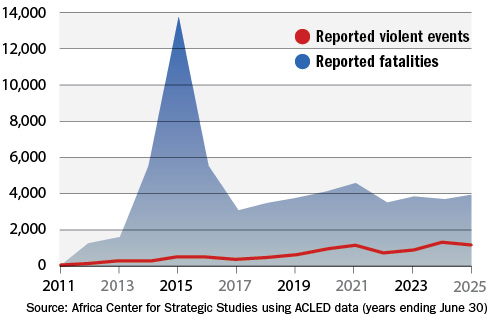
Boko Haram and IS West Africa Province (ISWAP) are blamed for 18% of terror-related deaths on the continent. Although fatalities are down from the highs seen about a decade ago, the 3,982 deaths in 2024-25 are 7% higher than the previous year. Nigeria alone saw an 18% spike in fatalities in that same span. Boko Haram has about 1,500 to 2,000 fighters. ISWAP has 4,000 to 7,000.
Mozambique
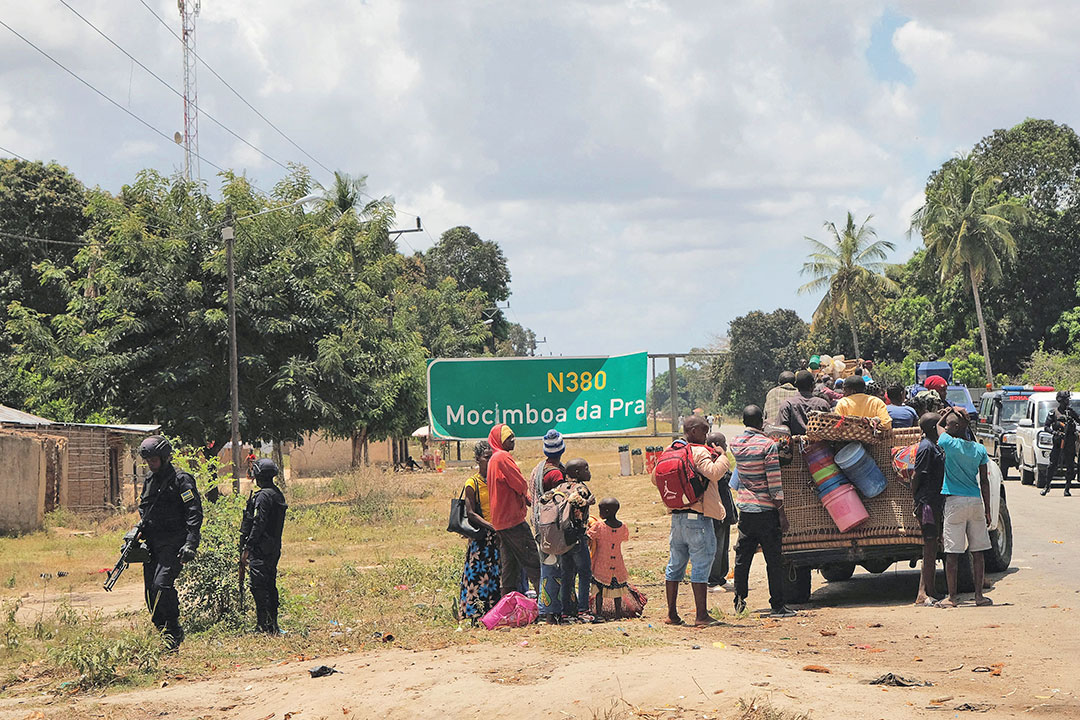
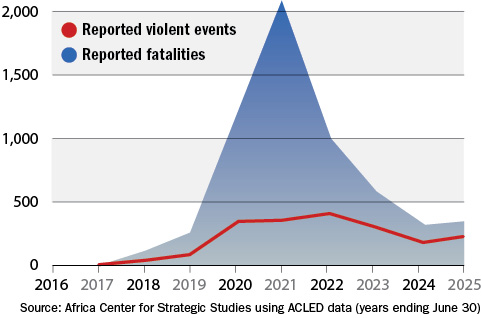
Mozambique’s northern Cabo Delgado province is among the newest terrorist theaters on the continent. It has been more than eight years since terrorists there first made themselves known with attacks. The IS-linked group, which has 200 to 300 fighters, is called Ansar al-Sunnah — or al-Shabaab colloquially. Rwandan and Southern African Development Community troops soon deployed to address the threat. Thousands of Rwandan troops and police remain. The conflict largely feeds off local grievances, according to an October 2025 Institute for Security Studies report.
The 330 deaths in 2024-25 linked to the group are down 84% since the 2021 peak, but the threat persists.
HOW TERRORISTS FUND THEIR ACTIONS
Funding methods are as varied as the terrorist groups that employ them. They can range from small roadside extortion rackets to cryptocurrency schemes, fraud and money laundering operations.
For example, JNIM is known to exploit and engage in artisanal gold-mining operations, kidnapping for ransom, livestock theft, road and checkpoint extortion, taxation, and exploitation of illicit trafficking networks, according to a 2023 report by the Global Initiative Against Transnational Organized Crime and the Armed Conflict Location and Event Data project.
Al-Shabaab is a top terrorist fundraiser. It raises millions annually through taxation at checkpoints and businesses in amounts that Critical Threats says rival official government revenues. The Global Initiative puts the group’s yearly revenue at more than $100 million.
 IS-Somalia generated at least $100,000 monthly through extortion rackets in northern Somalia and Mogadishu in early 2023, the United Nations reported. By 2024, that amount was estimated at $360,000 monthly due to extortion and taxation schemes. The group typically extorts money from imports, livestock, agriculture and local businesses.
Boko Haram has relied on kidnapping for ransom, but it also has exploited cryptocurrencies and other digital financial technology to raise money. Using these anonymous, unregulated platforms lets the group get money from local and international sources undetected.
HUMAN TOLL OF TERRORISM
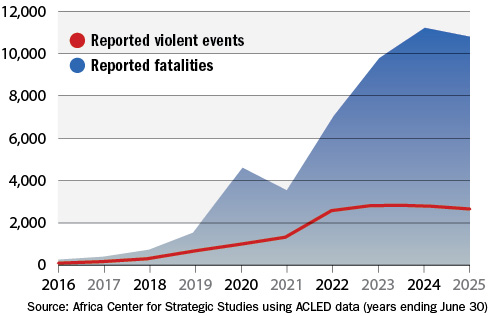
The most devastating statistic about terrorism is the number of people killed or harmed in attacks. Terrorist groups are responsible for more than 150,000 deaths on the continent in the past decade, with more than 22,307 fatalities linked to these groups from July 1, 2024, to June 30, 2025, according to an Africa Center for Strategic Studies report. That death toll represents a 60% increase from 2020 to 2022.
Nearly half of all fatalities from 2024 to 2025 were in the Sahel. Somalia accounted for about a third of fatalities in that period. The Sahel, Somalia and the Lake Chad Basin accounted for 99% of terrorist deaths.
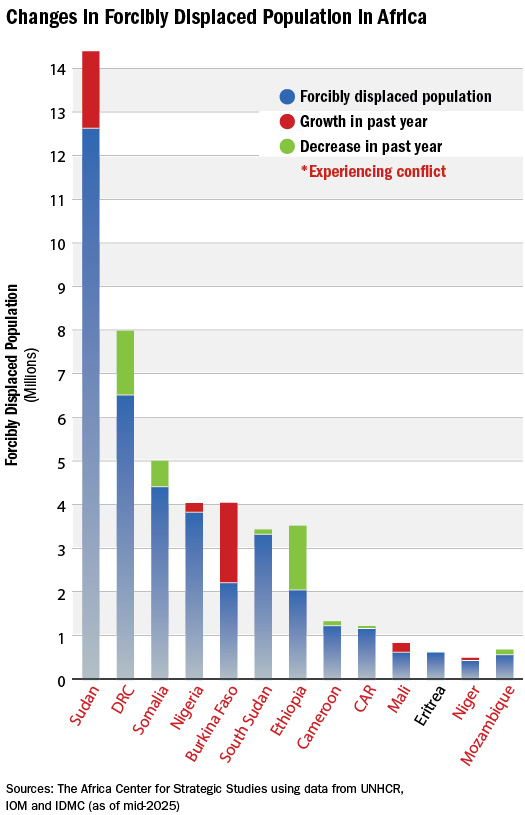
Terrorism and related unrest also lead to people leaving their homes to escape violence and threats. As of mid-2025, Burkina Faso, Mali, Niger and Nigeria were four of only five African nations that had seen increases in displaced people in the past year. Sudan, which was in the midst of a civil war, was the only other country to have an increase, according to the Africa Center. q