

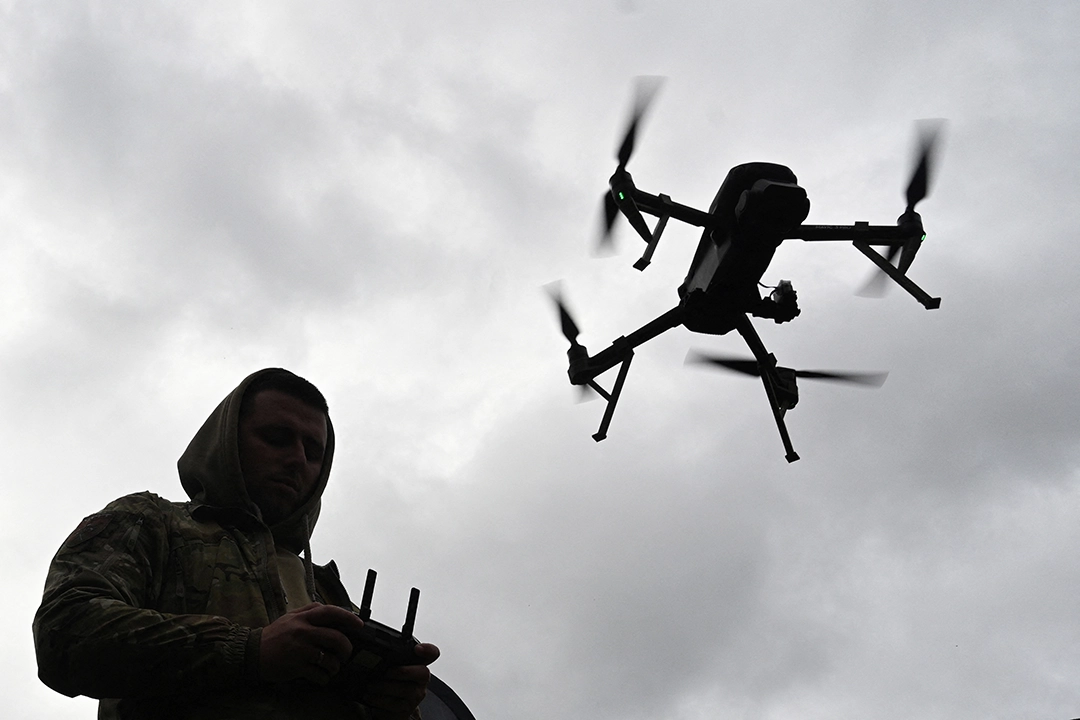
Russia has waged war on Ukraine for more than four years with no end in sight. But experts say that when the fighting does end, arms and soldiers who have expertise in drone warfare could flood into conflict zones around the world.
Researchers Will Brown and Lena Krause of the European Council on Foreign Relations warn that a huge stockpile of weapons and battle-tested military contractors will hit global markets and are likely to end up on the African continent.
“If history is anything to judge by, African countries will absorb a sizeable amount of this surplus, significantly increasing the risk and intensity of conflict on the continent,” they wrote in a June 15 article.
They also noted that the Kremlin has tricked, coerced and recruited a large number of battle-tested African fighters: “A stream of recent reports has uncovered trafficking networks bringing thousands of African men and women into frontline positions or slave-like conditions in Russian armament factories. Many of these people will eventually return home.”
James Njogu Wangui has analyzed and written about this subject in his native Uganda, where he is a legal advocate of the High Court. He is particularly concerned about his fellow citizens, as many as 100 of whom have been deployed on the frontlines in Ukraine. Njogu considers them victims of Russian human trafficking rings and the horrors of war.
“African countries could face significant security challenges once the conflict ends if returning fighters are not successfully reintegrated into civilian life or absorbed into legitimate employment,” he told ADF in written correspondence. “History shows that conflicts often produce veterans with advanced combat experience who, if left unemployed and unsupported, may become vulnerable to recruitment by criminal networks, insurgent groups or private military actors.”
Returning fighters could have gained expertise in the construction and use of drones, electronic warfare, precision targeting, encrypted communications and intelligence gathered through digital technologies.
“These are capabilities that remain relatively limited in the armed forces of many African states,” Njogu said. “As a result, returning fighters may possess operational skills that exceed those of local security institutions in certain specialized areas.”
History provides unfortunate parallels and lessons, according to Brown and Krause. Illicit arms networks expanded across African conflict zones after the fall of the Soviet Union, while highly trained fighters from South Africa and Rhodesia sought other opportunities following the end of their countries’ internal conflicts.
“Former soldiers became active in conflicts and coup attempts across the continent, including through private military companies such as South African Executive Outcomes,” the researchers wrote.
Russia has a sizeable military presence on the continent in the form of thousands of mercenaries with the Wagner Group and its rebranded successor, the Africa Corps. Those numbers could balloon after the end of the war in Ukraine.
“President Vladimir Putin, who has already survived an armed mutiny (by the late Wagner chief Yevgeny Prigozhin in June 2023), may see advantages in keeping large numbers of demobilised fighters and military contractors occupied abroad rather than allowing them to return home en masse,” Brown and Krause suggested.
Regarding the African fighters who may someday return home after the war in Ukraine, Njogu warns that some will have adopted extremist political and military ideologies shaped by their wartime experiences.
“Even a relatively small number of highly trained and ideologically motivated individuals could have a disproportionate impact on fragile states,” he said. “But these risks are not inevitable. Their severity will depend on the number of returning fighters, the effectiveness of border controls, the availability of reintegration and employment programs, the capacity of intelligence and law-enforcement agencies, and the willingness of African governments to coordinate regionally.”