

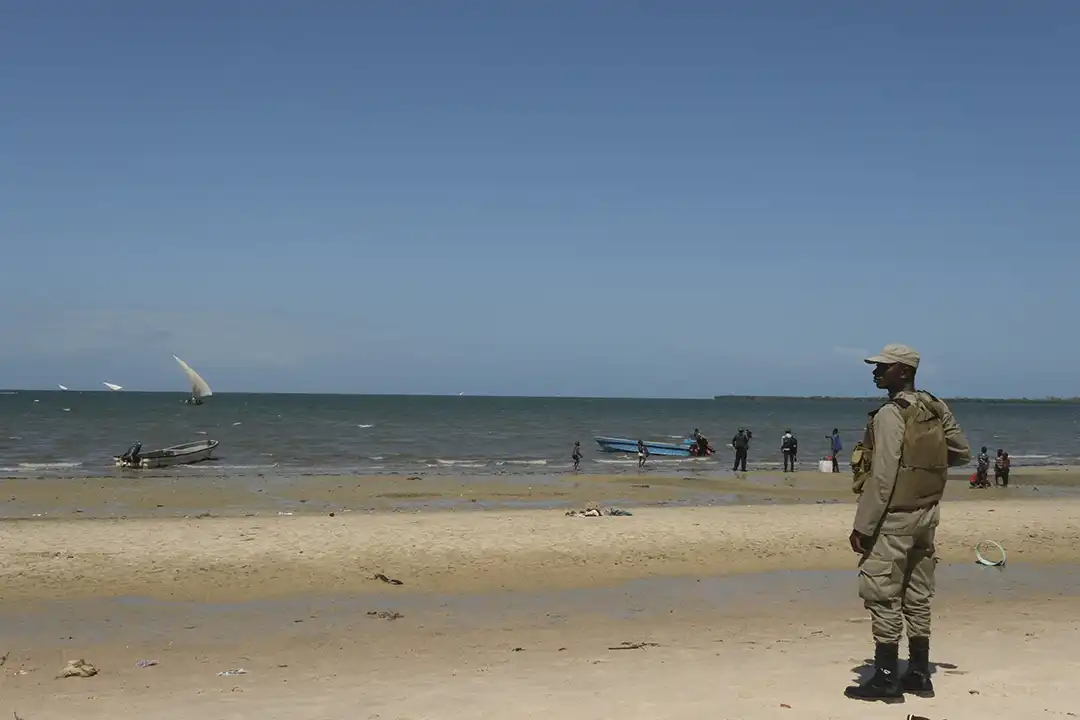
Northern Mozambique is home to one of Africa’s more intractable insurgencies, but reports have highlighted how civilian abuses by the military are contributing to the terrorist group’s durability.
The Islamic State Mozambique (ISM) group has operated in the Cabo Delgado province since 2017. In recent months, it has increasingly targeted civilians. But ISM continues to benefit from support in many communities that say they have suffered at the hands of members of the Mozambique Defence Armed Forces (FADM).
“This is where Mozambique is losing the war against terrorism,” Borges Nhamirre, a researcher with the South Africa-based Institute for Security Studies, wrote in an October 5 analysis. “As long as the FADM fails to gain the support of local communities in Cabo Delgado, the insurgents will keep thriving.”
FADM Soldiers have faced credible accusations of murder, rape, torture and rights violations against civilians. The Armed Conflict Location and Event Data Project (ACLED) estimates that around 70 fishermen have died since 2024 in “incidents” involving military forces in Macomia and Mocímboa da Praia.
On March 15, a Mozambican Navy patrol opened fire on six fishing boats in waters near Calugo village in southern Mocímboa da Praia, killing at least 13 young men, according to Zitamar News.
“This isn’t the first time the Mozambican navy has been accused of targeting fishermen,” ACLED researcher Tomás Queface told Human Rights Watch in March. “We have documented multiple incidents, but there has been no serious investigation or accountability. This sends a message that such abuses are tolerated and risks further violations.”
Shortly after the incident, locals gave ISM a show of support, according to ACLED’s Mozambique Conflict Monitor reported.
“Six days later, according to sources in the village, a group of ISM militants celebrated Eid al-Fitr in Ulo village, further up the coast and just 12 kilometers from Mocímboa da Praia town,” ACLED said. “Clearly, coastal communities are not turning their backs to the insurgents. The continued killings at sea are unlikely to sway public sympathies toward FADM.”
It is another example of civilians being caught in the conflict while trying to survive and demonstrates how FADM’s abuses are pushing people to be hostile or indifferent to the government’s counterinsurgency efforts.
“They [ISM fighters] do not need to be militarily superior to government troops, as they are characterised by small, lightly armed bands practising guerrilla warfare,” he wrote. “To survive, they need to hide from government forces, which is made possible by the rough terrain, poor road access and distance from the centres of state power. And they benefit from local communities who agree not to report insurgents to government agents.”
Since the insurgency began, Mozambican forces have received training from outside partners in subjects such as command and control, communication, civil-military cooperation, human rights, and international humanitarian law. Yet claims of crimes and rights violations against civilians persist.
“Mozambican troops have repeatedly been accused of sexually exploiting displaced women, killing civilians suspected of collaborating with terrorist groups and committing war crimes against captured terror suspects,” Nhamirre wrote. “While … training emphasises human rights, reports of civilians being killed by the FADM continue.”
FADM established the National Centre for the Prevention and Combating of Terrorism and Violent Extremism in 2025 to help understand and address the root causes of terrorism and better plan and conduct counterinsurgency operations.
“But for this to happen, FADM must reverse its culture of human rights abuses against communities affected by the insurgency and foster effective civil-military cooperation,” Nhamirre wrote.