

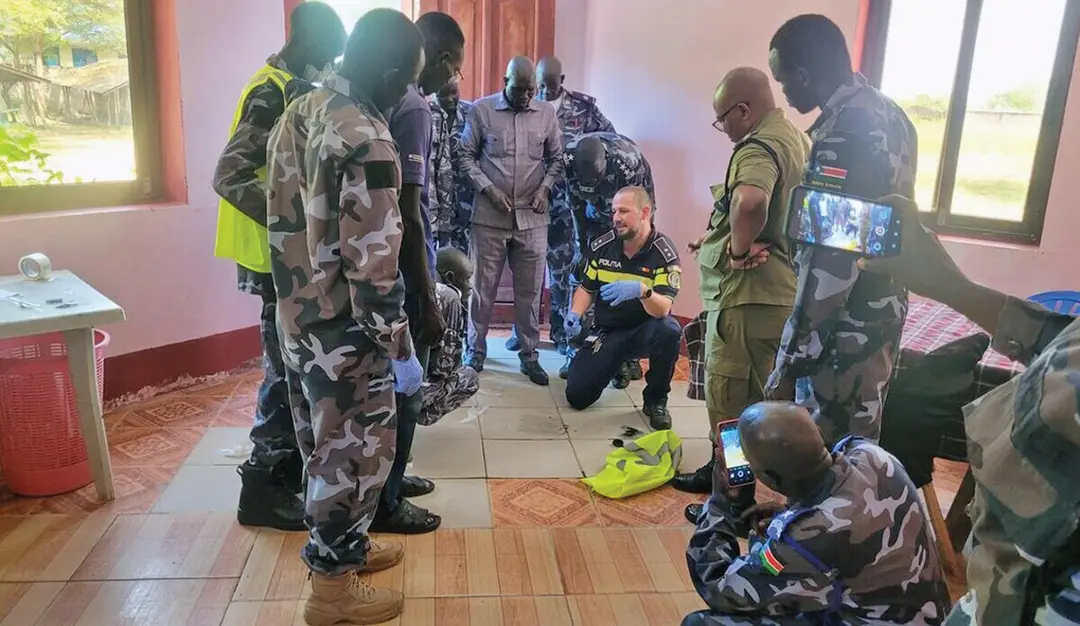
United Nations peacekeepers have trained South Sudanese police officers in investigative techniques and skills. The results have been immediate, officers say.
“The thin line between justice denied and justice served is determined by investigation,” said South Sudanese Warrant Officer Michael Dhieu Malual after the five-day program.
After completing the training from police officers serving with the peacekeeping mission in South Sudan, he was able to successfully deliver justice for armed robbery victims. An offender broke into a victim’s home in the middle of the night, threatened the residents at gunpoint, and ran off with a bag of clothes and other belongings.
“The residents informed the police about the crime, and we cordoned off the scene before marking, photographing and packaging the evidence,” Dhieu said. “A few days later, we found the perpetrator wearing the same clothes that he had stolen, and we were able to get these identified by the owner. We further investigated and were able to take the case successfully to court.”
Peacekeepers from the U.N. mission trained 31 people from the police force, riverine crime unit, traffic and criminal investigations teams.
“We were able to absorb the importance of a meticulous approach to investigation, including how a single fingerprint, a careful interview, or a well-documented chain of custody can mean the difference between justice served and justice denied,” Dhieu said.
The officers’ investigation studies included securing crime scenes; recording evidence; interviewing victims, witnesses and suspects; and compiling case files for prosecution.
Beyond technical skills, officers also studied the law, the importance of respecting victim and offender rights, and the need to collaborate with prosecutors and other agencies.
They explored all aspects of crime from violence and theft to fraud, cybercrime and environmental offenses. They also studied investigative approaches such as proactive tactics, reactive responses, forensic science and community partnerships.