
An Interpol-coordinated border security operation in West Africa led to 62 arrests and the seizure of ammunition, explosives, firearms, drugs, counterfeit medicines and stolen vehicles.
Operation Screen West Africa 2025, which ran from July to October 2025, brought together law enforcement agencies from 12 West African countries to strengthen border security, track people with links to terrorism and disrupt transnational organized crime networks.
Officers at land, air and sea borders used Interpol mobile devices and other systems to access global databases to carry out 1.7 million real-time checks.
During the operation, officers arrested nine people suspected of having terrorist connections. Among its most notable successes were the arrests in Burkina Faso of two people wanted by law enforcement authorities who were involved in attacks by the al-Qaida-affiliated terrorist group Jama’at Nusrat al-Islam wal-Muslimin. The attacks killed more than 10 security personnel in Côte d’Ivoire in 2020.
Officers in Burkina Faso also arrested a third person with connections to terrorism.
Cyril Gout, Interpol acting executive director of police services, said: “These cases highlight how the operational support we offer member countries and our unique specialist tools can make the links that identify suspected terrorists and disrupt their attempts to create fear and endanger communities. We are determined to counter these threats and constantly work with our member countries to strengthen global security.”
Officers in Ghana also freed 21 victims of human trafficking who had been held in Nigeria.
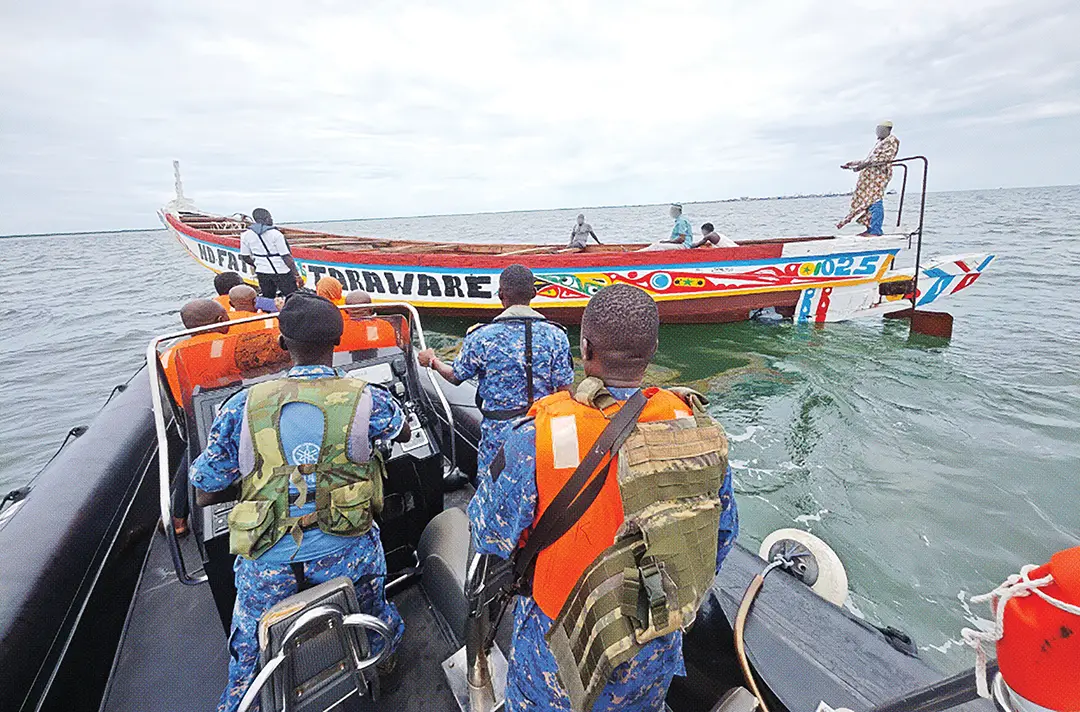
The operation included checks at harbors and in territorial waters. Interpol alerted participating countries about vessels using deceptive shipping practices, such as identity tampering; so-called dark operations, in which ships deliberately switch off their identification systems; and frequent flag changes, or “flag hopping.”
Authorities seized 17 caches of weapons and ammunition; explosives, including dynamite and detonators; 136 stolen vehicles; 731 kilograms of cannabis; counterfeit medicine, including fake branded opioid pain relief tablets; and counterfeit currency and fraudulent documents.
Proceeds from many of these items can be used to finance terrorism or fund organized crime.
The 12 participating countries were Benin, Burkina Faso, Cabo Verde, Côte d’Ivoire, The Gambia, Ghana, Liberia, Mauritania, Nigeria, Senegal, Sierra Leone and Togo.