

A complex war economy has emerged in Sudan that is depleting the country’s natural resources and fueling violence.
Intense fighting between the Sudanese Armed Forces (SAF) and the paramilitary Rapid Support Forces (RSF) has devastated the economy, and neither side has achieved military victory or begun earnest negotiations for a ceasefire.
“External financing and the unimpeded supply of weapons have motivated both factions to prioritize military maximalism,” researcher and analyst Carlota Ahrens Teixeira wrote in a May 7 report for Geopolitical Intelligence Services (GIS). “The sides can continue to fight thanks to illicit financial flows and non-state aligned logistics networks that serve as the conflict’s primary engine.”
One of Africa’s five largest gold producers, Sudanese mines yielded 74.6 metric tons in 2025, according to the World Gold Council. Despite the war, production surged between 2023 and 2025, accounting for more than 70% of total national revenue.
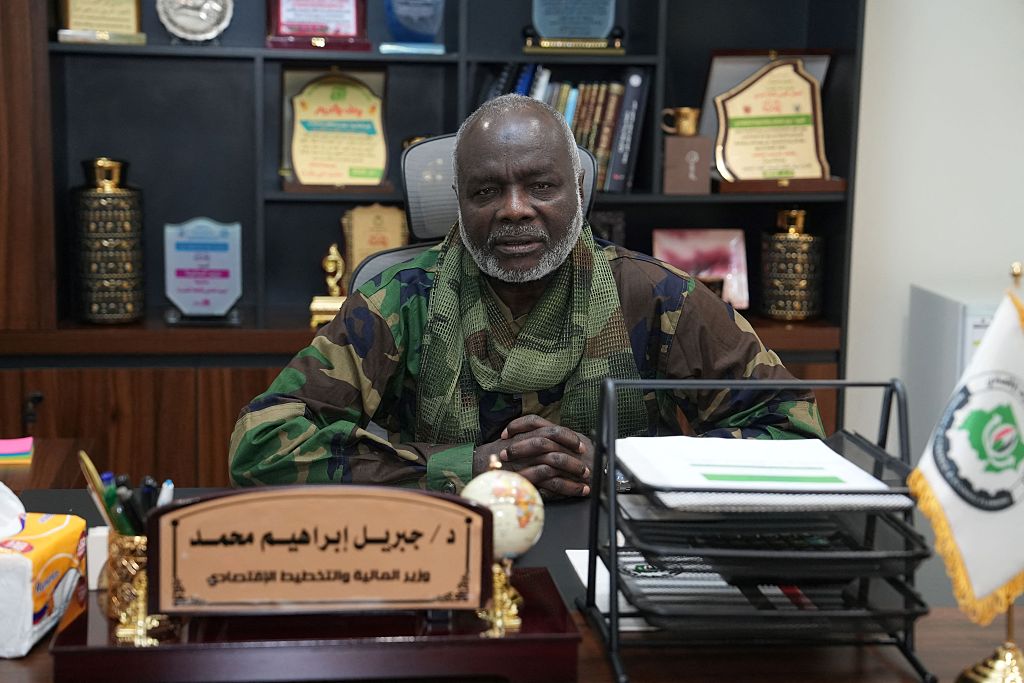
Gibril Ibrahim, finance minister in the SAF-aligned government, said that in 2025 only 20 metric tons were exported through official channels.
“Official government channels recorded only a small fraction of that as exports, revealing a massive leak in the national economy,” he told Agence France-Presse. “Unfortunately, much of it has been smuggled … across borders, through different countries, and going to the Gulf, mainly to the United Arab Emirates.”
The RSF built its base of power via gold-smuggling routes through Chad and Libya, some with the assistance of Russian mercenaries. It worked closely with the former Wagner Group, now known as Africa Corps, when it first arrived in Sudan in 2015.
“Complex financial networks established by RSF before and during the war enabled it to acquire weapons, pay salaries, fund media campaigns, lobby, and buy the support of other political and armed groups,” a United Nations panel of experts wrote in 2024.
The RSF controls major gold-mining operations in Darfur and Kordofan, while the SAF oversees extraction across eastern Sudan, much of which passes through informal channels. Teixeira said that porous borders and limited oversight in remote desert regions make it difficult to monitor cross-border flows.
Research estimates that roughly 60% of gold produced in Sudan’s Northern, River Nile and Red Sea states is smuggled into Egypt, where it enters formal trading circuits and ultimately ends up in the UAE.
Teixeira sees little change on the horizon. Gold lets the SAF and RSF skirt formal banking restrictions, and it offers the warring sides the liquidity to continue importing heavy weaponry and drones.
“The war economy, particularly the gold smuggling to markets like the UAE, provides both factions with a continuous source of revenue to purchase weapons and drones, creating a massive incentive to prolong the conflict rather than compromise,” she wrote.