

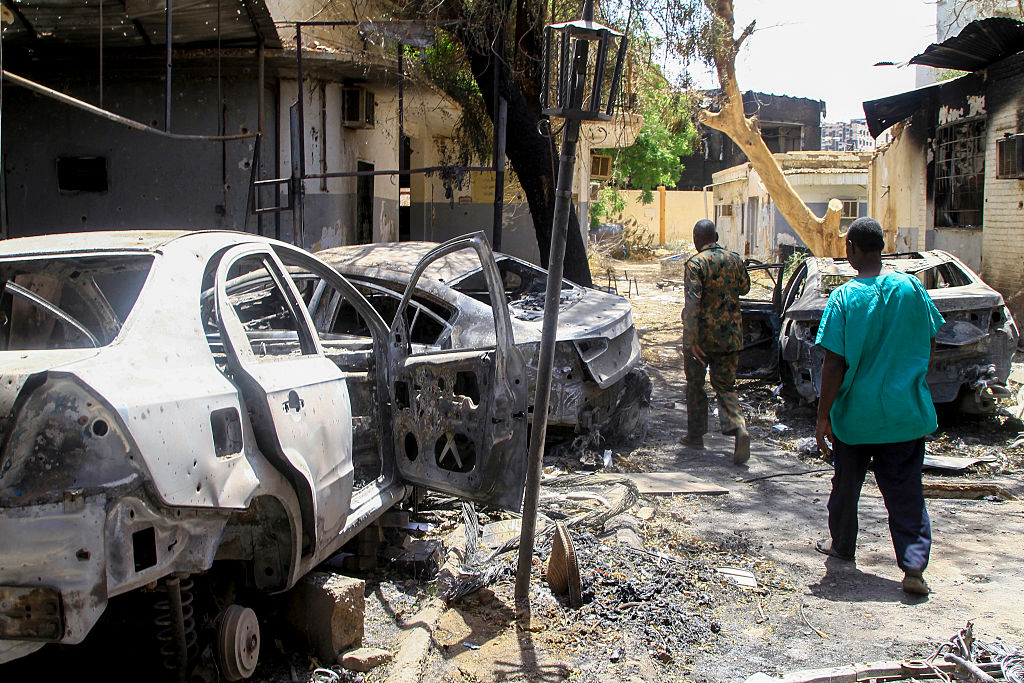
When Maj. Gen. Al-Nour Ahmed “al-Qubba” Adam defected from Sudan’s paramilitary Rapid Support Forces (RSF) in April, he brought a trove of assets with him. Al-Qubba gave the Sudanese Armed Forces (SAF) more than 130 combat vehicles, a group of loyalists, high-level tactical intelligence and years of brutal battlefield experience. Al-Qubba is one of several top RSF commanders who have recently left to join the SAF.
Brig. Gen. Ali “Al-Safna” Rizqallah left the RSF one month after Al-Qubba. Al-Safna played key roles in the battles of Kordofan and El-Fasher. These defections and others led “some to wonder whether the tide may finally be turning in one of Africa’s deadliest civil wars,” wrote researcher Amgad Fareid Eltayeb for Saudi Arabia’s Al Mjalla magazine.
Security and political analyst Mohieddin Mohamed Mohieddin told the Sudan Tribune that many defecting RSF commanders brought professionally trained forces with them.
“The RSF has begun to crack from within,” Mohieddin said. “The harder core is gone. What remains are less-trained elements who will be less effective, especially in offensive operations.”
The loss of RSF manpower and equipment seemed to embolden the SAF. In the first half of June, the SAF claimed it killed dozens of enemy fighters and destroyed 141 combat vehicles, two ammunition depots, two military equipment warehouses, two drone munition storage sites and one of the RSF’s main fuel depots.
The first high-ranking RSF commander to abandon the group was Abu Aqla Keikal. He left in October 2024 while commanding RSF forces in Gezira State in east-central Sudan. Three months after joining the SAF, Keikal led military operations that reclaimed the region from the RSF.
Al-Qubba, Al-Safna and Keikal are Arab, as are the majority of RSF fighters and their leader, Gen. Mohamed Hamdan “Hemedti” Dagalo. According to the Armed Conflict Location and Event Data (ACLED) project, there are indications that RSF alliances with non-Arab former rebel groups operating in Blue Nile and South Kordofan as the Sudan Founding Alliance also are fracturing. Infighting among these factions has been rising since October 2025.
Retired SAF Brig. Gen. Amin Ismail, now a crisis management expert, told the Sudan Tribune newspaper that internal RSF tensions were amplified after an RSF attack on North Darfur’s Mustaraha pastoral area in February that targeted the territory of a prominent chief of the Mahariya clan. Many RSF commanders are Mahariya, as are Al-Qubba and Al-Safna.
“The attack on Mustaraha was the straw that broke the camel’s back,” Ismail said, adding that grievances over medical care, pay and the favoring of Mahariya rivals also increased internal RSF turmoil. Al-Qubba, a founding RSF member, left after the group appointed another candidate as governor of North Darfur State.
The war is progressing amid ongoing violence against civilians and allegations that the United Arab Emirates (UAE) is supplying the RSF with weapons and Colombian mercenaries. The UAE officially denies supporting the RSF militia in the Sudanese conflict. However, Human Rights Watch (HRW) reported in May that hundreds of Colombian mercenaries have fought alongside the RSF since 2024. The report said a Colombia-based recruitment agency worked with the UAE’s Global Security Services Group to hire the fighters, who received training in the UAE.
“Thankfully for us, Colombian contractors are not very hygienic with their social media presence so we were able to get a lot of information from their own Tik Tok accounts and other social media that they posted publicly and geolocate them in these sensitive UAE military sites before they were then deployed to Sudan,” Joey Shea, a senior HRW researcher, told United States news organization Democracy Now.
Intelligence sources in 2025 told The Wall Street Journal that the UAE likely also sent advanced Chinese drones, small arms, heavy machine guns, vehicles, artillery and other materiel to the RSF.
The “only thing that is keeping them [the RSF] in the war is the overwhelming amount of military support that they’re receiving from the UAE,” security analyst Cameron Hudson told the newspaper. “The war would be over if not for the UAE.”
Both sides in the war are accused of committing atrocities against civilians. The United Nations Fact-Finding Mission on Sudan reported on June 15 that civilians are increasingly being arbitrarily detained and tortured. Also, drone strikes have killed more than 880 Sudanese civilians this year in strikes on places such as schools, markets and hospitals.
“Civilians continue to bear the overwhelming burden of this conflict,” Mohamed Chande Othman, the mission’s chair, said in a report by the AllAfrica news website. “They are subjected not only to direct attacks and violence but also to a growing system of repression, arbitrary detention and fear that has penetrated every aspect of life.”