

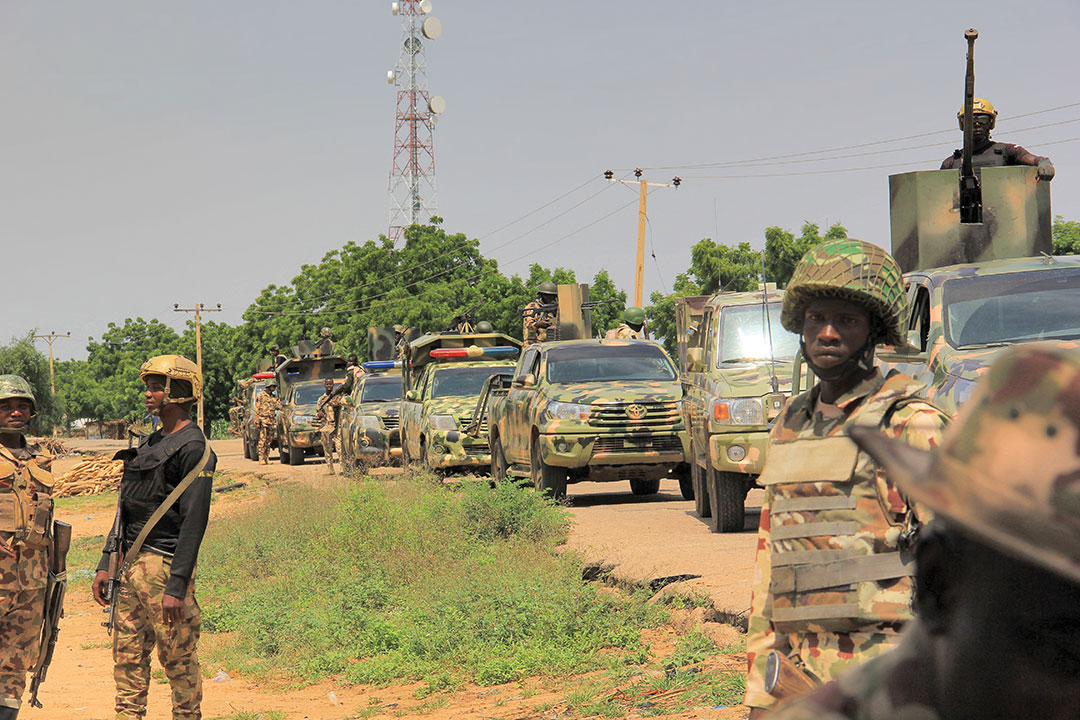
The Economic Community of West African States (ECOWAS) plans to activate a 260,000-troop rapid deployment counterterrorism brigade to help fight terrorism in the subregion.
“This bold initiative has become necessary given the asymmetric security dynamics in our region,” said Abdel-Fatau Musah, ECOWAS commissioner for Political Affairs, Peace and Security. He spoke for Commission President Dr. Omar Touray at the inaugural African Chiefs of Defence Staff Summit in Abuja, Nigeria, in August 2025.
“We are conscious of the fact that this requires the necessary financial resources and capabilities to make it a reality. ECOWAS is therefore throwing the gauntlet to bilateral and multilateral partners to complement this daring regional effort,” Musah said.
The proposed $2.5 billion-a-year effort would provide logistics and financial support to frontline states and complement the African Union’s standby force, according to Vanguard, a Nigerian newspaper.
ECOWAS would continue its commitment to raise its 5,000-man brigade under the African Union’s Peace and Security Architecture, according to an editorial in The Nation, a Nigerian newspaper.
The Sahel is considered the epicenter of terrorism, accounting for more than half of all terrorism-related deaths globally, according to the Global Terrorism Index, which reported that terror-related deaths in the region have increased tenfold since 2019.
The al-Qaida-affiliated Jama’at Nusrat al-Islam wal-Muslimin (JNIM) and the Islamic State Sahel Province (ISSP) terror groups have steadily expanded to the south and west. Héni Nsaibia, senior analyst for West Africa at the Armed Conflict Location and Event Data project (ACLED), noted they are targeting border regions between Benin, Niger and Nigeria, where security forces are overstretched and civilians are increasingly exposed to violence.
“JNIM and ISSP’s investment in cross-border activities suggests that this border region is of growing importance for jihadist expansion,” Nsaibia wrote. “The groups have been exploiting the porous borders to entrench their presence and further their goals of establishing proto-states, but also to complicate military efforts to contain their areas of operation.”