
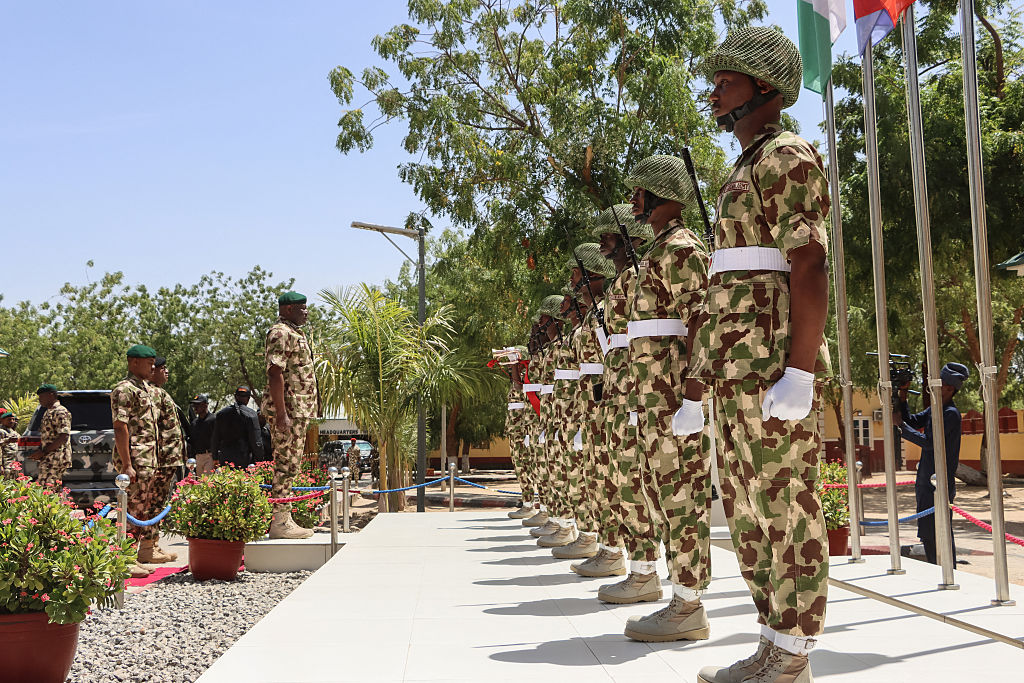
Nigerian President Bola Ahmed Tinubu confirmed a joint U.S. and Nigerian military raid took place early Saturday morning targeting a major Islamic State West Africa Province (ISWAP) compound in northeast Nigeria. The precision air-land operation killed Abu-Bilal al-Minuki, second in command of Islamic State globally, who had established a stronghold in the Lake Chad Basin used to launch attacks against Nigerian Army bases and terrorize surrounding villages.
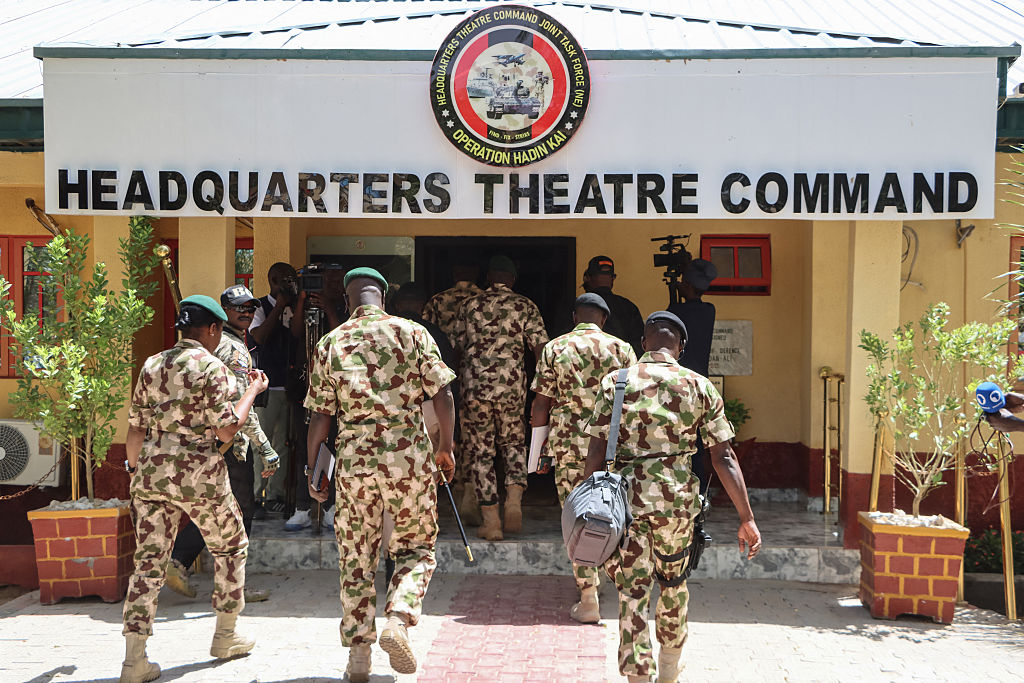
According to Joint Task Force North-East, Operation Hadin Kai (OPHK), the mission targeted a concealed and fortified ISWAP compound located in the Metele area of Borno State, near the border with Chad. Multiple terrorists were reportedly killed, including al-Minuki and several of his top lieutenants. The Armed Forces of Nigeria Air Force and Army components of Operation Hadin Kai are continuing operations to pursue and neutralize fleeing militants to prevent them from seeking refuge and establishing another base in the region.
The strike against ISWAP is part of Nigeria’s renewed efforts to address the country’s growing security challenges. The recently enhanced bilateral partnership between the U.S. and Nigeria deepened counterterrorism collaboration between the two countries to more effectively combat the various foreign-backed terrorist organizations that threaten not only Nigeria, but the greater West African region and the globe.
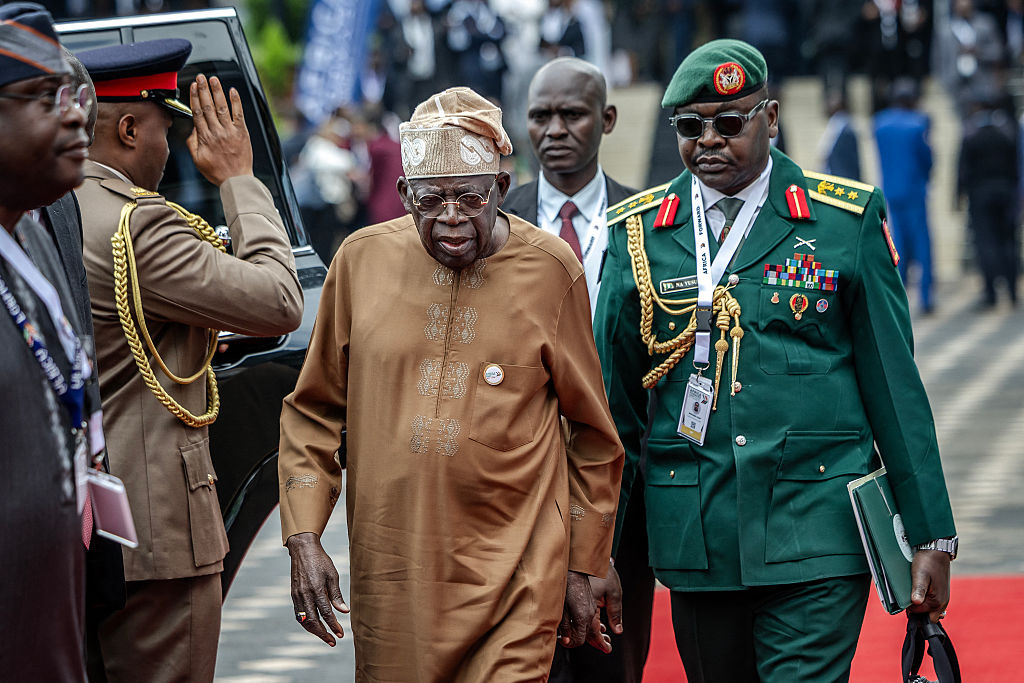
In a statement, President Tinubu noted the success of the joint operation as “a significant example of effective collaboration in the fight against terrorism.” The Nigerian Security Services (NSS), Joint Intelligence Fusion Center, and both U.S. and Nigerian drone intelligence, surveillance and reconnaissance capabilities are believed to have played a key role in the “daring joint operation that dealt a heavy blow to the ranks of the Islamic State.”
The Nigerian Army called the operation the “the single most consequential counter-terrorism outcome” in the northeast of the country since the beginning of OPHK in 2015. It reported the raid was the product of prolonged intelligence efforts and “involved several air platforms in a synchronised air-land configuration that left the terrorists with no avenue of escape.” No troop casualties or loss of assets were immediately reported.
IS Shifts to Africa
In a 2025 report, U.N. experts warned that the Islamic State had shifted its center of operations from the Middle East to Africa where it is using advanced technologies including artificial intelligence and attracting foreign fighters in its efforts to establish a caliphate.
Natalia Gherman, who heads the executive directorate of the U.N. Counter-Terrorism Committee, warned that, in the Lake Chad Basin, the Islamic State was growing more dangerous and receiving money, drones and expertise on building improvised explosive devices from foreign sources.
“Its ability to adapt and exploit instability continues to pose significant challenges, particularly in parts of Africa,” Gherman said. “The continent bears over half the world’s fatalities from terrorist attacks.”
The camp that was targeted was believed to be the major command and control and operational base for several hundred ISWAP commanders and fighters that operated freely in the porous border area surrounding Lake Chad.
ISWAP is responsible for launching several attacks on Nigerian Army bases in Borno State, including in the Gwoza local government area where terrorists killed several Soldiers and kidnapped hundreds of civilians. In early March, the Nigerian Army’s Ngoshe and Pulka bases were attacked and overrun, with the village of Ngoshe burned down and abandoned. On April 13, a military base on Monguno was attacked resulting in the death of base commander, Col. I.A. Muhammed, along with four Soldiers
On April 21, ISWAP gunmen on motorbikes raided the villages of Pubagu and Mayo-Ladde, firing indiscriminately and killing more than 20 people.
Nigeria’s DHQ has reported on Islamic State West Africa Province (ISWAP) fighters intensified attacks on military convoys and civilians, with increased use of drones and IEDs. Recent reporting has also confirmed a ‘loose alliance’ among the Sahel’s jihadist groups, enabling them to establish pseudo-states and coordinate attacks against the region’s security forces.
Civilians living in northeastern Nigeria are forced to pay taxes for protection and are subject to judgement in Sharia courts operated by ISWAP loyalists. Punishments can include beatings, floggings or shootings.
In 2025, as global terror attacks declined, Nigeria saw the highest increase in terrorism deaths rising 46% from 513 to 750 and ranking fourth in the Global Terrorism Index.
What is ISWAP?
ISWAP is a jihadist militant group affiliated with the Islamic State global terror organization. ISWAP operates primarily in the Lake Chad Basin region countries of Nigeria, Niger, Cameroon and Chad.
The group’s roots date back to 2009 when Boko Haram terrorized the region. In March 2015, Abubakar Shekau, the leader of Boko Haram, pledged allegiance to the Islamic State global emir. In 2016, a major internal rift occurred over leadership and ideology that saw IS replacing Shekau with Abu Musab al-Barnawi, leading the group to split into two factions: ISWAP and another group that reverted to the original Boko Haram name.
As of 2025, ISWAP is considered the largest and most active IS branch globally in terms of claimed attacks and includes an estimated 8,000 to 12,000 members. ISWAP funds itself through taxation, kidnapping for ransom and cryptocurrency markets. Smuggling routes span Nigeria’s borders with Cameroon, Chad and Niger, easing the movement of fuel, food and drugs.
Recently, the group has begun to acquire cheap, off-the-shelf drones and arm them with explosives. Nigerian security analyst Daniel Nduka Okonkwo called this a “dangerous escalation” of their capabilities making them more difficult to defend against and allowing them to strike from a distance.
Who is Abu Bilal al-Minuki?
Abu-Bilal al-Minuki, also known as Abu-Mainok, was a Nigeria-based Islamic State senior leader, who provided strategic guidance to other IS affiliate networks outside of Nigeria on matters regarding media, economic warfare, illicit finance, and the development and manufacturing of weapons, explosives, and drones. Minuki was one of the most active terrorists in the region; and has a significant history of involvement in terrorist attacks on Armed Forces of Nigeria forward operating bases and kidnappings of Nigerian civilians for ransom.
Before switching his allegiance to Islamic State in 2015, al-Minuki was a prominent leader of Boko Haram. Between March 2015 and early 2016, he sent fighters to Libya to support IS operations in the country. In 2018, he was a senior IS operational commander involved in the Dapchi kidnapping of 100 schoolgirls. Most recently, in February 2026, Minuki was promoted to head of the General Directorate of States, making him one of the five most senior members globally of the IS terror group.
“If confirmed, the killing of Al-Mainuki is huge because this is the first time a security agency has killed someone this high in the ranking of ISWAP,” Malik Samuel, a senior researcher at Good Governance Africa who specializes in insurgent groups in Nigeria, told The Associated Press. “The potential to cause chaos within the group is also there because the operation must have been carried out in the heart of ISWAP’s fortified base, which is very difficult to access.”