

Multiple investigations have accused Sudan’s military of deploying chlorine bombs against its rival, possibly after diverting chlorine intended to purify drinking water. This would violate international conventions against the use of chemical weapons.
Independent reports published in September by The New York Times and The Washington Post newspapers claim that the Sudanese Armed Forces (SAF) has used chlorine gas imported from Egypt against fighters with the Rapid Support Forces (RSF). Investigators with France 24 and C4ADS came to a similar conclusion in late 2025. Their investigation revealed that Sudanese officials were repurposing chlorine gas imported from India for water treatment.
“The use of chemical weapons represents a new low in a conflict in which both sides have been accused of committing war crimes on a wide scale,” researcher Daryl G. Kimball wrote earlier this year for the Arms Control Association. “The Army is the only armed group in Sudan with the aerial military capacity to carry out such attacks.”
The Organization for the Prohibition of Chemical Weapons (OPCW) reported that it is monitoring the situation in Sudan but could not verify the use of chemical weapons or whether Sudan has an undeclared program to employ them against the RSF.
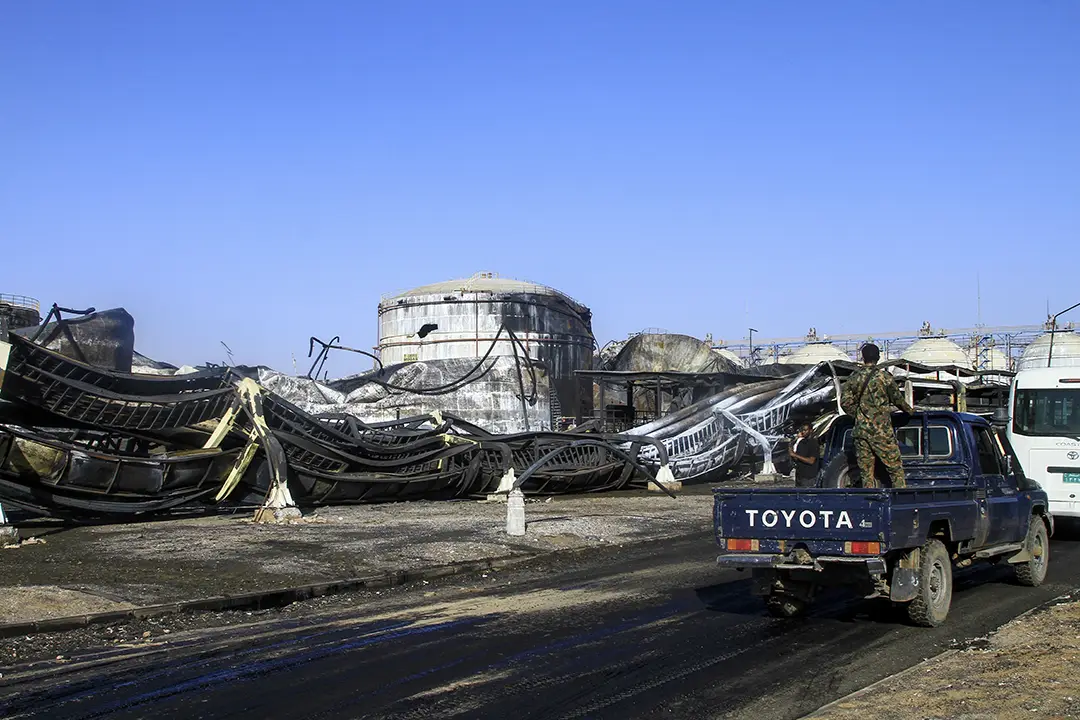
The investigations are rooted in the testimony of eight Sudanese witnesses, including two who claim to have been present during an aerial chemical bombardment of the al-Jaili Oil Refinery near Khartoum in September 2024. At the time, the RSF held the facility.
The witnesses at the refinery reported that military aircraft flew over the facility, then barrel-shaped objects fell from the sky, causing breathing problems among nearly two dozen refinery workers.
The witnesses’ claims are supported by their own videos, pictures and online material that suggest the use of chemical weapons during the Sudanese civil war.
Investigators visiting the site later found the remains of chlorine barrels that has been shipped from an Indian chemical company to Port Sudan, presumably to be used at a water treatment facility.
In the Times’ reporting, the SAF diverted chlorine gas from Omdurman’s al-Manara water treatment plant for use against RSF positions. The military used that gas to build 300 chlorine-based bombs.
The Times and Post built their reporting on documents and videos supplied by an unnamed Middle Eastern country’s intelligence services. The material suggests that the SAF made and stockpiled chorine-based weapons for several months in 2024. The documents included bomb design blueprints, testing operations and a coordinated cover-up strategy.
Sudan’s government has disputed the reports and says that it stands by the international Chemical Weapons Convention. However, the Sudanese government has been accused of using chemical weapons in the late 1990s and again in the early 2000s.
Times and Post reporting say Sudan shut down the chemical weapons program after the international community detected it. France 24 and C4ADS reported that the company that imported chlorine gas from India — Ports Engineering Co. — shut down after they began asking questions.
As a chemical weapon, chlorine can kill in high concentrations, however it also evaporates quickly in high temperatures.
In messages published by the Times, one SAF leader argued that deploying chlorine with explosives would kill with shrapnel and gas. Heat from the explosion then would destroy evidence of the chlorine.
“This makes the combination of chlorine gas and explosives useful for those trying to avoid detection while retaining the advantages of a gas attack: panic, exposing fleeing targets to conventional attacks and pressure on medical services,” researcher Anneleen van der Meer wrote for The Conversation.