

Mozambique has long been a key transit point for the trafficking of drugs such as cocaine, heroin, methamphetamine and opioids, but recent arrests and government data show that the drug business is expanding alongside rising concerns of domestic addiction problems.
After months of investigating evidence and rumors of international cartel activity and at least two hidden drug labs in the nation’s capital, police arrested three men — a Mozambican and two Mexican nationals — during an April 11 anti-drug-trafficking operation at Maputo International Airport.
“There is strong evidence linking the three detainees to international drug trafficking, document forgery and criminal association,” the National Criminal Investigation Service (SERNIC) said in an April 16 statement. “The two Mexicans were identified as members of the Sinaloa Cartel in Mexico and intended to establish themselves in the national territory, specifically in Matutuine district, Maputo province.”
The dominant cartel in Mexico, Sinaloa was founded in 1987 and is considered one of the world’s largest transnational criminal syndicates. Its primary business is distributing cocaine, heroin, methamphetamine, fentanyl, cannabis and MDMA.
In November 2025, Mozambican Interior Minister Paulo Chachine announced that Interpol has a team is in the country working with local authorities to tackle organized crime and drug trafficking. Interpol also is conducting joint operations with local forces simultaneously in Namibia, South Africa and Zimbabwe.
After the Maputo arrests, police searched the Mozambican detainee’s home and found traces of chemicals used as drug precursors. Suspecting that large quantities had been moved overnight, police on April 21 raided a warehouse, where they seized 10 metric tons of powdered acid and more than 2,000 liters of liquid chemicals commonly used in drug production.
“SERNIC is cooperating with South African and Mexican authorities to clarify the case, and there is suspicion of the involvement of some Nigerian citizens, as well as links to a potential drug trafficker based in South Africa,” SERNIC national spokesperson Hilário Lole said, according to Portuguese news agency Lusa. “According to forensic analysis derived from telephone contacts extracted from the detainees, it was possible to identify conversations with Mexican contacts, including images of drug packages.”
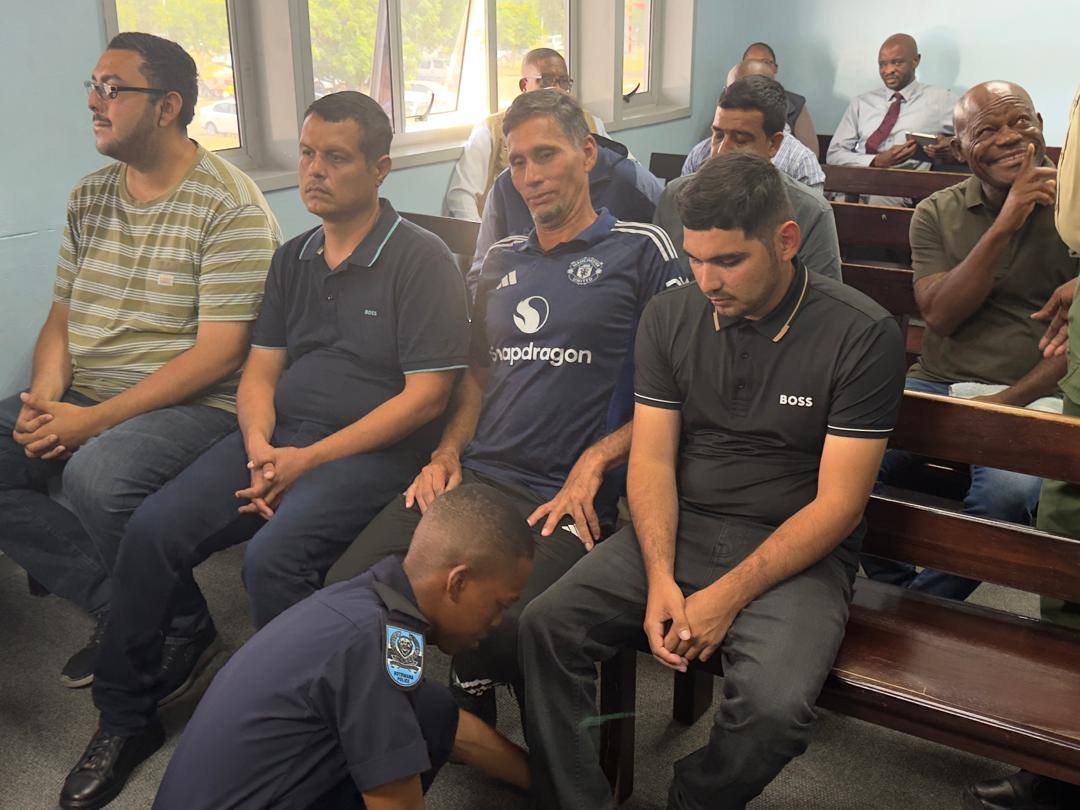
In January, authorities in Botswana arrested six Mexican men for illegally entering the country. Police located them after receiving Interpol alerts connecting the men to drug trafficking charges in Mozambique, where they violated their conditional release on bail. They are being extradited to Mozambique.
“The strongest line of inquiry suggests they have ties to the Sinaloa Cartel, given that two of them possess birth certificates issued in that state,” an Interpol source told Mexican newspaper Milenio for a January article.
In May 2025, Malawian police in Lilongwe partnered with drug enforcement agents from the United States to arrest six Mexican men at Kamuzu International Airport on their way to Mozambique, allegedly to set up drug laboratories that would serve as distribution centers for several African countries.
Officials say Mexican cartels increasingly are smuggling raw materials through West Africa and manufacturing drugs in Southern Africa. The shift is creating an epidemic of drug abuse in the region.
Mozambican authorities in 2025 seized approximately 4.4 metric tons of illicit drugs worth more than $2.8 million in operations that also led to the detentions of more than 600 people, according to an April 15 report by the Central Office for Drug Prevention and Control (GCPCD). In 2025, the number of people treated in Mozambican hospitals for drug use rose 38% to 32,281, and the government spent nearly $1.4 million to treat drug users.
“Mozambique’s geographical location, as a corridor linking East and Southern Africa, makes it particularly vulnerable to illicit drug trafficking,” the report stated.
The report also stated that Maputo lies within prominent drug routes that stretch from Afghanistan to South Africa for amphetamines, methamphetamines and heroin, and from São Paulo, Brazil, to South Africa for cocaine. In 2025, 42 Mozambican citizens were detained abroad on drug trafficking charges in 13 countries, including 22 in Brazil.
“The routes are known and permanent, which requires continuous reinforcement of control actions,” GCPCD spokesperson José Bambo said at an April 15 news conference.