

Recent maritime attacks by Yemen’s Iranian-backed Houthi rebels are threatening global trade and fueling a resurgence of Somali piracy.
When the Houthis gained control of Yemen’s Port of Mokha in September, the group effectively took control of the Bab al-Mandeb Strait, according to Andrew Leber, a nonresident scholar in the Carnegie Endowment for International Peace’s Middle East Program. The channel is a critical Red Sea choke point through which about 12% of the world’s trade passes.
Matthew Reisener, national security adviser at the Center for Maritime Strategy, warned that naval campaigns by Iran in the Strait of Hormuz also are fostering Somali piracy.
“Not only have the global navies that once combatted piracy off the Horn of Africa diverted their resources to counter the threats against ships in these critical waterways, but these conflicts have also drawn maritime traffic closer to Somalia’s coastline, creating openings for opportunistic pirates to target commercial ships,” Reisener wrote.
The Houthis’ upper hand in the Bab al-Mandeb has forced ships to take alternative routes around the Horn of Africa, including Somalia, where the rebels supply the al-Shabaab terror group with weapons, technical equipment and military training in exchange for increased piracy.
“With a strengthened Houthi presence in the Bab al-Mandeb, the Houthis and al-Shabaab have more operational space for collaboration,” foreign policy expert Lesley Anne Warner wrote for the Carnegie Endowment. “Meanwhile, the Houthis have expanded the battle space and forced any multinational effort to confront them and their Iranian patrons to divide their attention.”
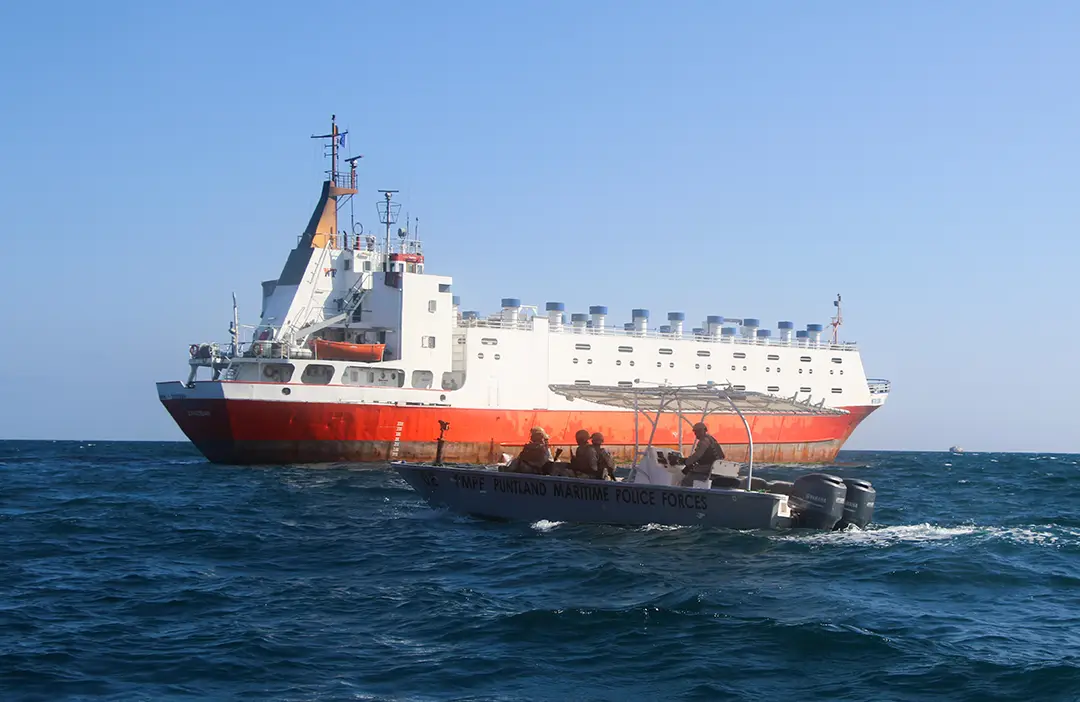
The largest Somali pirate attack this year unfolded on April 21, when the Palau-flagged tanker Honour 25 was hijacked near Eyl, a former fishing town in the autonomous Puntland region that has become a major hub of Somali piracy. Five crew members were killed and five injured during a rescue attempt in September. Analysts believe these marked the first killings committed by Somali pirates in more than 10 years.
The 32-kilometer-wide Bab al-Mandeb connects the Red Sea to the Gulf of Aden and separates Yemen from Eritrea and Djibouti. The Africa Center for Strategic Studies reported last year that the Houthis earned an estimated $180 million monthly from fees paid by shipping agents to secure safe passage through the Red Sea region.
The Houthis’ war with Yemen has recently forced thousands of Yemenis to flee to Djibouti, including more than 2,500 over a week in September.
“We expect the number of displaced people to rise to about 10,000 in the coming weeks,” Djibouti’s Interior Minister Omar Abdi Said said in an Al Jazeera report. “The influx of migrants has already exceeded our national capacity, and we are facing increasing pressure as international funding declines. We call on the United Nations and international partners to mobilise urgent financial resources commensurate with the scale of the crisis.”
Leber believes the Houthis’ momentum raises the possibility of opening a second front in the Persian Gulf conflict.
The rebels “could target Saudi oil facilities and population centers and threaten an additional Red Sea chokepoint for global energy trade and other goods shipments,” Leber wrote.
Houthi attacks on maritime traffic have also caused insurance and security costs to rise.
“These costs will inevitably be passed on to consumers,” Warner wrote. “In particular, African economies have already weathered a succession of geopolitical shocks in recent years, with little time in between to increase their resilience, and they will have to brace for higher commodity costs.”