
A series of recent arrests highlights the trend of Mexican drug cartels manufacturing methamphetamine in Nigeria and other areas. Analysts say the Sinaloa and Jalisco New Generation (CJNG) cartels are sending their own chemists to produce meth. They are also accused of funding terrorists, armed groups and criminal gangs that help them produce and move the drugs in a franchise-like business model.
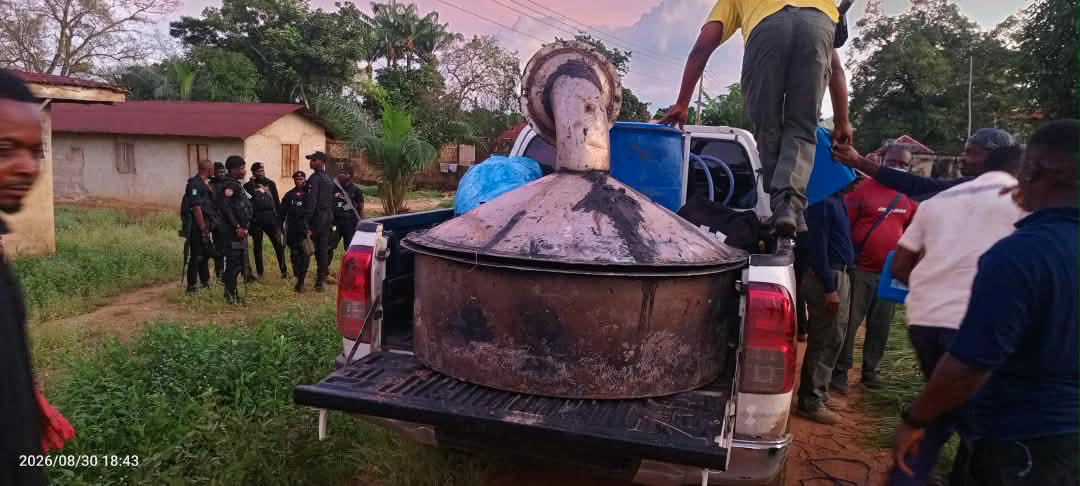
On August 19, Nigerian authorities arrested Arturo Carrera Loaiza, a 40-year-old Mexican national, at Murtala Muhammed International Airport in Lagos as he tried to leave the country. Officials said they found digital images of equipment consistent with methamphetamine production and Loaiza wearing what appeared to be a laboratory coat. The images’ location data led officers to a property in Ebonyi State, where they found precursor chemicals and drug-making equipment, the BBC reported.
Gen. Mohamed Buba Marwa, chairman of Nigeria’s National Drug Law Enforcement Agency (NDLEA), said further investigation led officers to an isolated house nearby, where they recovered precursor chemicals, drug-manufacturing equipment and a sieve containing traces of meth. Authorities believe Loaiza brought a fellow Mexican national to work at another suspected meth lab in an Oyo State forest.
“The breakthrough follows months of painstaking investigation into a wider criminal network behind a string of clandestine drug laboratories uncovered in parts of the country this year,” Marwa told The Associated Press.
On September 24, the NDLEA arrested two Nigerian men accused of operating a meth lab in Enugu State. The suspects allegedly operated the facility with a Mexican drug cartel member who has since left Nigeria. This marked the country’s fourth major meth lab bust with links to Mexican nationals since May.
Rafaella Liptschitz, criminal network specialist at the New Lines Institute, told The U.S. Sun digital newspaper that Mexican cartels are adapting their business models and becoming more resilient as they grow.
“As enforcement pressure intensifies in one area, these groups diversify production, spreading operations so that a bust in one country does little to disrupt the trade as a whole,” Liptschitz said. “Constant adaptation, be that through supply chains, trafficking methods or production locations, makes keeping up with them extremely difficult.”
South African authorities have busted at least five meth labs involving suspected members Mexican drug cartels since July 2024, when authorities seized a lab and drugs worth nearly $125.4 million on a farm in Limpopo province. In late August, five people, including two Mexicans, were arrested at another meth lab on a Limpopo farm. Officials seized drugs and equipment worth $37.5 million at the facility.
“Instead of cartels relocating leadership, they transfer production knowledge to local groups,” Liptschitz told The U.S. Sun. “This sets up a low-risk, high-reward structure that lets Mexican cartels plug into established criminal networks without owning the operation outright. So, a lab bust or arrest does little damage to the organization. This is not new but is becoming more prominent abroad.”
Willem Els, a counterterrorism expert at the Institute for Security Studies, told ADF that he believes Mexican cartels exploit South Africa’s porous borders and are buying off law enforcement, judges and politicians for protection.
“When they experience some problems, they have big money behind them,” Els said. “They keep on bribing their way out, and they can continue to operate.”
Julian Rademeyer of the Global Initiative Against Transnational Organized Crime told Johannesburg’s 702 Drive talk radio show that the Sinaloa cartel has established itself in at least 50 countries.
On September 24, Kenyan authorities destroyed more than a metric ton of meth worth an estimated $63 million that was seized about a year earlier off the coast of Mombasa. In 2024, a meth lab was uncovered in the countryside near Namanga, a community on the border with Tanzania. Among those arrested were three Kenyans, two Nigerians and an alleged CJNG member.
In April, Mozambican authorities arrested a local and two Mexicans identified as members of the Sinaloa cartel during an operation against drug trafficking at Maputo International Airport. The cartel members “intended to establish themselves in the national territory,” the National Criminal Investigation Service said in a statement.