

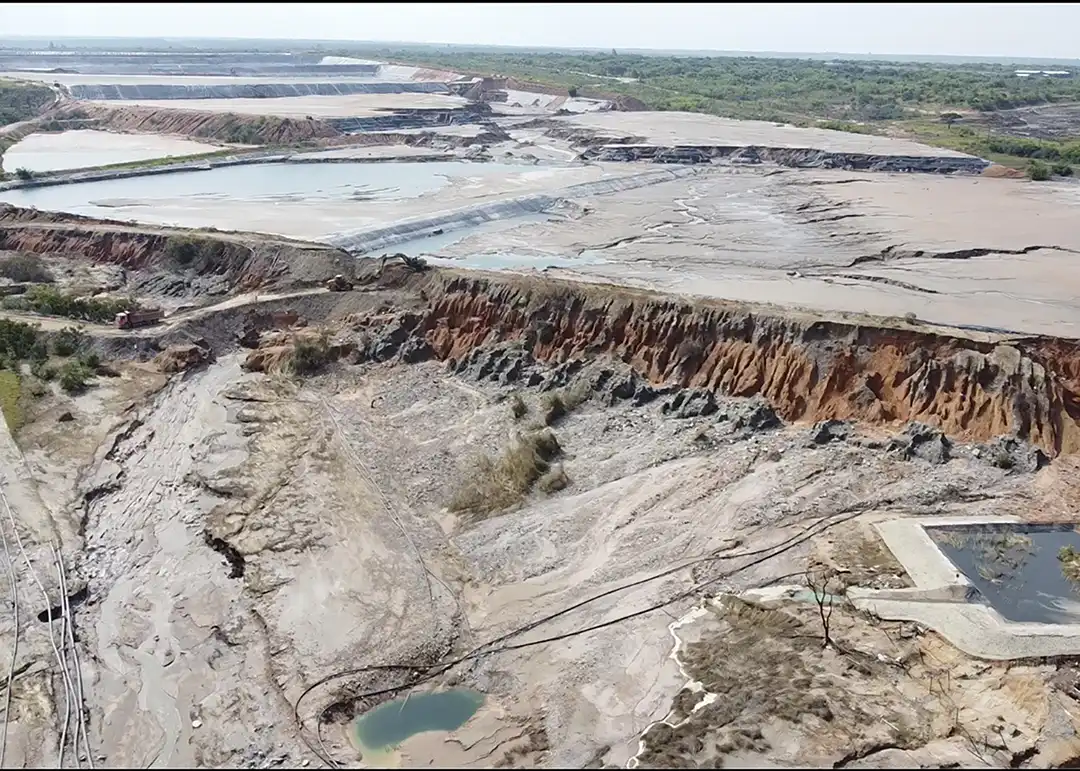
As China has expanded its investment in mineral mining projects on the continent, allegations of environmental and human rights abuses have risen at an alarming rate.
The Business and Human Rights Centre, an international nonprofit organization that promotes corporate accountability and transparency, revealed in a July report that allegations of abuse linked to Chinese mining in Africa more than doubled from 45 in 2024 to 100 in 2025.
The abuses involve the mining of energy transition materials, which are naturally occurring metallic and non-metallic substances key to many high-tech devices and electric vehicles. Worldwide, the Centre documented 326 allegations of abuse across transition-mineral projects linked to Chinese companies between 2023 and 2025. In that time, there were 119 allegations in Africa, which made up 37% of the total.
“In the increasingly fast-paced race for these minerals, serious allegations of human rights and environmental abuse are also on the rise,” the report stated. “Urgent action by Chinese actors is required to ensure the global energy transition is not only fast, but also fair to the communities and workers directly affected by the vast mining operations that power it.”
The report, titled “Shifting ground: Human rights, Chinese investment and the rush for transition minerals,” showed that the highest number of allegations in Africa came in the Democratic Republic of the Congo with 52, followed by Zimbabwe with 20, Guinea with 18, Zambia with 15 and Namibia with eight.
“This acceleration is unfolding at the same time that global powers are multiplying strategic mineral agreements with African governments,” Joseph Kibugu, Africa regional manager at the Centre, told Reuters in June. The agreements, he said, often were “negotiated with little consultation with rightsholders and communities, and crucially, without binding human rights and environmental safeguards.”
Africa is home to an estimated 30% to 40% of the world’s critical mineral reserves, including cobalt, copper, lithium and nickel. China extracts and imports the largest volume of raw minerals and metals from the continent, as Chinese companies control a vast number of African mines. China also is the leading financier of critical minerals projects.
One of the worst environmental disasters in Zambia’s history occurred in February 2025, when Sino-Metals Leach copper mine released at least 50 million liters of toxic effluent into the Kafue River, which supplies drinking water to about 5 million people.
The Southern African Litigation Centre, a South Africa-based non-governmental organization that works to advance the rule of law in the region, is directly involved in a lawsuit filed by Zambian communities against the Chinese-owned copper mine. Executive Director Anneke Meerkotter agreed with the Business and Human Rights Centre’s hypothesis that the race for green energy has spurred rights abuses across African mining countries.
“Africa’s transition mineral boom is increasingly marred by environmental and human rights abuses, fueled by a dangerous combination of weak government oversight and corporate disregard for local laws,” she told the Thomson Reuters Foundation. “As global demand for these critical minerals surges, advocates are calling for urgent accountability, warning that the green energy transition must not be built on a foundation of impunity and local exploitation.”
The report shows that 10 Chinese companies, including Zijin Mining, Tsingshan Group and Zhejiang Huayou Cobalt, accounted for nearly two-thirds of all allegations recorded in the past five years. It found that some Chinese companies “still appear to turn a blind eye to these issues.” The Centre warned that even among companies with human rights policies, implementation remains a challenge.
The report concluded with a plea that mining companies provide better leadership in the global transition to clean, renewable energy.
“However, this will not happen without urgent, proactive and concrete action by companies and regulators to confront the persistent environmental and social harms linked to transition minerals,” it said.
Kibugu warned that as demand for Africa’s minerals increases and China continues to dominate the mining sectors of the DRC, Zambia and elsewhere, human rights abuses will likely rise, “unless companies, states and investors take decisive action to ensure that local communities and workers are protected and benefit from the resources.”