

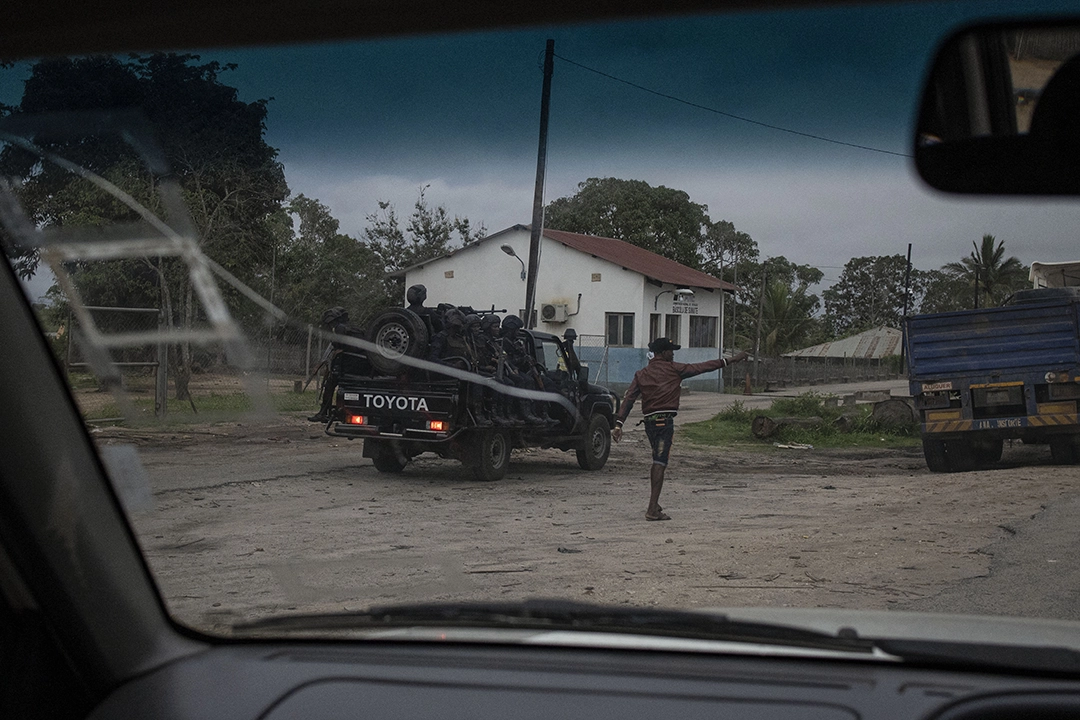
Terrorists have resumed attacks in northern districts of Mozambique’s Cabo Delgado province, relying on improvised explosive devices (IEDs) to limit the movements of Mozambican and Rwandan military forces.
The Islamic State Mozambique stepped up its IED attacks in June, according to a report by the Armed Conflict Location and Event Data project (ACLED).
“After two months in southern Cabo Delgado, Islamic State Mozambique (ISM) insurgents have begun to return to bases in Macomia,” ACLED reported.
ACLED researchers first reported the terrorist group using IEDs in 2021. Since then, their records show 45 IED incidents, including 35 in the Macomia and Mocímboa districts. Most of the IEDs have been on roads that surround the Catupa forest to constrain Mozambican and Rwandan forces and discourage them from approaching ISM’s main camp.
ISM has plagued the region since 2017, beginning by attacking with crude weapons such as machetes, axes and small arms, according to news organizations. Early on, terrorists attacked and burned hundreds of homes, Human Rights Watch reported.
The insurgents suffered territorial losses in 2021 when Rwandan security forces and the Southern African Development Community Mission in Mozambique intervened. Since then, researchers report, ISM fighters have relied on asymmetric tactics, including ambushes, hit-and-run attacks and more IEDs.
Rwanda first sent troops to the region in 2021 at Mozambique’s request to help stabilize areas previously overrun by terrorists. Reuters reported in May 2026 that Mozambique had secured the funds for Rwanda’s army to continue its deployment.
The IEDs serves a dual purpose, according to ACLED. They injure Soldiers and damage vehicles and other valuable property. They also require detection operations and defensive measures that tie up resources “that could otherwise be involved in more proactive counter-insurgency operations.”
IEDs are inexpensive, relatively easy to make, and can produce disproportionate military and psychological damage, according to medical groups. They are easily transported and can be assembled from commercially available materials, stolen ammunition and arms, salvaged munitions, and fertilizer-based explosives.
Dense forests, winding roads, and distance from military and police authorities make parts of Cabo Delgado province easy targets for terrorists.
ISM, also known as Ansar al-Sunna, wants to overthrow the Mozambican government and expel foreign influences. IS publicly recognized the group in 2019 and provides it with technical assistance and financial support. The U.S. National Counterterrorism Center says the parent organization touts ISM attacks in its propaganda. The group operates primarily in Cabo Delgado province and is believed to have about 300 fighters.
The center said the group uses small arms, IEDs, mortars and rocket grenades to attack civilians, local government officials, security forces, foreign aid workers and public facilities. Its targets include garrisons, police stations, health centers and schools. ISM also has caused economic damage by threatening liquid natural gas projects in the region. As a result, the center said, some companies have ceased operations there.
ACLED reports that ISM also uses IEDs defensively to keep troops from penetrating its territories. Pushing back on the IEDs, the group said, will require more than just continued detection efforts. “More fundamentally, it demands stopping the supply of explosives,” ACLED said, adding that degrading ISM’s technical capacity is not likely feasible in the short term.
“In the meantime, they present a direct threat to state forces and their ability to degrade ISM’s operations, rather than civilian traffic,” ACLED said. “As the IEDs are detonated by command wire rather than by pressure, the bomber can target military traffic precisely, while his companion captures the moment on his phone for use in IS propaganda.”