

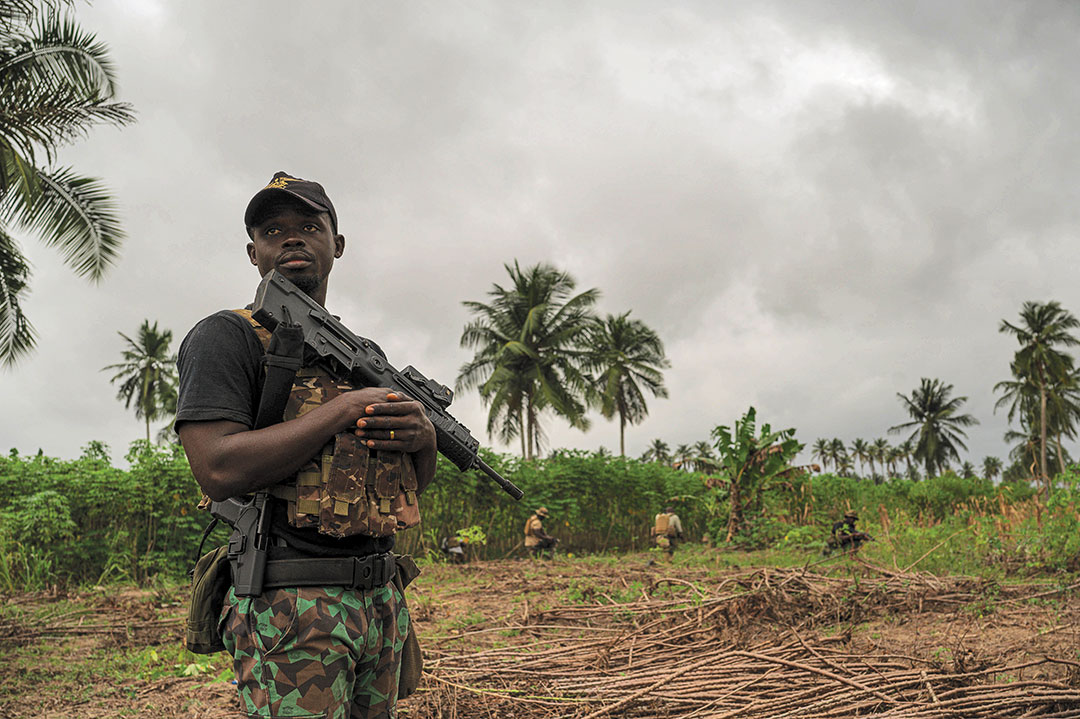
Transnational terror groups know how to find weak spots on the map. They look for regions that are isolated because countries do not cooperate militarily or share intelligence. They move along lightly guarded borders. They seek out people who feel underserved and forgotten by their government. They look for communities beset by cultural and political divisions.
These are the ingredients necessary for terrorism to thrive, and the mixture is quite strong in the Sahel.
In recent years, the Sahel has been the global epicenter of terrorism, accounting for nearly half of the world’s terror-related deaths. Military coups in Burkina Faso, Mali and Niger were launched in the name of stopping violence but have done nothing to slow its expansion. Partnerships with foreign mercenaries have led only to more bloodshed and chaos. Now, terror groups affiliated with al-Qaida and the Islamic State group are pushing toward the West African coast.
The Sahel is not terrorism’s only hot spot. Terrorist groups also operate in Somalia, the Lake Chad Basin, the Great Lakes region and Mozambique. In the past decade, terrorists in Africa killed 150,000 people.
The only way to stop these attacks is by securing the zones where terrorists operate freely. It can’t be done by one nation alone. It will require continental and regional efforts to develop joint training and knowledge and intelligence exchanges.
In some cases, this is already happening. Senegal and Mauritania jointly patrol land and maritime borders. Côte d’Ivoire has opened its International Counter-Terrorism Academy to warfighters from across the continent. Coastal nations are looking for new ways to partner with their Sahelian neighbors despite political challenges.
This cooperation is vital, and time is of the essence. Transnational terror groups that have lost ground in the Middle East have moved to Africa, with similar ambitions of establishing a caliphate that crosses borders and destabilizes much of the continent. By working together, nations can deny terrorists the space and environment they need to launch attacks. Africa’s security professionals and civilian leaders must seize the moment, recognize the shared mission and push back against the growing threat.