
Social media companies have uncovered an effort by Russia to create a fake expert to spread false information in Africa. Russian operatives used a popular artificial intelligence platform to create content for a fictitious academic and geopolitical commentator named “Dr. Manuel Godsin” to infiltrate mainstream media in Africa with pro-Kremlin propaganda.
OpenAI said it received a tip from Meta, which owns and operates Facebook, that a Russian network was targeting African audiences with content generated by its large language model application, ChatGPT. The app is trained on vast amounts of text data to understand and generate human-like language, code, and content
“The ChatGPT account’s main activity was generating social media posts and long-form commentary articles about geopolitics in sub-Saharan Africa,” OpenAI wrote in a February 25 report on malicious uses of its model. “The user mainly prompted in English but sometimes input Russian-language instructions that they attributed to their manager.”
Meta said it discovered and shut down 37 Facebook accounts and 29 pages for violating its policy on “Coordinated Inauthentic Behavior.”
“We disrupted a network originating in Russia that targeted audiences in Sub-Saharan Africa, including Angola, Ghana, Kenya and South Africa,” Meta wrote in a March report on threats. Mali, Nigeria, Togo and Uganda also were targeted.
“The network also used AI-generated content to make its accounts appear more authentic to local users, including in the Page’s visual branding, such as profile photos and advertisements promoting the Page, as well as in its influence operation materials. We shared this information with our partners at OpenAI who conducted an independent investigation into the network, leading to the removal of the network from their platforms.”
Forensic analysts with Code for Africa (CfA), a data journalism nonprofit, verified the Russian media campaign, which “copies similar ‘information laundering’ and ‘paid punditry’ techniques pioneered by Chinese state agencies in the early 2020s,” according to a March 17 report by the African Digital Democracy Observatory (ADDO).
“The content was also amplified by fake think tank websites, with some of the articles republished on global platforms, such as the Microsoft-owned global news portal MSN, as supposed credible ‘expert analysis,’” according to ADDO.
CfA investigated the fake writer and his AI-generated articles — 38 pieces of manipulated content published 73 times on at least 27 different websites in eight African countries.
“CfA’s investigation built on OpenAI’s case-study, confirming that ‘Dr. Manuel Godsin’ is a fictitious identity — a sockpuppet created to launder Russian narratives into the mainstream media ecosystem by posing as an independent commentator,” ADDO said.
In author bios given to African media outlets, Godsin is described as having a master’s degree in international crisis management from the University of Oslo and a Ph.D. from the University of Bergen.
CfA and OpenAI were unable to find him in the University of Bergen’s library. The University of Oslo said that it doesn’t offer programs in international crisis management and had no record of a current or previous student named Godsin.
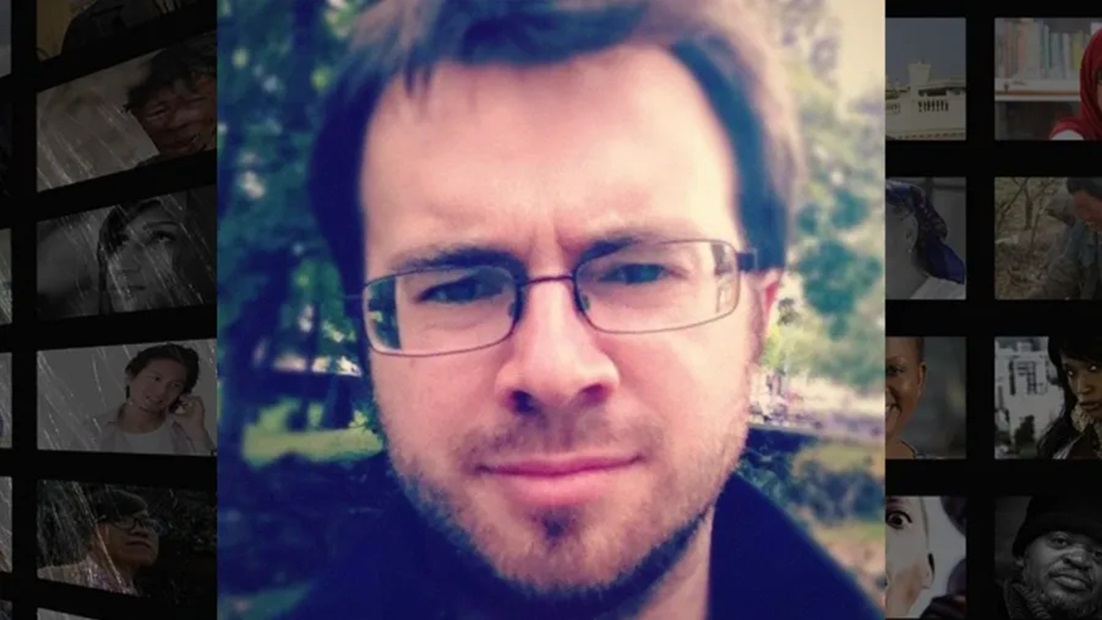
Reverse-image searches on the profile photo attached to Godsin’s articles found a match with a law student in St. Petersburg, Russia, named Mikhail Malyarov Yurievich, who posted his photo on a Russian legal networking site in the 2010s. Godsin also is described as an author of several books, none of which CfA could find in any catalogues or databases.
“The Godsin operation appears interwoven with a broader Kremlin-aligned propaganda machine targeting Africa,” ADDO concluded. “A central node in that ecosystem is African Initiative, a Moscow-based state-funded agency focused on Africa, which was launched in 2023.”
CfA analyses showed that mainstream news websites published several of Godsin’s articles shortly after African Initiative posted similar commentaries on the same subjects.
“The planting of misinformation, and in some cases of clear disinformation, in mainstream media is not only about pushing a particular narrative,” according to the ADDO article. “It is also an attack on the integrity of the news ecosystem, with a concomitant effect on trust in news media that serves the ends of actors intent on destroying the integrity of information in general.”