

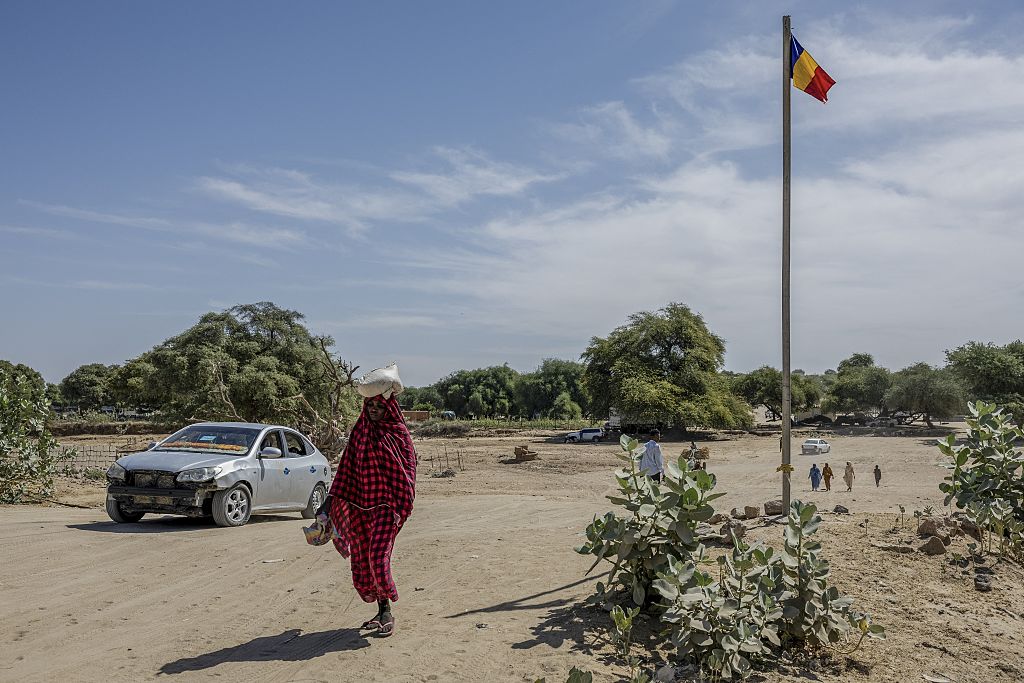
Sudan’s paramilitary Rapid Support Forces (RSF) on January 15 pursued rival Sudanese Armed Forces-affiliated (SAF) militias from the Darfur region into Chad and attacked a Chadian Army camp, killing seven soldiers and destroying combat vehicles.
The attack came after a week of fighting in the Sudanese town of Tine, North Darfur State, one of the last areas in the region where fighting between the RSF and SAF continues.
On December 26, two Chadian Soldiers were killed in a strike on an Army camp by a drone originating from Sudan, two days after the RSF briefly seized the North Darfur border towns of Abu Qamra, Ambara and Karnoi. The SAF and RSF blamed each other for the attack. The cross-border attacks stoked fears of escalating regional violence amid dire humanitarian crises in Chad and Sudan.
“We call on all parties in the conflict to stop all violations of Chadian territory,” Chadian government spokesman Gassim Cherif said in a report by The Defense Post. “This is our final warning. We cannot have our defense and security forces dragged into the conflict … or Chadians dying.”
The RSF had consolidated its control over most of Darfur by late October 2025 after overrunning El Fasher, capital of North Darfur State. Attacks increased on the Chadian border as the RSF pushed farther north to eliminate small holdouts of SAF-aligned militias known as the Joint Force and local self-defense groups known as the Popular Resistance.
The RSF attacks against members of the Zaghawa ethnic group, who live on either side of the border, risk angering the Chadian government. Chadian President Mahamat Déby and much of the upper echelons of Chad’s military are members of this group.
The increased violence has strained Chad’s border towns as a continuing influx of Sudanese refugees cross the countries’ 1,400-kilometer border. Between December 22 and January 16, about 18,000 Sudanese families fled to Chad amid skirmishes that killed 103 civilians and wounded 88, the People’s Dispatch reported. The population in the town of Adré, where most of the Sudanese refugees enter Chad, has risen tenfold since the war began, causing prices to rise amid increasing unemployment and exacerbating outbreaks of cholera and other illnesses.
Since the war began in April 2023, Chad’s eastern provinces bordering Darfur have taken in more than 1 million people fleeing the violence. Lacking sufficient funding, Chad’s humanitarian response agencies are overwhelmed. Charlotte Slente, secretary general of the Danish Refugee Council, told Radio France Internationale in November 2025 that she saw “one of the most complex humanitarian crises one can imagine” after visiting refugee camps in Chad.
She told the story of a family whose home was bombed and burned and who lost a child and another family member in the fighting. “What they described to me was a nightmare situation of random attacks and massacres of civilians,” Slente said.
Slente added that the Sudanese are arriving in host communities that welcome them but are also in dire need of basic items to survive. According to the Global Conflict Tracker, more than 11 million Sudanese have been displaced by the war and more than 30 million people need humanitarian assistance. Some estimates place the war’s death toll as high as 150,000.
The SAF now largely controls the country’s eastern, central and northern territories, while the RSF dominates parts of the south, as well as nearly all of the Darfur region. On January 14, peace efforts resumed in Cairo with Egypt and the United Nations calling on the SAF and RSF to agree to a nationwide humanitarian truce. Egyptian Foreign Minister Badr Abdelatty said Egypt would not accept the collapse of Sudan or its institutions, or any attempt to undermine its unity or divide its territory.
“There is absolutely no room for recognizing parallel entities or any militias,” Abdelatty said in a report by The Associated Press. “Under no circumstances can we equate Sudanese state institutions, including the Sudanese army, with any other militias.”
All ceasefire talks have failed.