
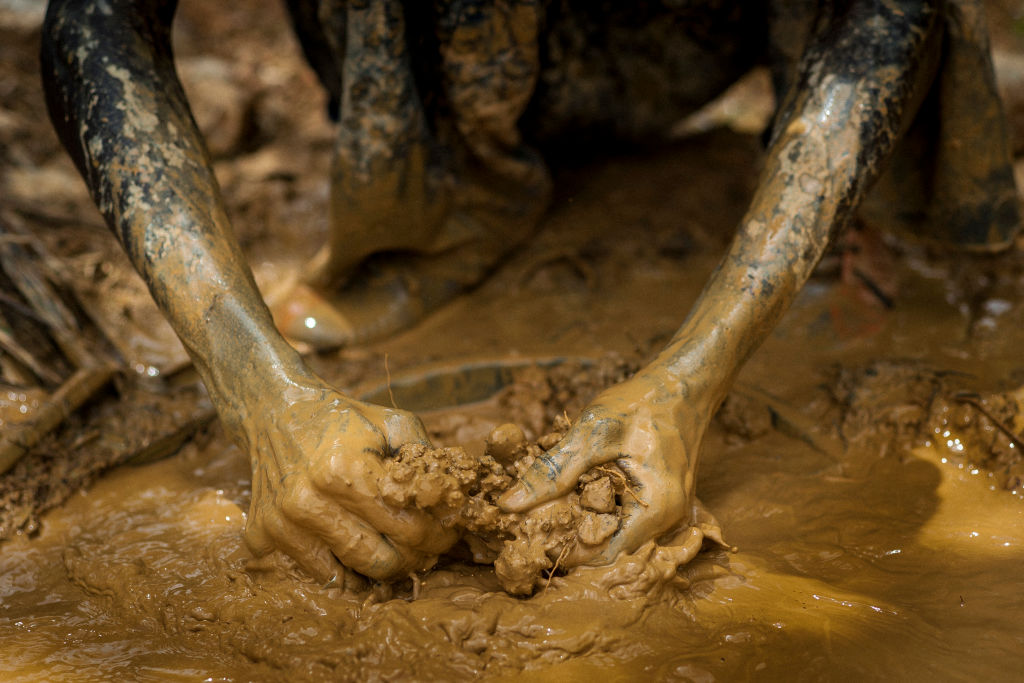
Despite a national crackdown on illegal gold mining in Ghana, the practice, locally known as “galamsey,” continues to contribute to the annual loss of billions of dollars.
The mining is being driven by a combination of factors that includes depressed local economic conditions, scarce jobs, and lax enforcement. Some blame the influx of Chinese migrants for worsening the situation. Analysts say foreign miners exploit government regulatory lapses and have introduced large scale machinery such as dredging equipment that is destroying land and water sources.
Many of the foreign miners were aided by China’s “Go Out” policy, which began encouraging Chinese migrant workers to travel to the continent, and particularly Ghana around 2008.
According to researcher Nathaniel Ocquaye writing in the London School of Economics and Political Science, the arrival of the Chinese miners irreversibly transformed Ghana’s artisanal and small scale mining sector into “a mechanized, industrial-scale activity.” “Bulldozers and excavators levelled up forests within a few days — an impossible feat for locals using hand tools. Cocoa farms vanished like mist wherever the Chinese miners arrived,” he wrote
Heavy metals such as mercury and chemicals like cyanide, used to process gold from excavated soil, also are killing the nation’s rivers. This has been linked to serious illnesses, birth defects and declining fish populations, which rankles fishermen such as Benjamin Yankey, who for years relied on the Ankobra River for his livelihood.
“Previously, we had different varieties of fish in this river, but because of the ongoing galamsey activities in the communities, the water has been polluted,” Yankey told Africanews.
In Elmina, one bucket of water is considered a blessing. Jennifer Dazi, 72, spends hours a day sitting near a local tap from which water occasionally flows at dawn — and some days, not at all.
“My legs are too weak to go searching for water,” Dazi told Ghana’s Joy News television channel. “I even struggle to walk from my house to this place. I now use sachet water to rinse my foodstuff. I don’t have water unless I buy sachet water to use.”
Sachet water is filtered or sanitized water commonly sold in plastic, heat-sealed bags. Lack of water in Ghana is an ongoing crisis. According to a 2023 report by the United Nations International Children’s Emergency Fund, nearly 22% of rural Ghanaians lack access to safe drinking water year-round. In the North East and Savannah regions, more than 40% of the population lacks access to basic drinking water, the Ghana Sustainability Times platform reported.
While Ghana deported more than 4,500 Chinese nationals during a 2013 crackdown on galamsey, their technology was left behind and used by locals who repurposed it and began manufacturing it locally. According to Ocquaye, Chinese entrepreneurs now export dredging machines known as “changfa,” bulldozers and excavating equipment to Ghanaian business partners. The Ghana National Association of Small-Scale Miners has called for the government to ban the machines, which are responsible for contaminating rivers with mercury.
Some illegal Chinese miners have used money from galamsey to establish legal businesses in Ghana, including supermarkets, construction companies and casinos. This created a network of undercover businesses involved in gold smuggling and recruiting more Chinese miners.
Ocquaye wrote that the Chinese would not have thrived in illegal mining had they not been aided by corrupt Ghanaian government officials, some of whom provide false immigration documents for a fee. Local chiefs also are known to sell farmland to Chinese miners, while some artisanal miners procure mining licenses on behalf of Chinese miners.
In recent months, there have been several consultation meetings involving Ghanaian government officials, civil society organizations and security agencies seeking ways to eliminate galamsey. Officials established a new task force comprising prominent individuals and state agencies to coordinate efforts, Manaseh Mawufemor Mintah wrote for Ghana’s My Joy Online. The government also has deployed “Blue Water Guards” along rivers as a form of vigilante force, and officials have discussed using drones and high-tech monitoring systems for surveillance.
Ocquaye argued that Ghana should “thoroughly examine and strictly regulate every Chinese business operating in the country” and promoted the idea of Ghana and China collaborating to mitigate the crisis.
“China can provide Ghana the much-needed financial resources and technical expertise as a sign of goodwill in its bilateral relations with the latter,” he wrote. “Ghana should also incorporate civic education and training on good mining practices into the local governance of mining communities in order to foster good citizenship and compliance with mining laws.”