

Jama’at Nusrat al-Islam wal-Muslimin (JNIM) amasses an estimated $100 million a year through a web of illicit activities that illustrates the way terrorism, organized crime and public corruption are connected.
“Make no mistake, today illicit economies in the Sahel and West Africa are interlinked criminalities across borders,” David M. Luna, executive director of the International Coalition Against Illicit Economies (ICAIE), told a recent webinar hosted by the Nigerian Financial Intelligence Unit (NFIU).
Porous borders, rapidly expanding digital technology, and a lack of security in so-called ungoverned spaces across Burkina Faso, Mali, Niger and Nigeria, for example, allow criminal operations to thrive, Luna reported.
Terrorist groups such as JNIM, the Islamic State group and Boko Haram exploit those weaknesses to raise millions of dollars and project their authority in place of local governments.
“Criminally derived profits from the trafficking of illicit goods and contraband have a harmful influence on economic development, prosperity and peace and security,” Luna noted.
JNIM, for example, has developed a complicated mix of crimes, including artisanal mining, extortion, kidnapping, livestock theft, roadblocks and forced zakat payments, to support its violent extremism across the region.
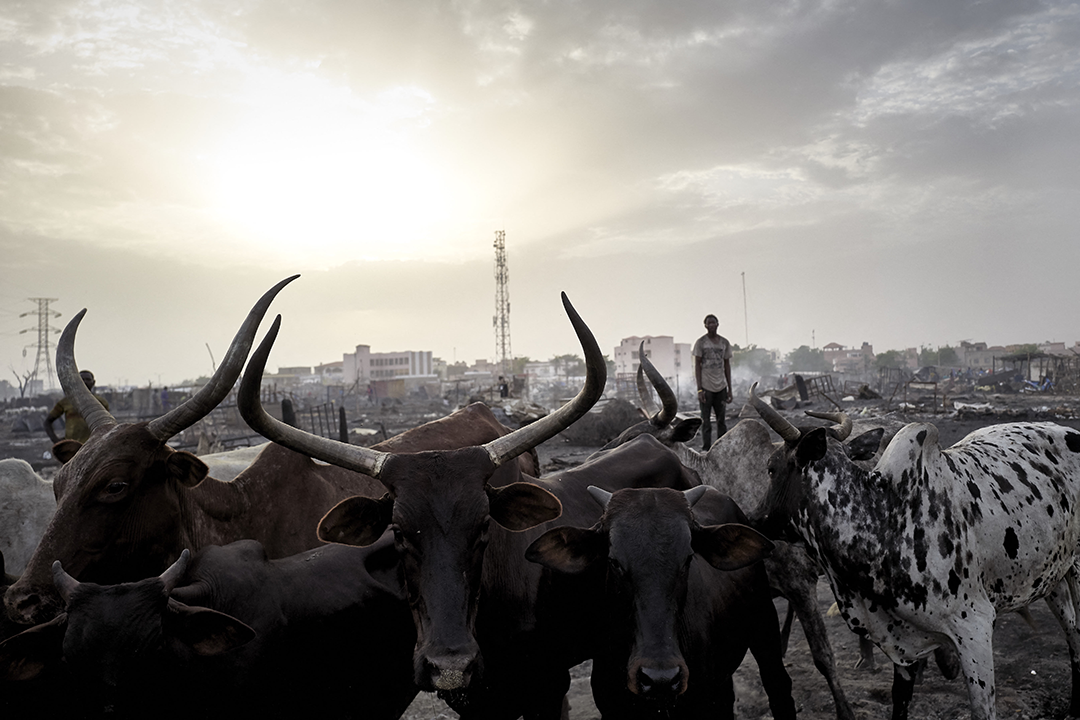
As an illustration of the scale at which JNIM operates, the group accumulated nearly $740,000 from cattle rustling in a single district in Mali in 2021, according to analyst Elena Martynova of the Insight Threat Intelligence newsletter.
While JNIM relies on gold and cash distributed across its network of commanders, Islamic State West Africa Province has experimented with using cryptocurrency to store and transfer funds, according to Martynova.
Those illicit funds underpin terror groups’ ability to attack civilians and security forces. They also help the group corrupt public officials, undermining faith in local governments, according to Luna.
It’s a vicious cycle, he added in an article published by Homeland Security Today.
“Insecurity weakens governance and law enforcement, creating more opportunities for illicit markets,” Luna wrote. “Those markets then generate resources that allow armed and criminal groups to expand their influence, purchase weapons, corrupt officials, and challenge government authority.”
Left unchecked, the illicit economies that fuel JNIM and other terrorist groups subvert public institutions to become self-perpetuating sources of chaos and insecurity, Luna noted.
JNIM and other terrorist groups are likely to remain financially resilient unless key revenue streams, such as gold smuggling, livestock theft and ransom kidnappings, are disrupted, Martynova wrote.
Groups like NFIU play a vital role in defeating terrorist groups by finding and destroying their funding infrastructure, Luna told the webinar.
“Attacking their financial underpinnings is the center of gravity,” Luna said. That includes stripping groups of their illicit funds; cutting them off from legitimate financial systems and underground banking; exposing crimes hidden behind legitimate fronts; and protecting strategic markets from criminal infiltration.
Financial intelligence units can’t do the work alone, however. They must work across borders to share information with other FIUs and with law enforcement, security agencies and civil authorities, Luna added.
“To defeat transnational criminal networks that pose the greatest threat to regional security entails targeting their infrastructure, their logistics and depriving them of their enabling financial means,” Luna said. “It is a shared responsibility among trusted partners.”