

Sudan’s Rapid Support Forces (RSF) launched a May 3 drone strike against a fuel storage facility at Kenana Sugar Co. Ltd. in White Nile State, setting fire to one of the country’s most important pieces of economic infrastructure and weakening the nation’s food security.
“The targeting of facilities that had just resumed operations after years of shutdown demonstrates systematic economic warfare that compounds Sudan’s humanitarian crisis,” the Darfur Network for Human Rights posted in a statement about the attack on X.
The Kenana attack happened weeks after Sudan’s civil war entered its fourth year. It came after drone attacks by the Sudanese Armed Forces (SAF) against the Adre border crossing between Chad and Sudan’s West Darfur State and against the al-Wihda market in West Kordofan as the military attempts to drive the RSF out of the region.
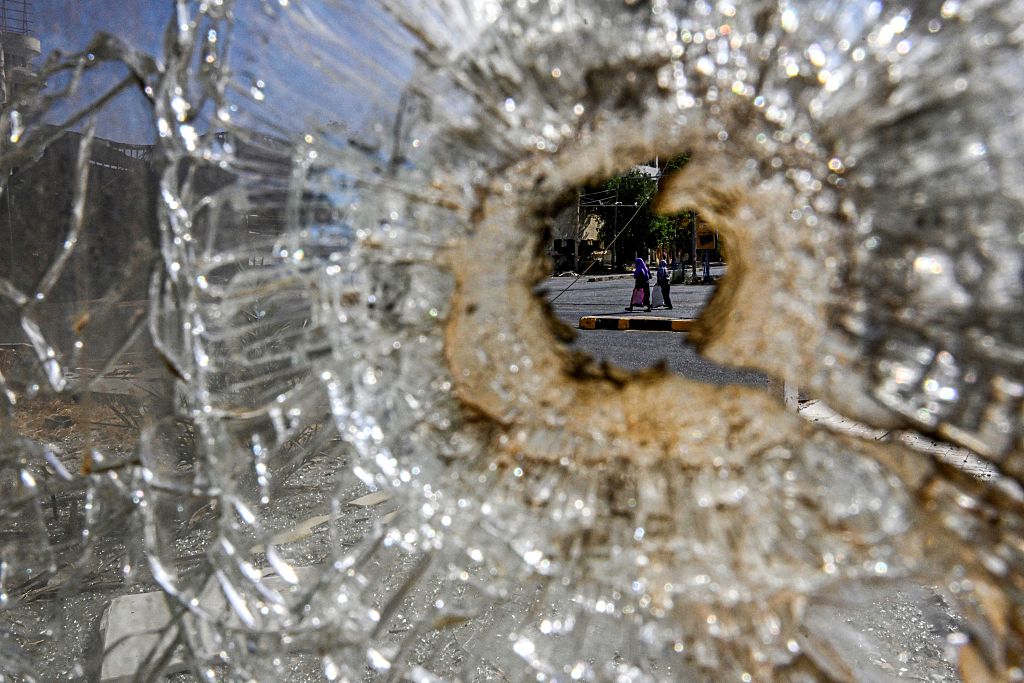
The attacks against Adre, al-Wihda and Kenana Sugar Co. illustrate the relentless nature of Sudan’s civil war, in which both sides increasingly use drones to attack civilians and civilian infrastructure.
According to the United Nations, nearly 700 civilians have died since the beginning of this year in SAF and RSF attacks as the two sides fight for control of territory.
Three years after the war began, both sides remain evenly matched thanks to support from external sources — the United Arab Emirates in the case of the RSF, and Türkiye in the case of the SAF. As battles continue, lines of control appear to be hardening, with the RSF largely in control of western and southern Sudan while the SAF controls the north and east.
Recent RSF forays into Blue Nile and White Nile states, allegedly originating from bases in Ethiopia, so far have failed to bring those areas under the RSF’s control.
“There is no sign that either side can fully defeat the other, nor that a stalemate is close,” analyst Ahmed Soliman wrote recently for Chatham House.
Despite repeated attempts by international mediators to negotiate a peaceful settlement, both sides have refused to put down their weapons.
Speaking at the end of April, SAF leader Gen. Abdel Fattah al-Burhan, the de facto president of Sudan, repeated his refusal to negotiate with the RSF, which he termed a “rebel militia.”
Drones have become central to each side’s attacks on the other’s positions, with the RSF frequently relying on UAE-supplied commercial off-the-shelf technology while the SAF uses a mix of commercial drones and military-level unmanned aerial vehicles (UAV) supplied by Türkiye.
The RSF claimed to have shot down a Turkish Bayraktar Akinci drone involved in the SAF attack on the Wihda market that killed three women and six children. Meanwhile, the RSF used drones to attack hospitals and other civilian infrastructure during its monthslong siege of el-Fasher, the capital of North Darfur, last year. On May 2, RSF fighters killed five civilians in a drone strike on a car in a community near the SAF-controlled capital, Khartoum.
While al-Burhan and RSF leader Gen. Mohamed Hamdan “Hemedti” Dagalo battle for territory, Sudan’s civilians are caught in the crossfire.
Since the war began, international agencies estimate that more than 150,000 people have been killed, about 13 million displaced and more than 33 million need of humanitarian assistance. RSF fighters have been accused of genocide for the widespread killing that occurred after they captured el-Fasher in October 2025.
Civilians often are targeted when territory changes hands, with the incoming fighters launching retaliatory executions against people they accuse of collaborating with the other side. SAF forces also target individuals advocating for a return to democratic rule, according to analyst Hamid Khalafallah.
“While they may differ in tactics and motivations, both the SAF and RSF share an interest in suppressing pro-democracy actors and movements that challenge their authority,” Khalafallah wrote recently for the Tahrir Institute for Middle East Peace.