
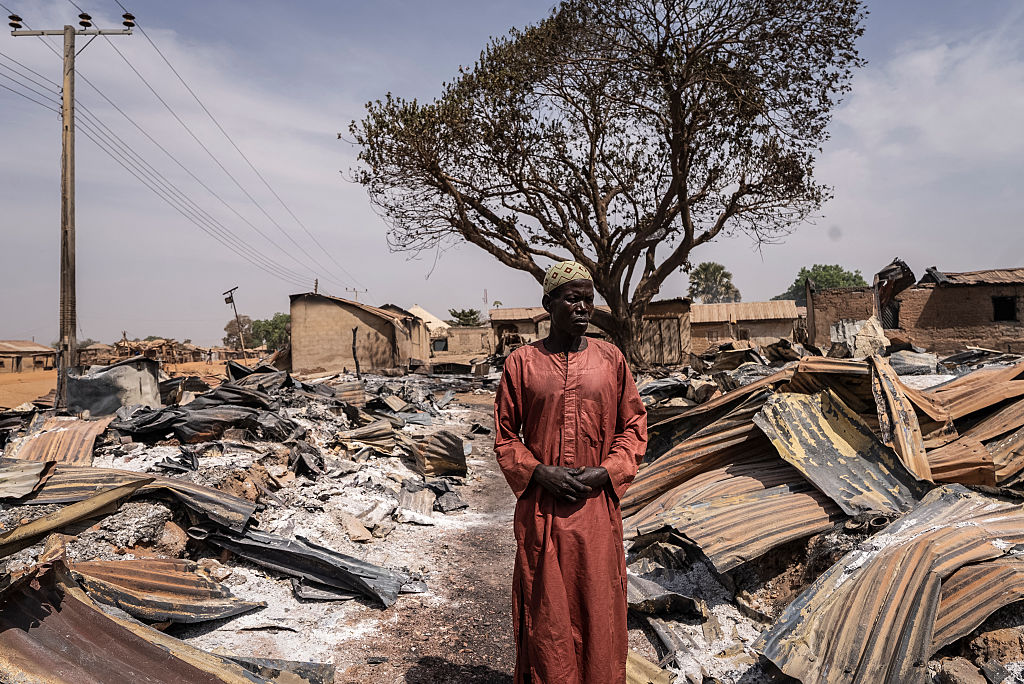
Nigeria was shaken after members of a Boko Haram offshoot killed about 200 people and kidnapped 38 on February 3. Some of the victims were shot to death, others were burned alive.
Survivors said jihadists had sent a letter demanding that villagers embrace their strict interpretation of Islam and were infuriated when community leaders declined. Woro is predominantly Muslim, and about 90% of those killed in the attack were Muslims.
Days after the massacre, Nigeria’s Punch newspaper identified Abubakar Saidu, locally known as Sadiku, as the leader of the attack. Sadiku heads the Jama’atu Ahlis Sunna Lidda’awati wal-Jihad (JAS) terror group. In 2025, he established a base in the Kainji Forest Reserve, which spans Kwara and Niger states. The group also is active in Borno and Kaduna states, and across the Lake Chad Basin.
According to the Institute for Security Studies (ISS), Sadiku is a Borno State native. He was sent to Niger State in 2014 by the late JAS leader Abubakar Shekau and was part of a group directed to meet members of the Darul Islam terror group, which had rejected Boko Haram’s overture for alignment. Sadiku, however, found common cause with the group’s followers and formed a JAS cell in Niger State.
He traveled between Borno and Niger states, embedded himself in the Alawa Forest Reserve and coordinated with the local Fulani. Sadiku’s cell began launching attacks in 2021. For a while, Sadiku maintained an alliance with notorious bandit kingpin Dodo Gide, using the partnership to acquire weapons, intelligence and local influence until ideological differences fractured relations, leading to deadly clashes.
From forest camps such as Kugu and Dogon Fili in Niger State, JAS has attacked security forces and civilians in villages and towns, and on roads in the Shiroro, Munya and Rafi local government areas. It has killed hundreds, displaced thousands and planted numerous improvised explosive devices.
According to the ISS and Nigeria’s Premium Times newspaper, the group is known to abduct boys who are forced into labor and indoctrinated at Islamic schools. Women and girls are commonly kidnapped and forced into marriages with JAS fighters. Ideologically fluid, the group blends jihadism with banditry.
“Unlike the doctrinal and tighter command discipline of rival Boko Haram faction Islamic State West Africa Province’s (ISWAP), JAS thrives on ideological fluidity and predation,” wrote ISS researcher Taiwo Adebayo. “Militants raid villages, carrying out kidnapping and extortion, which they justify as ‘fayhoo’ (spoils taken from civilian ‘unbelievers’). This flexibility appears key to its entrenchment in Niger State.”
The Woro attack was less than 4 kilometers from Nuku, where fighters of the al-Qaida-affiliated Jama’at Nusrat al-Islam wal-Muslimin (JNIM) terror group launched their first attack in Nigeria in October 2025. The proximity suggests an operational overlap between JNIM and JAS — either an opportunistic alliance or a nonaggression pact, west and east African security analyst Brandon Phillips wrote on X.
The Woro massacre followed patterns similar to recent attacks in the Papiri area of Niger State, indicating a continued southward push by JAS toward areas of the Kainji Reserve dominated by JNIM. Operational links between JNIM and JAS became increasingly evident between November and December 2025, when Sadiku redeployed most of his fighters into JNIM-controlled areas of Kwara, Niger and southern Kebbi states, according to Phillips.
The analyst also linked JNIM to the kidnapping of Catholic children in Papiri, Niger State, after a JAS operation.
“These attacks have occurred within established JNIM operational zones, suggesting continued cooperation between the two groups,” Phillips wrote.