

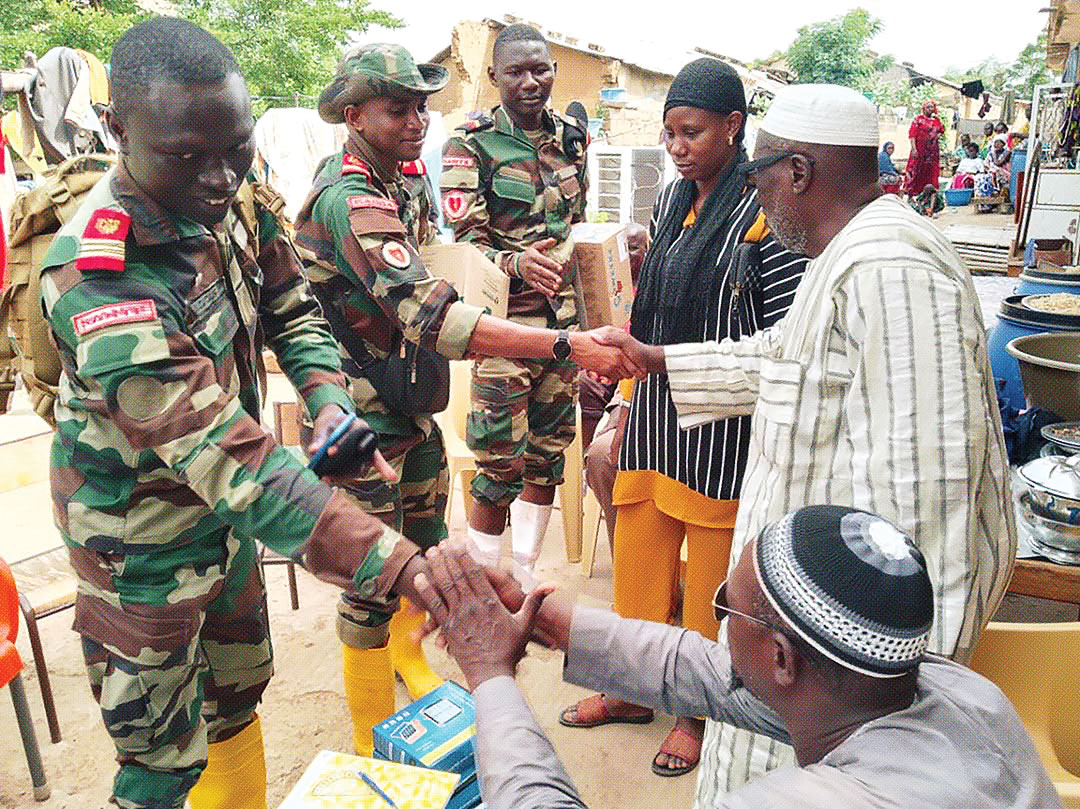
What is security? It could mean access to food, shelter, health care, economic stability or protection from violence. Often it means all of the above.
Increasingly, militaries are taking a holistic approach to security provision. They know that their primary responsibility is to protect the citizens of the country, but that rarely can be done through military means alone. More often, complex problems require a response that addresses the root causes of insecurity.
In West Africa, for example, coastal nations face a growing threat from Sahel-based terrorist groups. These groups are determined to expand southward and form a caliphate that crosses borders.
In many coastal countries, terror groups target regions that are underdeveloped with little state presence. Terrorists capitalize on this by offering jobs and services, and by preaching an ideology that fans the flames of local grievances.
In response, militaries have recognized that providing security must include building trust with civilians. In Benin, the armed forces have launched civil-military committees that promote dialogue and hold events such as veterinary and health clinics. The outreach is part of a broader national strategy that includes provision of state services, investment in the region and an increased military presence to face down the terrorists. Similar efforts are underway in Côte d’Ivoire, Ghana and Togo. The goal is to build resilience in these border communities so they are no longer vulnerable to terrorist recruitment.
This is just one way that militaries are widening the scope of what they do. In Senegal, the Armed Forces sprang into action during historic flooding in 2024 to evacuate people, provide logistical support and distribute aid. The Kenya Defence Forces are stopping cattle rustling and shutting down the illegal weapons trade that fuels intercommunal violence. In Mauritania, camel-riding National Guard Soldiers known as Meharistes visit isolated communities and provide everything from clean water to medical care.
Holistic security cannot be a military-only strategy. Experience shows that when security forces are part of a whole-of-government and whole-of-society effort, results are better. By viewing insecurity from the perspective of the people they serve, governments, civil society groups and military professionals can offer results that are effective and long-lasting.