
Lakurawa, which began as a self-defense force in northwestern Nigeria, has evolved into a Boko Haram-aligned terrorist organization, preying on civilians and imposing its own strict version of Islamic law wherever it goes.
“Lakurawa now cooperates with Boko Haram and operates as a hybrid actor, blurring the line between religious extremism and organized crime,” analysts Taiwo Adebayo, Célestin Delanga, and Remadji Hoinathy wrote recently for the Institute for Strategic Studies (ISS).
According to the researchers, Lakurawa operates primarily in Nigeria’s northwestern Sokoto and Kebbi states and in bordering regions of Benin and Niger. Tense relations with Niger’s ruling junta have hindered security operations along that border since 2023, they note.
Weak security relations, porous borders and a lack of a strong government presence have allowed Lakurawa to grow, according to analysts.
Lakurawa began a decade or more ago as a regional force composed of fighters from Mali, Niger and Nigeria dedicated to fighting banditry. It quickly gained public support in a rural region where the government security footprint was light.
“Clearly, the vacuum left by the state enabled Lakurawa to set up parallel governance structures, appoint local imams, levy taxes and enforce extreme religious prescriptions on villages,” the ISS researchers wrote.
Soon, the anti-banditry group turned to banditry — kidnapping people for ransom, stealing cattle and seizing harvests — to fund its operations. Like other Islamic extremists, Lakurawa fighters defend their actions as part of their victims’ religious obligations, often labeling them as zakat, a tax required under Islamic law.
“Many villagers now express deep regret over ever accommodating the group,” Malik Samuel, a senior researcher at Good Governance Africa-Nigeria, wrote based on first-hand accounts from a Lakurawa camp.
“At the time of Lakurawa’s arrival, resistance was impossible,” Samuel added. “The group portrayed itself as a moral force, and state security actors were conspicuously absent.”
Starting in 2023, according to ISS researchers, Lakurawa fighters began visiting Boko Haram camps in the northeast, and handfuls of Boko Haram fighters began relocating to the northwest. Lakurawa terrorists launched their first attack on locals in November 2024, killing 17 people in the village of Mera in Kebbi State. Nigeria’s government declared Lakurawa a terrorist group in January 2025.
Over the next few months, Lakurawa killed as many as 250 people, including bandits, civilians and Soldiers, as it spread across the region, according to reports by the Armed Conflict Location and Event Data project (ACLED) and Amnesty International. Its tactics mirror those of Boko Haram, which attacks civilian and security targets alike in Borno State.
“They are displacing and expelling locals from their settlements and converting them to their recruitment and training camp,” one local leader in Sokoto State told The Africa Report. “They assess your level of Islam, but most people fail and they make them their subjects.”
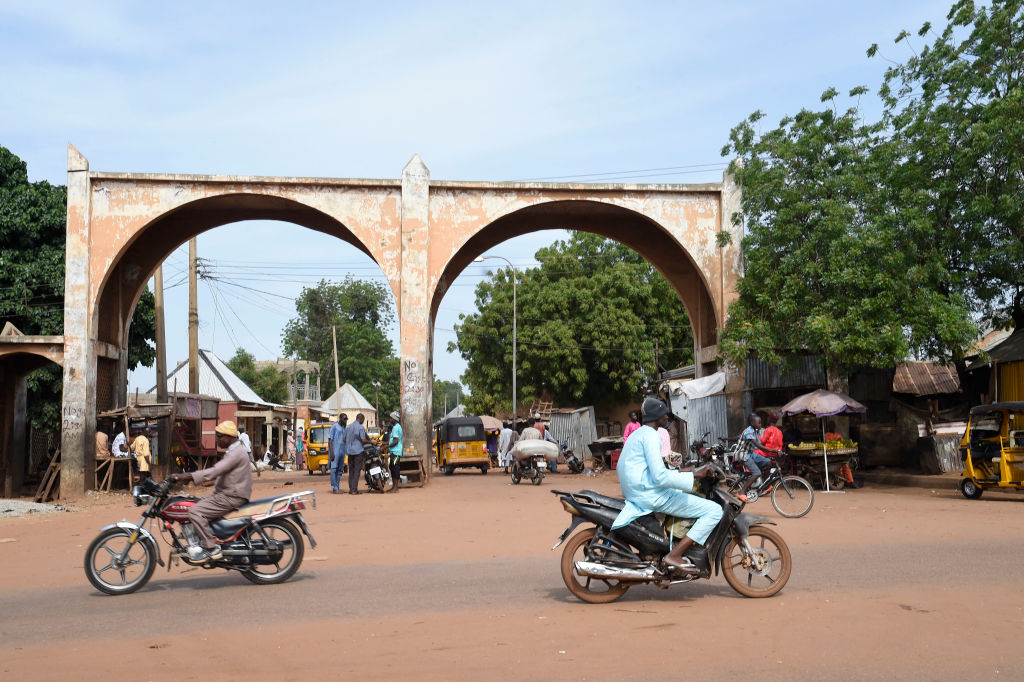
Like other terrorist groups in the Sahel, Lakurawa fighters travel on motorcycles and make their hideouts in forested areas. They raid communities, whip civilians for a host of offenses such as playing music and demand tribute in the form of cattle.
The theft of cattle, including oxen used to plow fields, has undermined agricultural output and threatens food security across the region, according to Samuel.
Lakurawa’s kidnapping victims include the deputy speaker of the Kebbi State legislature, Muhammad Sama’ila Bagudo, who was held for a week in early November. He was released after paying a $140,600 ransom, some of it in CFA francs used in Benin, Niger and much of French-speaking West Africa.
Bagudo’s abduction demonstrated Lakurawa’s expanding operational reach, according to Samuel.
“The threat is active, growing, and waiting for the moment when it can fully erupt, unless Nigeria actively and urgently works to ensure that the threat never materializes,” he wrote.