

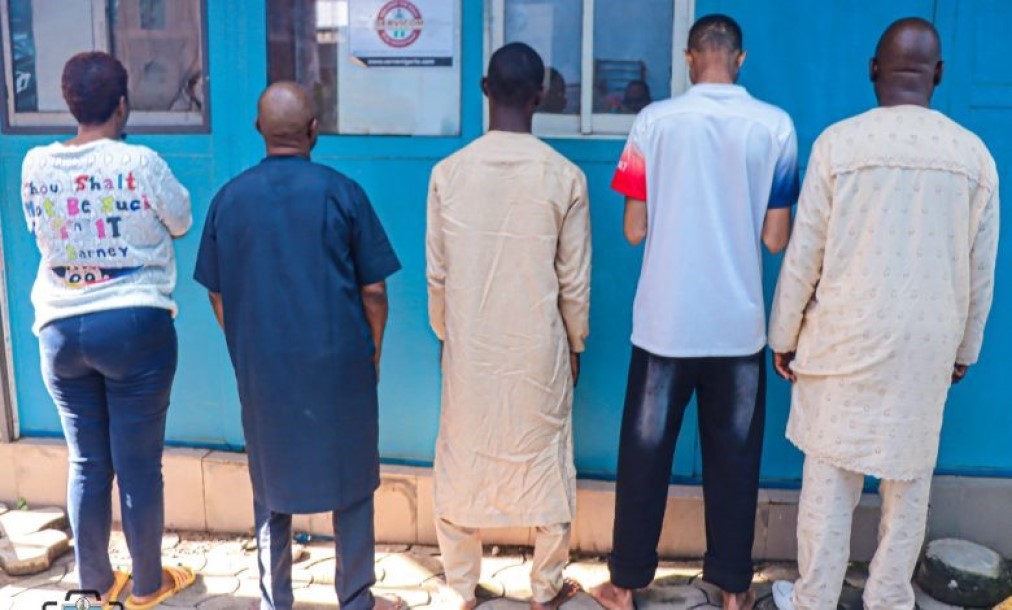
In a dramatic six-hour operation, Nigerian authorities conducted a raid at Nnamdi Azikwe International Airport in Abuja, arresting five suspects and rescuing 24 victims of human trafficking.
Recruiters targeted the victims, between the ages of 15 and 26, in Kano, Kastina, Oyo, Ondo and Rivers states. They were at the airport on October 1, heading to Afghanistan, Bahrain, Egypt, Iraq, Saudi Arabia and Sudan.
“They told my mother that they are taking me to Europe, where I will work and earn dollars,” one of the victims told Nigeria’s National Agency for the Prohibition of Trafficking in Persons (NAPTIP). “My parents were happy, and they allowed me to follow them.”
Nigeria is stepping up its efforts to combat human trafficking, a modern form of slavery that has had a resurgence throughout the continent. Led by Director General Binta Adamu Bello, the agency is at the heart of those efforts.
“We observed that the Nnamdi Azikwe International Airport is becoming a comfort zone for these traffickers, and that is why we have decided to shift attention to this airport,” she said. “We will sustain this raid until they stop this unpatriotic and illicit trade in human beings. Human trafficking is a visible national concern, and we all must be on the same page to turn the heat on the traffickers. Our resolve to ensure the protection of Nigerians from all forms of exploitation is firm and resolute.”
As part of the agency’s efforts to raise awareness, Bello has shown that human trafficking is a threat to Nigeria’s national security, because it fuels other criminal activities and is frequently intertwined with other illicit trafficking. Researchers have documented links between transnational criminal syndicates and mafia-style gangs, cults and other criminal organizations in Nigeria.
Bello said victims of human trafficking are transported daily from rural to urban areas and across borders for sexual slavery, hazardous labor and recruitment into terrorism and armed conflict. She shared a stark list of crimes and social ills linked to human trafficking during a NAPTIP event in November in Dutse, the capital of Jigawa state in northern Nigeria.
“It fuels public-sector corruption, irregular migration, undermines human capital development potentials, causes social breakdown and exclusion, a dearth of capable manpower, human degradation, abuse of human rights, the spread of diseases; it tarnishes the national image, and is associated with financial crimes,” she said.
Earlier this year, Bello ordered increased surveillance throughout the country with an emphasis on international airports, motor parks and coastal waterways. NAPTIP’s Public Enlightenment Unit also works to raise awareness in remote areas of Benue, Edo and Kogi states and has educated thousands of women, children and educators on how to prevent human trafficking.
NAPTIP and several other Nigerian law enforcement agencies worked together with Interpol and Afripol in September 2024. The five-day operation, which netted 36 arrests, highlighted the transnational dynamics of human trafficking and the vulnerabilities of people seeking better opportunities across borders.
“West African organized crime groups are considered to be among the most aggressive and expansionist criminal groups for their involvement in a broad range of illegal activities, from people smuggling, human trafficking, extortion and kidnapping to cybercrime and money laundering,” Interpol Acting Executive Director of Police Services Cyril Gout said.
Economic hardship in Nigeria and high demand for cheap labor and sexual exploitation abroad are driving factors that have led many women and children to seek risky job and education opportunities. Human trafficking also is linked to other illicit trafficking networks.
Africa is a primary source and transit point for the illegal wildlife trade, a multibillion-dollar industry led by organized criminal gangs with operations around the world. New research in the Journal of Economic Criminology has shown that these gangs also are frequently involved in other forms of criminal activity, including trafficking in drugs, arms, people, stolen vehicles, extracted natural resources, counterfeit goods and human body parts.
“We’re seeing criminal networks around the world being more adaptable and interconnected and almost commodity agnostic,” University of Oxford researcher Michelle Anagnostou told Scientific American magazine for a November 21 article.
“The previous long-standing approach of countering each type of organized crime separately is no longer sufficient. [We need] a comprehensive organized crime approach to trafficking activities as a whole with less focus on the commodity being trafficked.”