
Africa continues to experience some of the world’s highest levels of crime and the lowest levels of resilience to it.
The Enhancing Africa’s Response to Transnational Organized Crime (ENACT) project’s 2025 Africa Organized Crime Index reported that the most pervasive offenses plaguing African nations are financial crimes; followed by human trafficking; nonrenewable resource crimes, such as illegal mining; trade in counterfeit goods; and arms trafficking. The increase in financial and counterfeit goods offenses reflects global trends.
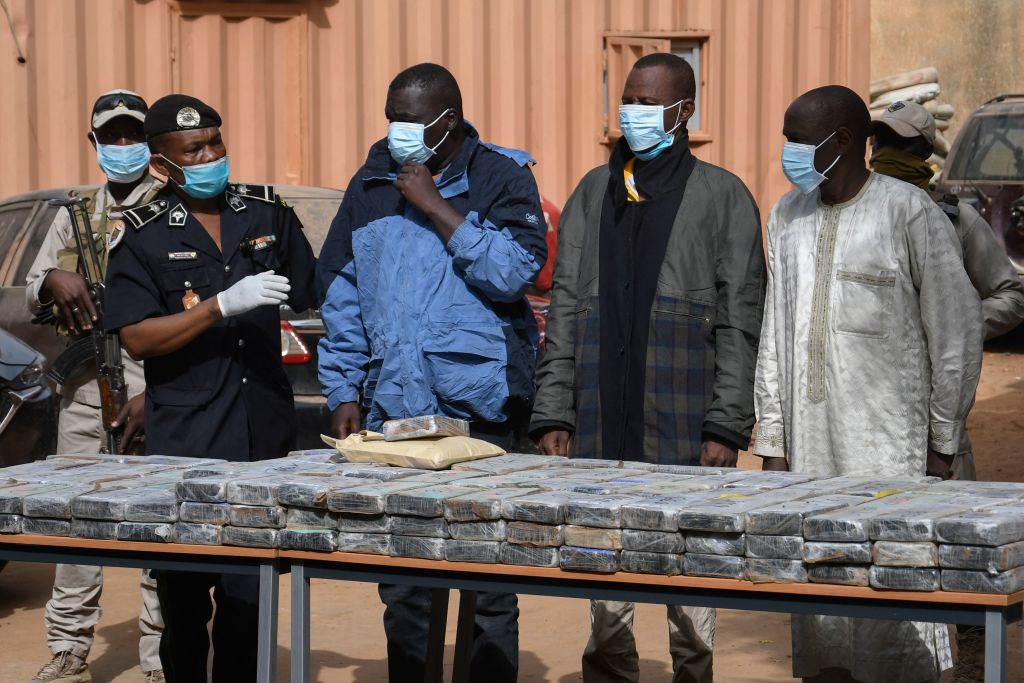
Between 2019, when the first ENACT report was released, and 2025, the cocaine trade was the fastest-growing criminal market on the continent, followed by human smuggling, which is driven by people fleeing conflict zones. The new report was compiled between 2023 and 2025.
Although crimes related to the illegal extraction of natural resources are consistently prominent, arms trafficking,the illegal trade and exploitation of plants and wildlife and cyber-dependent crimes have marginally decreased since 2023, when financial crimes and trade in counterfeit goods began to rise significantly.
“State-embedded actors, in particular, remain the most dominant drivers of criminality since the first assessment in 2019, leveraging official authority to enable and sustain illicit economies,” the report said.
Criminal networks, mafia-style groups, foreign actors and private sector actors — non-governmental groups and companies that operate for profit — also were highlighted as drivers of crime. Among these groups, the influence of foreign actors and private sector actors has increased the most since 2023. West Africa ranked highest for involvement of foreign actors in Africa — and the world — due largely to global cocaine routes. Private sector actors were most prominent in East Africa. According to the report, mafia-style groups and criminal networks only marginally increased their influence continentally between 2019 and 2025.
Regional Breakdown
In Central Africa, the largest criminal markets involve nonrenewable resource crimes, followed by human and weapons trafficking, financial crimes, and the illegal trade and exploitation of plants and wildlife . The largest criminal market in East Africa is human trafficking, followed by arms trafficking, human smuggling, financial crimes and nonrenewable resource crimes. Financial crimes dominate North Africa, followed by human smuggling, the cannabis trade, the synthetic drug trade and counterfeit goods trafficking.
Southern Africa is plagued mostly by financial crimes, followed by illegal wildlife crimes crimes, non-renewable resource crimes, the heroin trade and the cannabis trade. South Africa grapples mostly with entrenched gangs, rampant fraud, embezzlement and corruption.
Rumi Matamba, an analyst at the Global Initiative Against Transnational Organized Crime, said one difference from previous ENACT reports was the increased use of technology in organized crime in South Africa.
“In fact, South Africa increased its cyber-dependent crime score, which ranks quite highly within the region in comparison to other countries,” Matamba told South Africa’s SABC News, the country’s public broadcaster. “So, the use of technology in facilitating organized crime has been noted.”
Due partly to corruption, the cocaine trade has become West Africa’s largest criminal market, followed by human trafficking, trade in counterfeit goods, nonrenewable resource crimes and financial crimes.
Overall resilience to organized crime slightly decreased continentally between 2023 and 2025. The report said this was driven by: poor anti-money laundering efforts; insufficient economic regulatory capacity; ineffective political leadership and governance; flaws in judicial systems; waning territorial integrity; law enforcement concerns; and the actions of nonstate actors. Only Southern Africa and West Africa recorded higher-than-average resilience scores.
Scientific Approach ‘Urgently Needed’
Most African countries have signed onto the United Nations Convention against Transnational Organized Crime (UNTOC) since its inception in the early 2000s. The treaty aims to promote cooperation between countries and protect the international community against spreading organized crime.
However, there is no observable difference in crime across the continent between early ratifiers, late ratifiers and nonratifiers of the UNTOC, the report said. In East Africa, for example, historical modes of cooperation typically are more effective at combating crime than UNTOC measures.
“Ultimately, African leaders cannot afford to be complacent while the harms of crime persist, and yet being party to an international convention on organized crime does not mean that governments are addressing the problem,” the report said. “Steps to ameliorate the threat on the continent should focus on strengthening law enforcement, improving the capacity of public institutions to target organized crime, tackling corruption and undoing the effects of state capture.”
The report argued that a more scientific and robust approach to disrupting criminal markets in Africa “is urgently needed,” adding that the technological capacity of law enforcement and investigative bodies should be strengthened while investments in information and communication technology systems should be prioritized.