

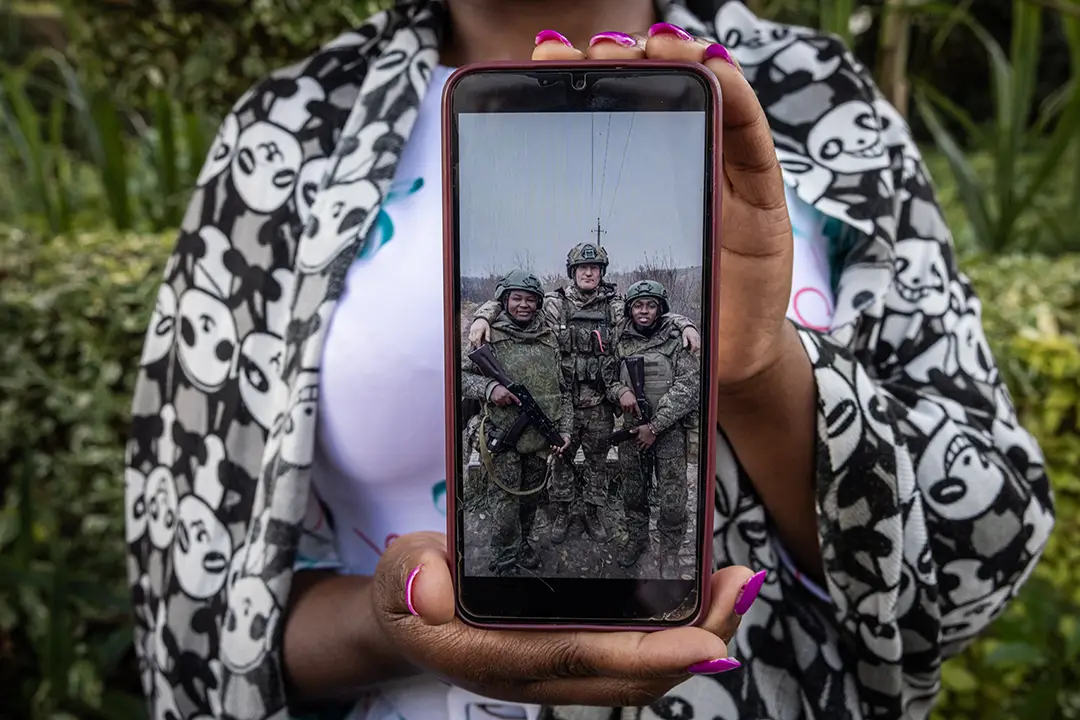
Russia is using social media, AI and other technology to recruit Africans to join the invasion of Ukraine despite efforts by African countries to suppress deceptive advertising and keep their citizens safe.
South African authorities recently arrested nine Zimbabwean men accused of leaving the country to join Russia’s invasion of Ukraine. Russia has targeted Zimbabweans and Burundians for recruitment in 2026 as other countries, such as Kenya and South Africa, have worked to disrupt recruitment efforts among their citizens.
In their report “Death Benefits: the industry selling Russia’s war as a job,” investigators with Code for Africa’s iLAB team recently documented nearly 289 digital tools targeting men from African countries across 33 recruitment operations. The recruitment campaigns make false claims about jobs and benefits to lure people to Russia.
“Recruiting foreigners to fight Russia’s war is no longer only a state campaign. It is now a competitive and profitable industry for a network of covert entrepreneurs,” investigator Justin Arenstein wrote in an analysis for Medium, a social journalism platform. Code for Africa specializes in data-based reporting and has members in 21 countries on the continent.
According to the investigation, ads published online enticed men from Ghana, Kenya, Uganda and elsewhere to travel to Russia for work in construction and the film industry. The promise of work visas sweetened the lure.
Upon arrival in Russia, the men were forced to sign military contracts and sent to the front line. In some cases, Russians strapped anti-personnel mines to African men’s chests and forced them into suicide missions against Ukrainian positions. In videos published online showing the men rigged as suicide bombers, Russian soldiers derisively call the them “can openers.”
Current estimates suggest that Russia’s digital campaigns have tricked more than 3,000 Africans into joining the Ukraine invasion. At least 20% of them have been reported killed. Of 272 Ghanaians recruited, for example, 55 have died.
According to investigators, the digital campaigns are designed to be deployed quickly and replaced just as quickly when they are detected and removed. AI translators create WhatsApp pitches in potential recruits’ native languages that funnel them to Facebook ads and from there to human recruiters.
The Code for Africa report found Russian-language notes in the code of several local-language sites, including one in Wolof targeting Senegalese recruits. The ad was developed by Work Crew Agency, one of the Russian network’s recruitment fronts.
“The network continues to grow, even as the iLAB and the platforms themselves expose and remove the recruitment campaigns,” Arenstein wrote.
Russia launched a major new campaign in West Africa in mid-September even after recruitment websites elsewhere had been deactivated, he noted. The Russian sites are promoted on platforms such as WhatsApp, Facebook, TikTok and Google, but authorities have struggled to keep up.
Meta has removed multiple Russian sites only to have them quickly reappear under new names thanks to AI. In August, for example, Meta removed 300 sites targeting Africans. By mid-September, new AI-generated social media content was recruiting men from Côte d’Ivoire, Sierra Leone and Zimbabwe.
“Across the sites iLAB monitored, a new phone number, pixel or page appeared roughly every three days,” Arenstein wrote. “While iLAB was watching, one site deleted its operator’s legal identity from its footer, and another removed a menu link to a page called ‘Stalin’s Falcons.’”
According to Arenstein, social media companies and government authorities must put more attention on attacking Russian sites at the root. The campaigns are not simply disinformation; they are fraud. They also meet the definition of human trafficking, he said.
“The operators can afford to lose websites,” Arenstein wrote. “What costs them is losing ad accounts, billing records and platform administrator accounts. That is where enforcement can hurt.”