

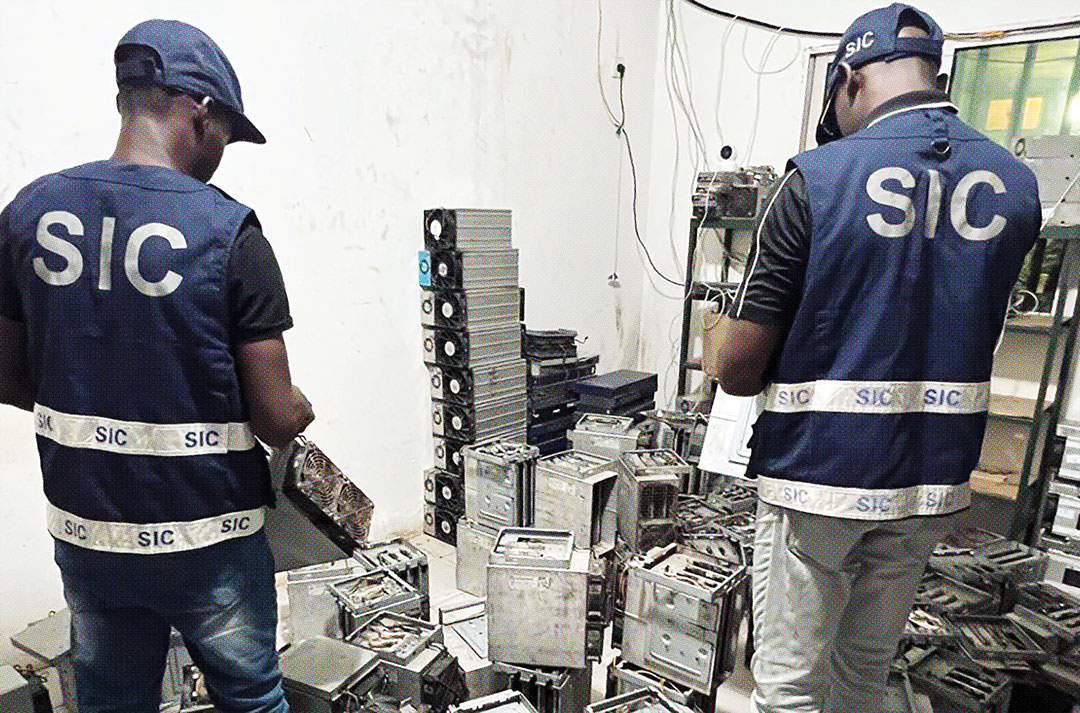
Authorities arrested 1,209 cybercriminals and recovered $97.4 million in a major crackdown involving investigators from 18 African countries, the United Kingdom and Interpol.
The operation, named Serengeti 2.0, ran from June to August 2025 and tackled high-impact cybercrimes such as business email compromise schemes, ransomware and other online scams, Interpol reported. Authorities identified about 88,000 victims of fraud and illegal cryptocurrency networks and dismantled 11,432 malicious infrastructures.
Before the operation, investigators participated in workshops that covered open-source intelligence tools and techniques, cryptocurrency investigations, and ransomware analysis, according to Interpol. This training is credited with contributing to the effectiveness and success of Serengeti 2.0.
“Each Interpol-coordinated operation builds on the last, deepening cooperation, increasing information sharing and developing investigative skills across member countries,” Valdecy Urquiza, secretary-general of Interpol, said in a statement. “With more contributions and shared expertise, the results keep growing in scale and impact. This global network is stronger than ever, delivering real outcomes and safeguarding victims.”
In a June 2025 report, Interpol said reports of online fraud in some African countries had spiked 3,000% in the previous year. Cybercrime now makes up more than 30% of all reported crime in West and East Africa.
In one bust, Angolan authorities shut down 25 cryptocurrency mining centers in which 60 Chinese operators were illegally validating digital currency transactions. Angolan authorities seized equipment worth an estimated $37 million. Proceeds from the seizure will go toward improving electricity distribution in the Central African country, Interpol said.
In Côte d’Ivoire, officers dismantled a transnational inheritance scam — described as one of the oldest internet frauds — in which victims pay fees to claim fictitious fortunes, causing losses of about $1.6 million. Ivoirian authorities seized electronics, jewelry, cash, vehicles and documents.
Zambian investigators took apart a large fraud operation that lured people into an online cryptocurrency investment scheme. The scam bilked about $300 million from about 65,000 victims. Authorities in Zambia also disrupted a suspected human trafficking network with help from the Immigration Department in Lusaka, confiscating 372 passports from seven countries.
Authorities from Angola, Benin, Cameroon, Chad, Côte D’Ivoire, the Democratic Republic of the Congo, Gabon, Ghana, Kenya, Mauritius, Nigeria, Rwanda, Senegal, Seychelles, South Africa, Tanzania, Zambia and Zimbabwe participated in the operation.