

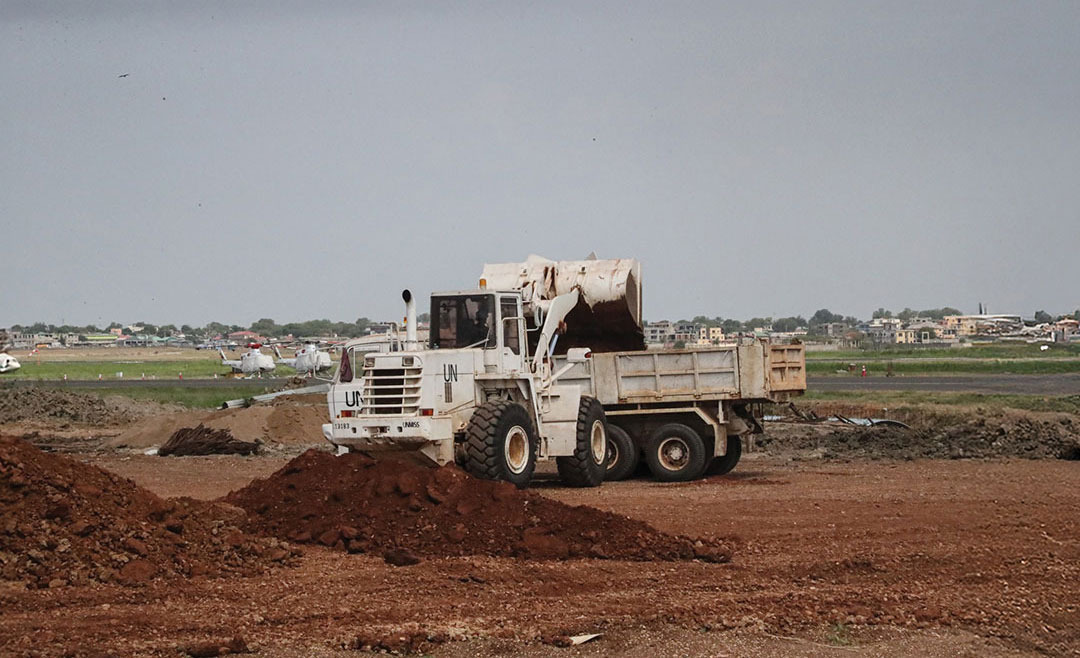
Three engineering contingents with the United Nations Mission in South Sudan worked seven days a week for eight months to clear and improve land so it could be returned for use by Juba International Airport.
The South Sudanese government asked the peacekeeping mission, known as UNMISS, to hand back the land it occupies next to the airport to improve aviation safety and help attract major airlines. The mission returned the first parcel of 2½ hectares on November 14, 2025.
“There was a significant amount of investment of money and energy made here, so I want to thank UNMISS so much for adding value to Juba International Airport,” Daffalla Habib Awongo, director-general of the South Sudan Civil Aviation Authority, said at the handover. “We will continue to partner with the mission to ensure that we make the airport modern, safe, reliable and efficient.”
The extensive and costly project began in March 2025 as the mission was forced to close and downsize bases around the country, reduce peacekeepers, and cut its operational budget due to U.N. funding shortfalls.
To free up the land, the mission had to remove 300 shipping containers and relocate its hangar and many accommodation units. Peacekeeping engineers battled the long, heavy rainy season to level and compact the soil, build culverts, and clear drainage systems. At times engineers had to dig 1.7 meters deep to find hard ground.
“When I saw the topography of the soil, I was a bit hesitant, because this area is swampy … with a lot of bad soil which expands in the rain and then later contracts,” said Kat Mosety Monyjok, an engineer and airport general manager.
The mission also has provided vehicles and training to build the capacity of South Sudan’s air aviation unit.
“We do not take this effort for granted,” Awongo said. “It attests to the level of partnership that has been established with UNMISS over many years.”
Much more work needs to be done to complete the return of more land and for local authorities to improve airport facilities, including tarmacking dirt areas and installing lighting to improve surveillance at night.