

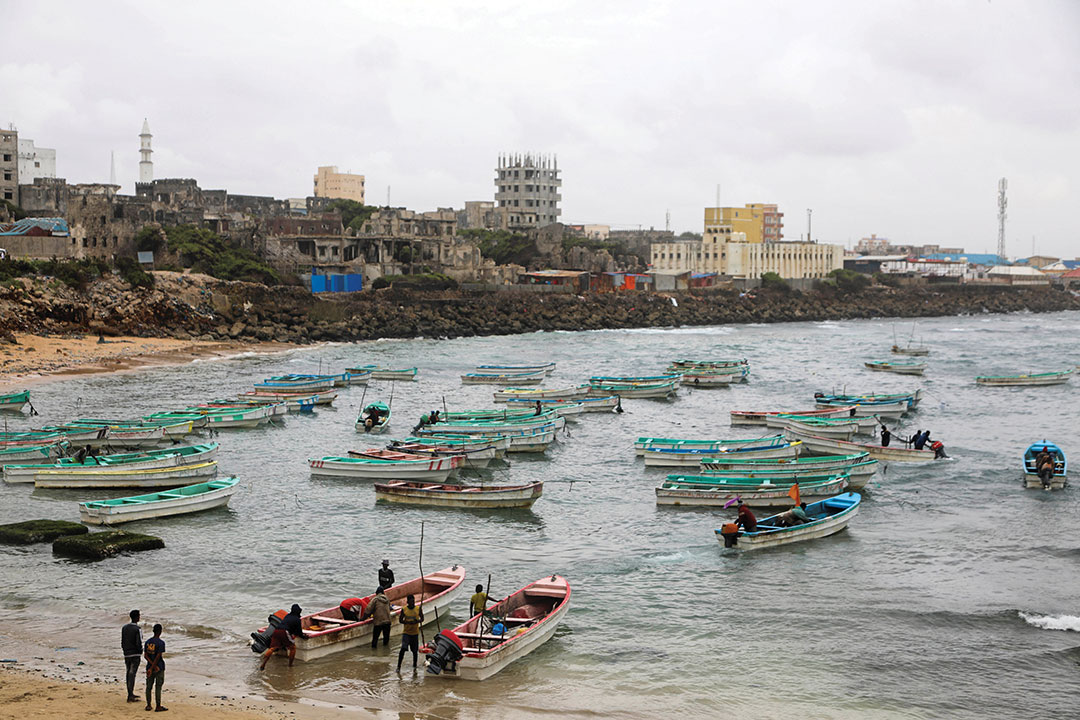
To secure Africa’s longest coastline, Somalia has signed a 10-year partnership with Turkey for maritime security and law enforcement.
Somalia loses $300 million a year to illegal, unreported and unregulated fishing along its 3,300-kilometer coastline on the northern Indian Ocean and Gulf of Aden, according to the Enhancing Africa’s Response to Transnational Organized Crime (ENACT) project. Somalia has been plagued with terrorism, piracy, weak governance, political instability and ineffective law enforcement.
Most illegal fishing in Somalia is carried out by foreign fishing vessels. A Mogadishu-based researcher told ENACT that some foreign vessel operators illegally obtain fishing licenses, making it impossible for Somalia to know how much fish has been taken. The researcher said the fish is processed and exported to world markets.
Turkey and Somalia signed the initial memorandum of understanding in February 2024. Turkey will strengthen Somalia’s maritime security capabilities through training, joint operations, information sharing and naval acquisition, ENACT reported.
In April 2025, Turkey boosted its military presence in Somalia to 500 troops after attacks by al-Shabaab near Mogadishu, the Middle East Eye news website reported. It was about double the troop numbers Turkey has had in Somalia. Turkey has maintained a presence in Somalia since President Recep Tayyip Erdoğan’s first visit in 2011 under a humanitarian mission.
Turkey’s Anatolia Barracks in Mogadishu is its largest foreign military training base. It has trained more than 15,000 Somali troops since its inauguration in 2017, according to the Nordic Monitor news website.
The two countries have agreed to allocate land for each other’s embassies. Under the deal, Turkey will build a new office and residence for the Somali Embassy in Ankara on a 5,000-square-meter plot in the Incek diplomatic enclave, according to the Nordic Monitor. Somalia has granted more than 61,000 square meters in Mogadishu, now home to Turkey’s largest embassy compound abroad.