
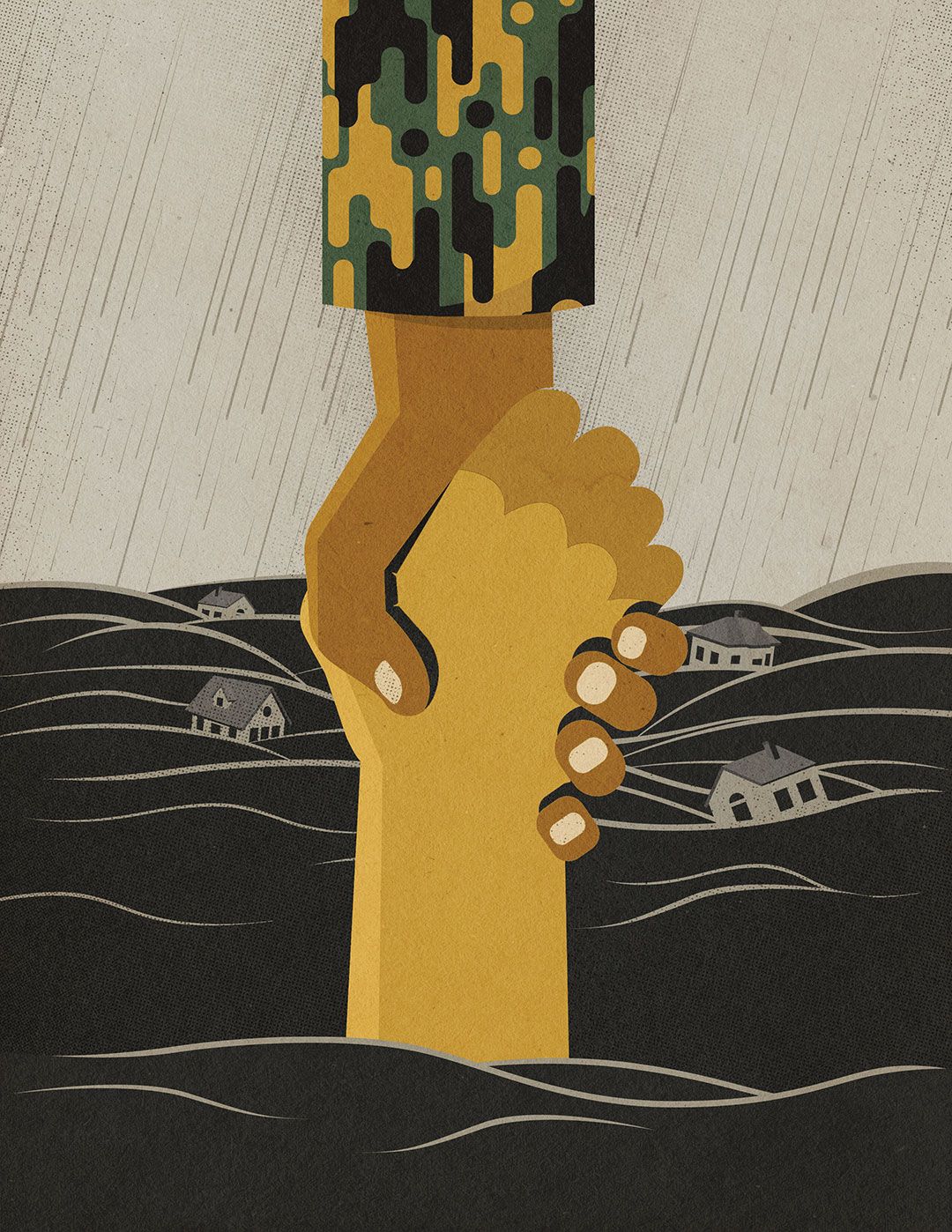
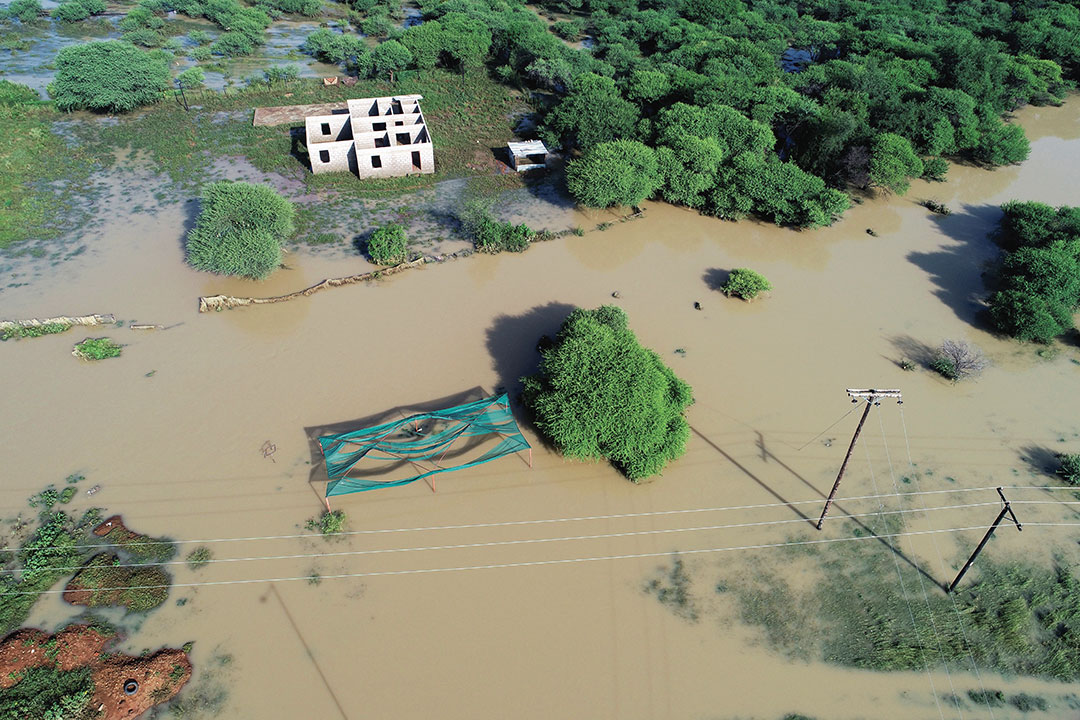
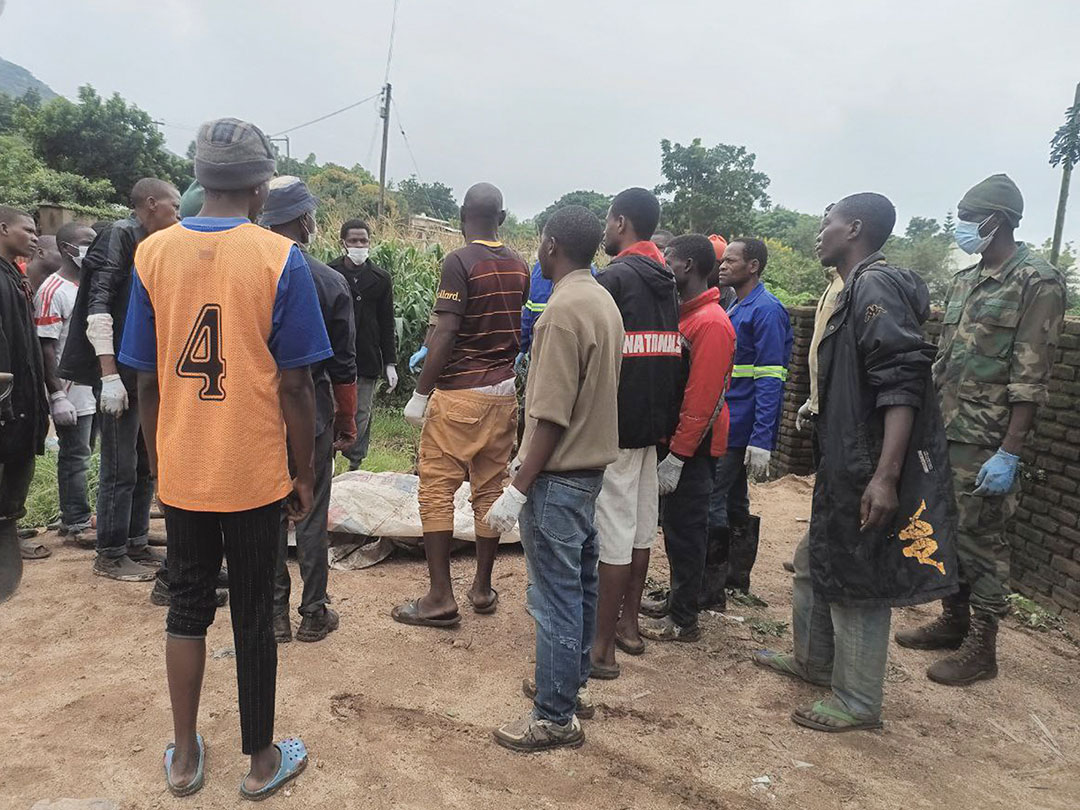
When deadly floods swept through Gabarone, Botswana, in February 2025, the Botswana Defence Force swung into action, working alongside government agencies and nongovernmental organizations to protect the city’s residents and restore order.
Soldiers employed their expertise in search and rescue, medical evacuation, and logistics to support their civilian counterparts during the natural disaster.
For Maj. Gen. Molefi Seikano, the response was a model for civil-military relations among African nations.
“It showed the military as a force for stability,” Seikano told ADF at the 2025 African Chiefs of Defense Conference (ACHOD), where civil-military relations were a topic of discussion.
Across Africa, militaries are improving their communications and relations with civilian leaders and citizens. A growing number of military leaders have been actively involved in transforming their armed forces into organizations that protect and support their fellow citizens.
“There has been a dramatic transformation in training, in skills development, and in expanding the institutional and operational capacity of African armed forces from what they were previously,” researcher Dr. Moses Khisa told ADF. Khisa is a research associate at the Centre for Basic Research in Kampala, Uganda, and writes a weekly column for Uganda’s Daily Monitor newspaper. According to Khisa and his research partner Christopher Day, African societies face the challenge of establishing protection both by the military and from the military. They do that by building institutions that are accountable to civilian leaders.
“This is the true crux of the civil-military conundrum in Africa,” Day and Khisa wrote in their 2022 book, “Rethinking Civil-Military Relations in Africa.”
The solution, they say, is not necessarily the same for every country. Some, such as Ghana or South Africa, might opt for a system that keeps the military separate from the political sphere, while others, such as Rwanda and Uganda, might bring the two institutions so close together that they are virtually intertwined.
Regardless of how civil-military relationships develop, the most successful armed forces believe that their job is to protect the people. This credo was articulated at the ACHOD conference by Maj. Gen. Guy Blanchard Okoi, chief of the general staff of the Armed Forces of the Republic of the Congo: “The human being is at the center of everything.”
CIVIL-MILITARY PARADIGM SHIFT
The focus on greater civil-military relations has been decades in the making. At its heart is a generation of military leaders who have learned from the political and social upheaval caused by decades of coups and civil wars.
“In the past, the armed forces were seen as a source of insecurity, as predators,” Khisa told ADF. “They had a predatory persona and a predatory reputation.”
That predatory nature still exists in parts of the continent where corruption and human rights abuses are tolerated. But military leaders, such as Maj. Gen. Davidson Forleh, chief of staff of the Armed Forces of Liberia, stress that they represent the old way of thinking.
“The new military is different from the past,” Forleh told ADF.
Forleh was among the first class of recruits to join Liberia’s military when it was re-created after the country’s civil war that ended in 2003. The reformed armed forces emphasizes professionalism, peacekeeping, and patrolling its maritime environment and its land borders in collaboration with its neighbors.
Liberia’s neighbor Sierra Leone has a similar history of military reform after a civil war. Protecting civilians is the key to the military’s mandate, according to Sierra Leonean authorities.
“For countries like Liberia and Sierra Leone, they’re distinct in that they were just smoldering craters of civil war where there was a pretty big effort to reform their security institutions,” Day, who spent time in Sierra Leone during the civil war, told ADF. In such cases, reforming civil-military relations might require the complete rebuilding of security forces, Day said.
“But it also has to do with accountability at the top,” he added. “There has to be visible accountability.”
BUILDING TRUST
As militaries work to strengthen their relationship with citizens and civilian leaders, they face another challenge: building trust.
“We have to work in an environment where there is less distrust,” Lt. Gen. Mbaye Cissé, Senegal’s chief of defense staff, told his colleagues at the ACHOD conference.
That may mean starting a dialogue with nongovernmental organizations, civilian leaders and legislators to build connections between them and the military. Doing so can lay the groundwork for those moments when both sides of the civil-military relationship are called into action.
Senegal provides an example of how a successful civil-military relationship can work. When the military was called upon to rein in separatists in the southern Casamance region, leaders did not start with the Army, Cissé said.
“We used NGOs to do the peacebuilding,” he added. “The Army can’t do peacebuilding without the participation of civil society organizations. When you talk about security, military forces think they’re the only ones who are important.”
Building trust can be difficult on a continent where military leaders remain willing and able to overthrow their civilian governments, however. Coups in Burkina Faso, Guinea, Mali and Niger — along with the civil war in Sudan — cast a shadow over the promise of better civil-military relations among African nations.
The number of successful coups has plummeted from more than two dozen per decade between the 1960s and 1990s (the peak decade with 35 coups) to fewer than 10 a decade in the 2000s and 2010s, according to Day and Khisa.
“The decline in coups d’etat has unfolded in tandem with major changes in regional norms that proscribe military interference in domestic politics,” Day and Khisa wrote.
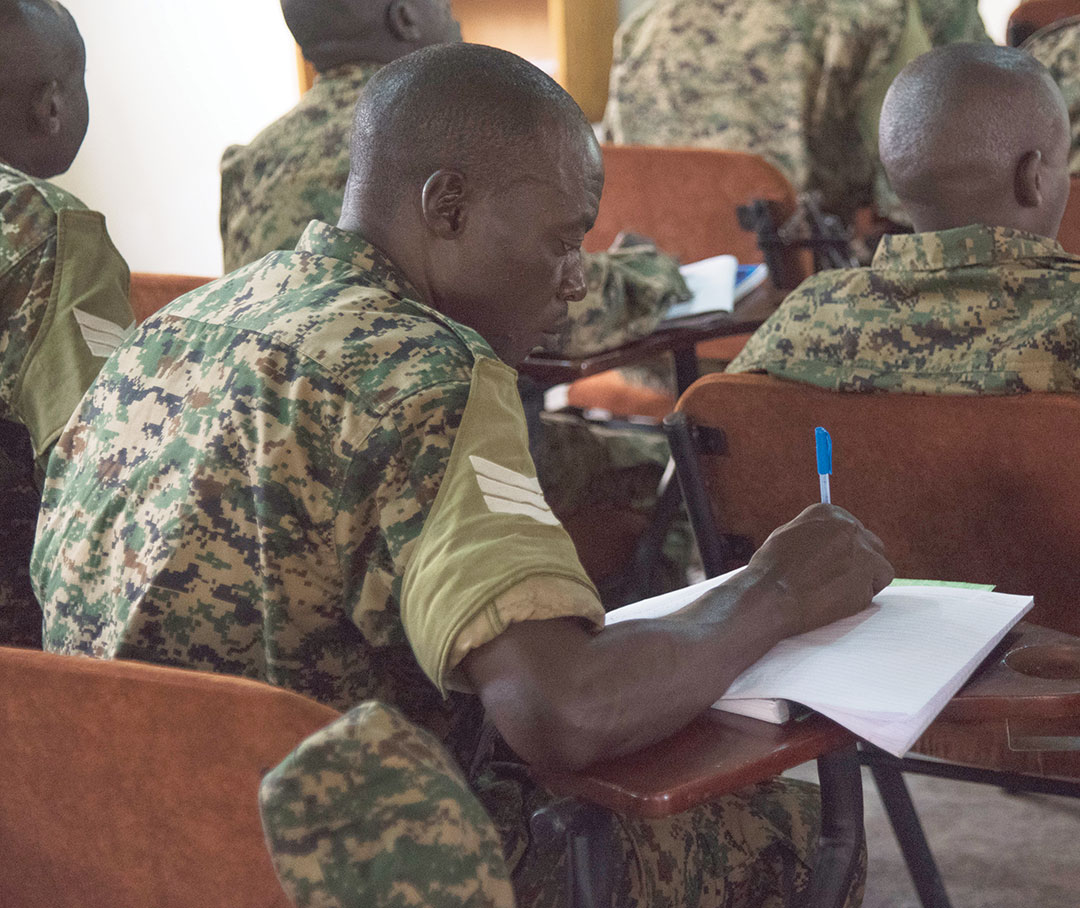
STAFF SGT. ALLYSON L. MANNERS/ U.S. AIR NATIONAL GUARD
PEACEKEEPING AND PROFESSIONALISM
The rise in cordial civil-military relations has coincided with two other changes: less tolerance for coups among the continent’s leaders and a greater emphasis on African-led peacekeeping missions.
The African Union predecessor, the Organization of African Unity, had a reputation for being agnostic about how a nation’s leaders came to power, Day said.
“The OAU created permission for coups,” Day said. “There were not proscriptions for how anybody became president. Now, you get suspended if you have a coup.”
The AU’s more aggressive stance toward keeping order on the continent has led to a growing number of African-led missions, such as the Multinational Joint Task Force (MNJTF) in the Lake Chad region.
“Peacekeeping is one of the most underrated aspects of what we’re talking about,” Khisa said. “It’s incredibly important.”
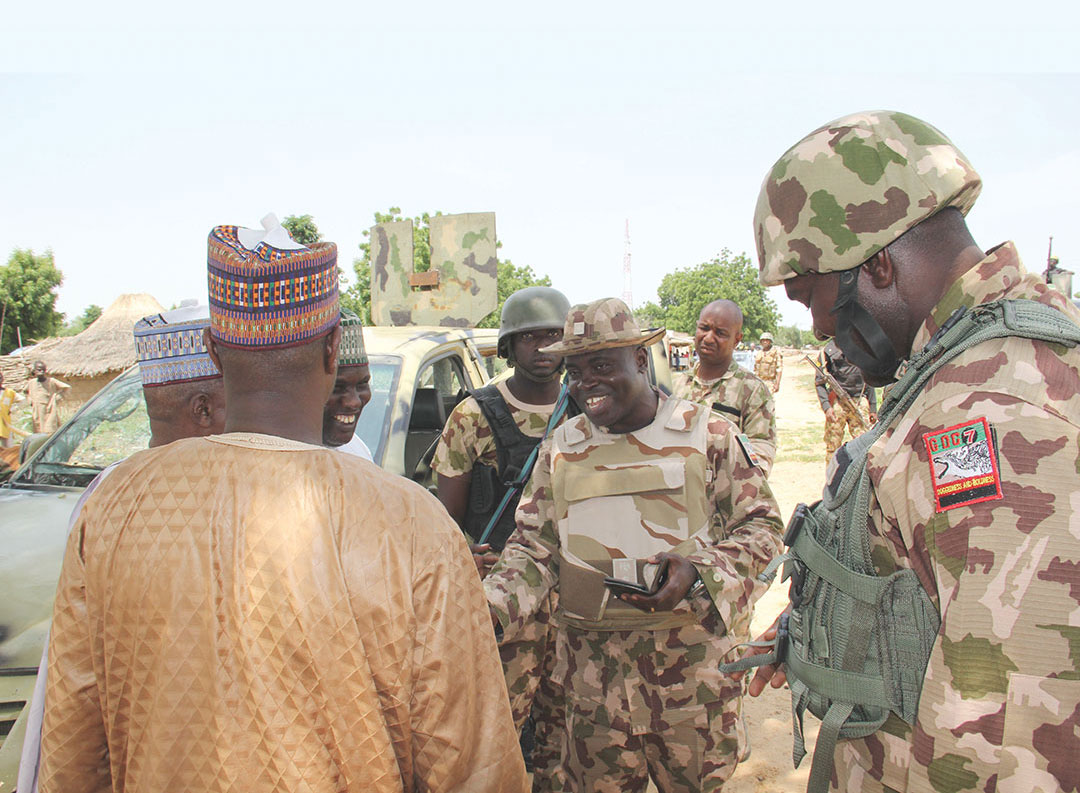
Troops participating in the MNJTF, for example, are trained in civil-military cooperation (CIMIC) that prepares Soldiers to engage constructively with civilians facing displacement, mistrust of the military and humanitarian crises.
“Given the nature of the threat — an asymmetric insurgency operating among civilian populations — military force alone has proven insufficient,” MNJTF officials wrote in an email to ADF. “CIMIC enables Soldiers to understand local dynamics, build relationships with civilians, and coordinate more effectively with humanitarian agencies. These capabilities are not just ‘soft skills,’ but essential tools for mission success.”
Along with providing MNJTF troops a tactical advantage, CIMIC also can transform the force’s image and impact in the region and serve as a foundation for broader regional stability, enabling communities to rebuild and resist future threats, task force officials said.
In some cases, peacekeeping missions have served as a warning to African military leaders about the destruction that could result from violating the civil-military relationship, Khisa said.
“When senior officers go out there and see what’s going on in other countries, they come back home with a different attitude and perception of what their role should be,” Khisa said, adding that Ghanaian peacekeepers who served in Rwanda after the 1994 genocide are an example of that change.
“When you read about their experience, it left an indelible, enduring impact on how they perceived the role of the armed forces in their country,” Khisa said. “That was that the military should not be disruptive. It should not lead Ghana into the kind of crisis they saw in Rwanda.”
PROVIDING FOR POLICE
As African nations improve the relationship between their militaries and civilians, one aspect of the security sector continues to be overlooked: local police. In Nigeria, for example, the military is dispatched to deal with issues such as extreme civic unrest for which the police, as the security institution responsible for domestic law enforcement, would be more appropriate.
Nigeria’s police do not have the training or resources to handle large-scale events of insecurity, impeding their ability to respond to large events, according to researchers retired Brig. Gen. Saleh Bala and Mvemba Phezo Dizolele, a senior associate with the Africa Program at the Center for Strategic and International Studies (CSIS).
Sending the military into Africa’s rapidly growing cities in the place of police can cause problems, Bala and Dizolele wrote in a report for CSIS.
“In some communities, the military is seen as the enemy,” the authors wrote. “In others, people still welcome the military as an assurance that they will be protected.”
Investing more in local police forces could help improve security while keeping the military focused on its mandate of safeguarding the nation from foreign threats, Catherine Lena Kelly, director of engagement at the Africa Center for Strategic Studies, told ADF. Community-based policing can complement the military’s national defense role by identifying and disrupting terrorist groups and promoting deradicalization efforts, Kelly said.
“Community policemen and women can be a strong resource for that,” Kelly said. “In an ideal world, the police would exhibit a level of professionalism equal to what the military exhibits.”
Observers say the ongoing shift in civil-military relations across Africa promises to bring more stability to a continent long marred by coups and social upheaval. Extensive training opportunities and a dedication to keeping the military accountable to democratically elected leaders are transforming Africa’s armed forces into institutions that protect their citizens rather than prey on them.
“In the past, the military was looked at as a kind of beast,” said Forleh of Liberia. “We’ve shifted the entire military to be a force for good.”