
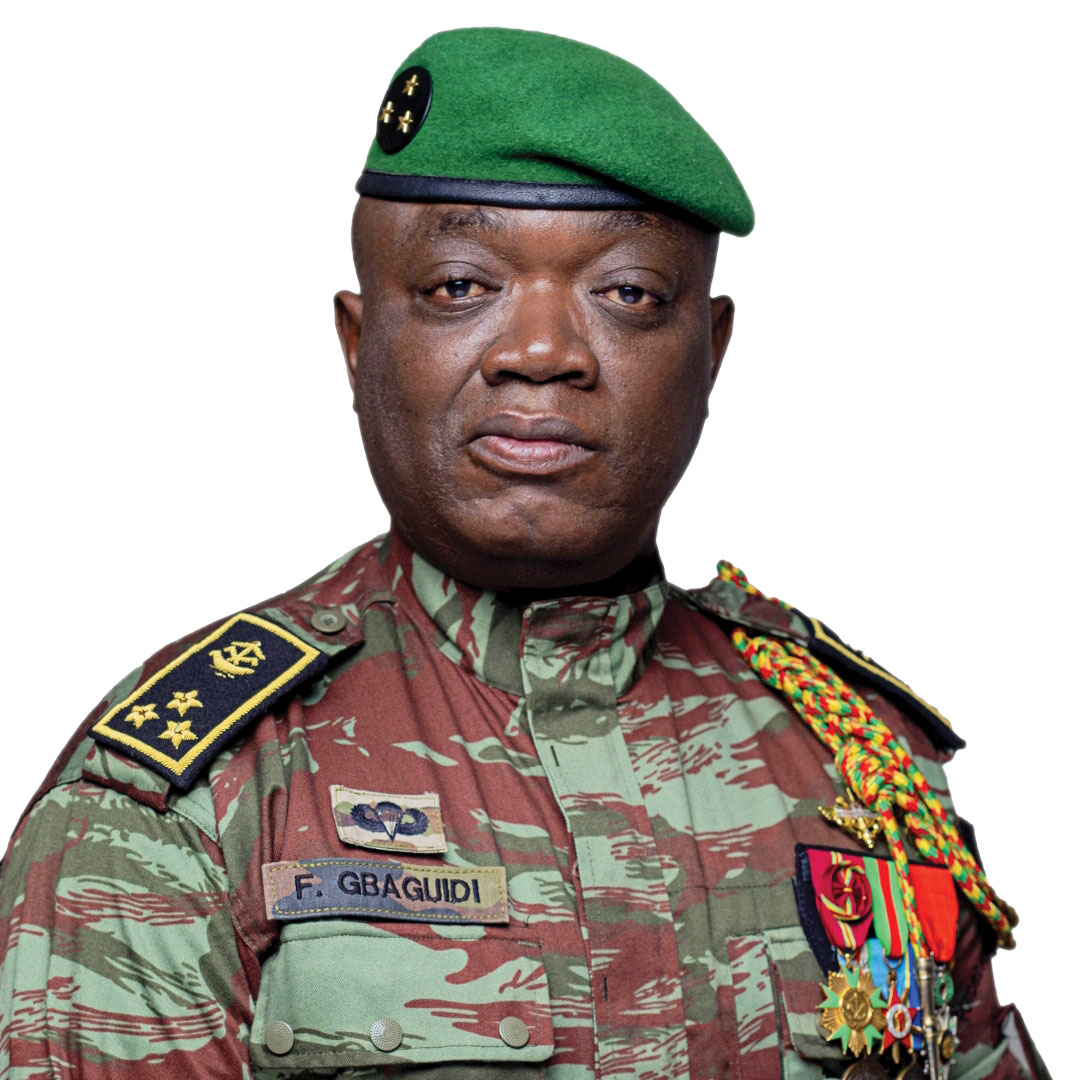
 Maj. Gen. Fructueux Gbaguidi, an Army officer with more than 35 years of experience, has studied and trained at institutions in France, Madagascar, Senegal and the United States. During his career in the Beninese Armed Forces (FAB), he served as commander of the 1st Combat Company of Benin’s Rapid Intervention Battalion, aide-de-camp to the chief of the general staff and commander of the 2nd Combined Arms Battalion. He held leadership roles at the National Higher Training School for the Army and the National School for Non-Commissioned Officers. He served as chief of army staff from 2016 to 2022 before being named to his current role. In September 2025, he was approved for induction into the International Hall of Fame of the U.S. Army Command and General Staff College. He spoke to ADF by video from his office in Cotonou. This conversation has been edited for space and clarity and translated from the original French.
ADF: Historically, Benin has not faced threats from terrorist groups. This changed in 2019 when tourists were kidnapped in a national park. In the years after, the threat has only grown. Can you describe how Benin came to be targeted by Sahel-based terror groups and how this threat has affected the country?
Gbaguidi: Benin has always been a peaceful country, but unfortunately in 2021 we began to experience attacks. For a long time, the enemy arrived in Benin in a secretive manner, unarmed or sometimes with hidden weapons. And when I say enemy, I mean terrorists. Initially, they didn’t make Benin their primary target; they were more concerned with the ability to strike in the Sahel. Evidently, in search of better lines of communication, in search of more space, they began to attack us. As you described, there was the kidnapping of tourists, and instead of continuing to be a transit zone, Benin became a target because their goal was to enable the trafficking necessary to fuel these groups. This includes cigarette trafficking, gasoline trafficking, gold trafficking, and various trafficking activities, including drugs. The deployment of our forces disrupted the enemy, and this trafficking became more difficult for them. Therefore, they had to attack us in order to militarily conquer these areas. So that’s how we became the target of the Sahel terrorists.
ADF: In 2022, Benin created Operation Mirador. Can you describe why it was created, its goal and what it has accomplished?
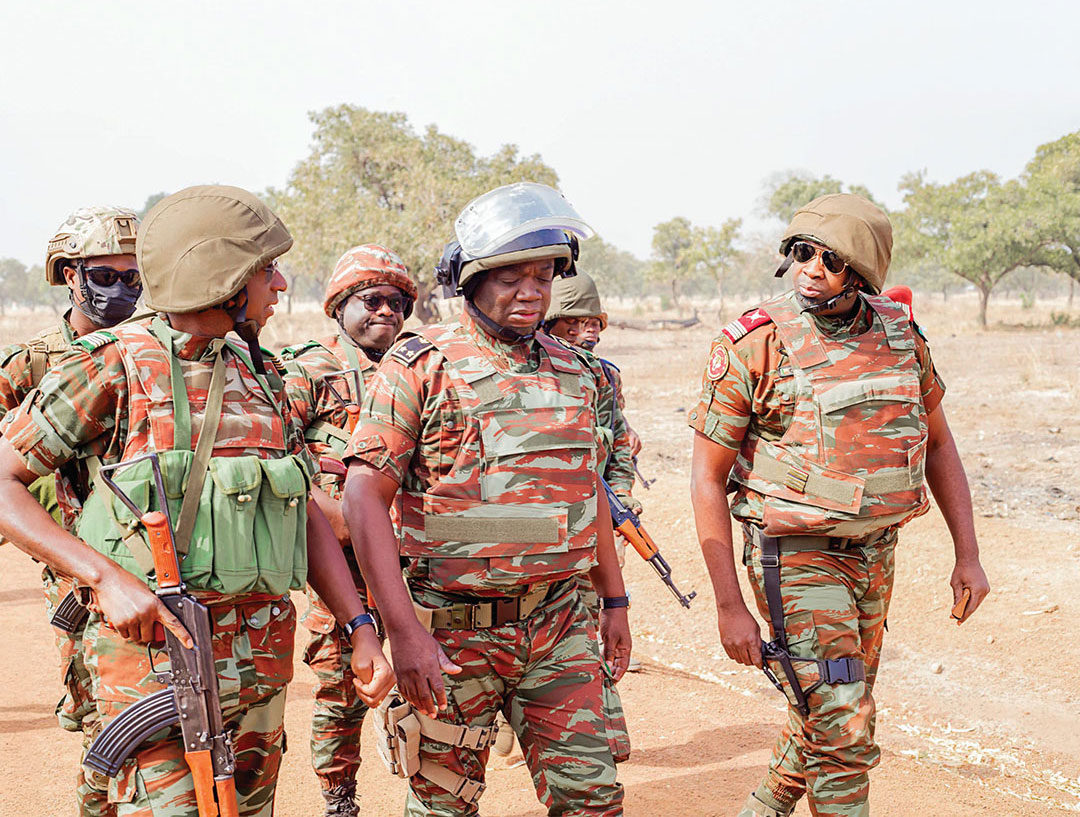
Gbaguidi: We had several operations underway: operations to confront the illegal mining and operations to combat the transit of trafficked goods. Understanding that all these illegal activities had the same goal — to destabilize our country — we decided to implement a unified operation that we called Mirador. It was essentially about surveillance, and when you’re on a watchtower or a “mirador,” you’re monitoring. So, we unified all the commands in the North to create a single operation with a theater commander. The theater is divided into three major zones: the Northern Zone, which is the Alibori department; the Western Zone, which is the Atacora department; and the Eastern Zone, which is the border with Nigeria, that is, Borgou. It’s a principle of warfare: The unity of combat allows us to facilitate the transmission and execution of the orders I transmit to the various units on the ground. The whole thing is under the command of two theater commanders who change periodically, each with their own headquarters. But there is a central headquarters in Parakou. This is the headquarters of Operation Mirador. The objective is to secure the northern areas of Benin, particularly the parks that seem to be the preferred zones of terrorist groups.
ADF: You mentioned the W-Arly-Pendjari complex of parks. Can you describe how terrorists and traffickers are infiltrating the parks and what must be done to return them to stability?
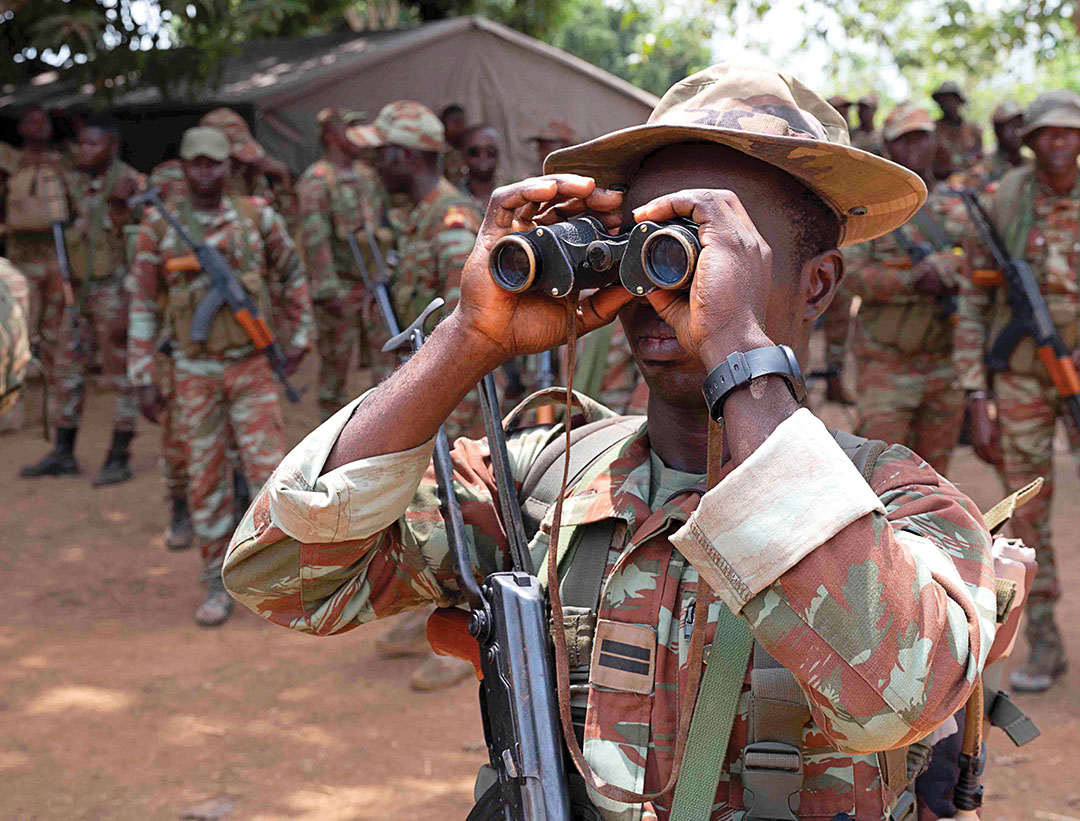
Gbaguidi: Yes, these groups need places to hide, and the undergrowth and forests are ideal places for them to move around. They move in small groups, often on motorcycles, sometimes even on foot. They are very resilient. They move from camp to camp, carrying just the bare minimum. They are fortunate to have shelter because in Africa, when you see a stranger arrive, even if you don’t necessarily know them, you give them food and shelter, and you don’t report them even if you think they’re of poor moral character. That’s what allows them to move from place to place and to regroup to conduct their operations. We address this threat in several ways because we must take a holistic approach to the situation. For us, the military approach is the last resort. We try to communicate with the various village chiefs, with the various traditional leaders. Using force remains the last resort.
ADF: What is being done to dismantle trafficking networks and disrupt the illicit economy that funds terror groups?
Gbaguidi: We don’t see things in terms of all-out war. We see it in terms of needing diverse approaches. First, we try to identify what might cause the frustrations of the population because these frustrations constitute the breeding ground that terrorists use to organize and to be successful on the ground. We identify these frustrations, but also the crucial needs of the population, particularly in terms of public services, health and roads. These roads open up areas so that very quickly — and the government understood this early on — we can reach out to these populations, possibly providing them with public services so that these needs do not create the breeding ground on which terrorist groups rely to be successful. We only use force as a last resort. It is when we are attacked that we generally respond. But, in general, we try to prioritize dialogue, to ensure that people can talk to each other and avoid a situation where force precedes dialogue.
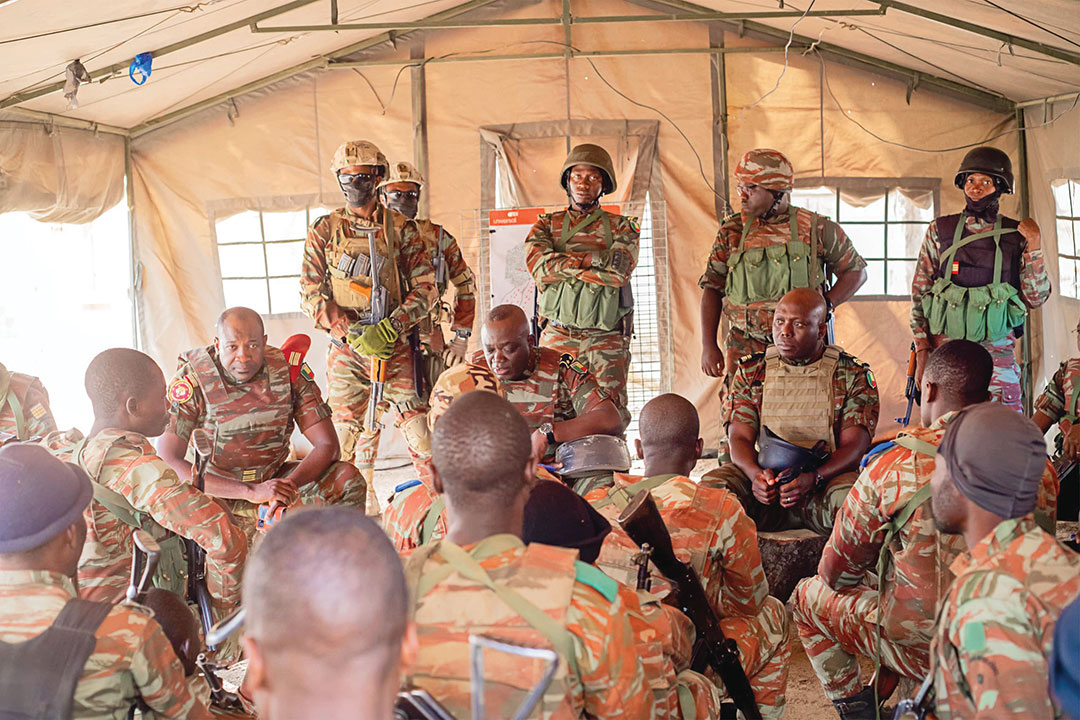
ADF: Two of Benin’s northern neighbors, Burkina Faso and Niger, have experienced military coups and have decreased political and military cooperation with West African nations. How would you describe the collaboration between the FAB and the militaries from its northern neighbors? How important is cooperation with these countries to securing shared borders?
Gbaguidi: Regarding the coups in the Sahel, the countries are sovereign, and they decided to withdraw from ECOWAS [the Economic Community of West African States]. It’s a completely sovereign decision that I won’t comment on. However, among Soldiers, you know, we still continue to have exchanges. In Beninese schools, there are trainees from the countries you mentioned, notably Niger, Burkina Faso and many other African countries, because our vision of pan-Africanism is to be with all Africans and to make life easier for Africans. We seek cooperation, and they are our brothers in arms. Sometimes it works, sometimes it doesn’t. I’m convinced that, over time, things will return to normal. But it’s important that we can talk to each other and that we can work together to confront terrorism, because terrorism is precisely what crosses our borders. When you consider their area of operation, it’s the borders, the gray areas that we have difficulty controlling. Terrorist groups work in synergy; they know no borders; they work in networks. So, if we remain isolated, we all lose. That’s why, when I took command, I visited all the countries that border Benin to explain my vision of things in that we must continue to exchange information, particularly in terms of intelligence, mutual support and prosecutions on each other’s territory. I was understood initially, but as you said, there is a new situation. This new situation hasn’t completely destroyed everything, but there is room for improvement in the sense that we could better understand each other to be able to confront the terrorists.
ADF: How has the FAB worked to build trust with civilians in the affected northern communities? How does civilian outreach help the counterterrorism mission?
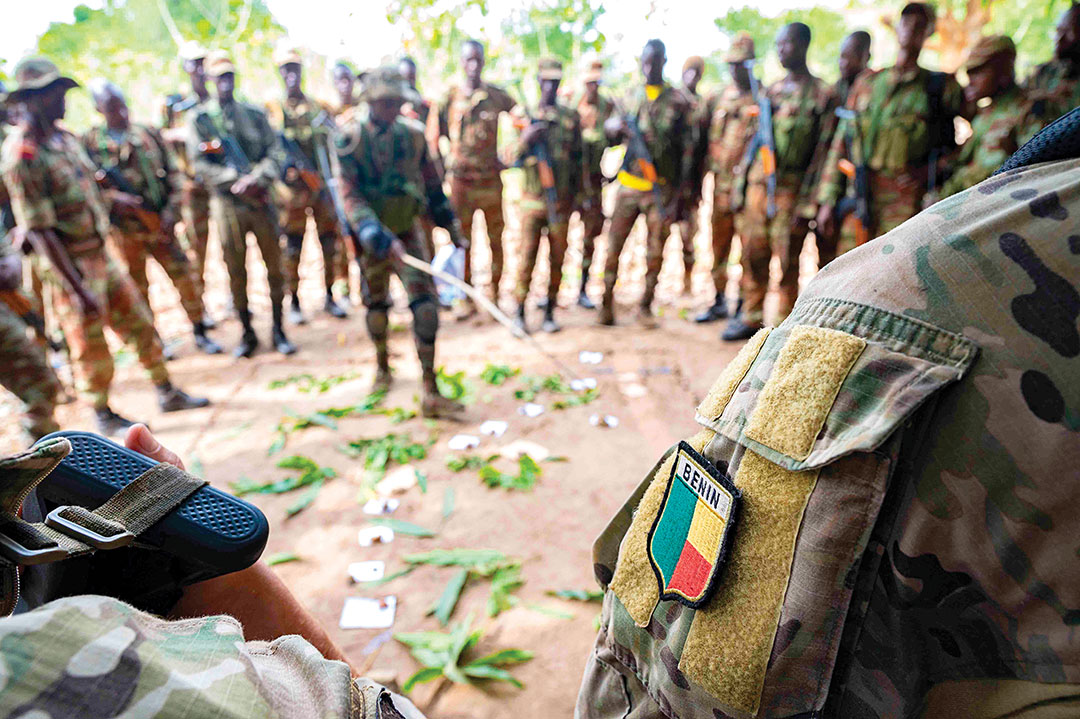
Gbaguidi: We maintain constant synergy with the civilian population. We exchange information; we talk to them. We explain the latest security situation to them and maintain this dialogue to explain whenever something changes. We also conduct civil-military actions with these populations to win hearts and minds, as we often say. The approach in the fight against terrorism must be a general one; it must be a comprehensive approach; and, first and foremost, it is the civilian population that we must support so that they understand that we are not at war with anyone and that we are only safeguarding the integrity of our territory. One of the actions we have also carried out is to recruit in these communities, because they know the terrain. The young people we recruit from these border communities know their brothers and sisters, they know the people there, and we are accepted when we arrive in these areas when we speak the same languages as these people. There are also civil-military actions. We conduct vaccination sessions, whether for men or for cattle, for herds, flocks of sheep, herds of cattle, etc. We treat the people. We bring what is really lacking in these areas so that the people understand that we are on their side and that this is all about protecting Benin and nothing else.
U.S. SPECIAL OPERATIONS COMMAND AFRICA
ADF: What role do you think civilians can play in defeating terror? Do you think they can be effectively trained as guards, vigilantes or as an early warning network that can alert authorities to threats in remote areas?
Gbaguidi: You know, Benin has neither eternal enemies nor permanent allies. We do things by using situational intelligence, and the civilian population is the most important part of the fight against terrorism since they are the ones most directly impacted. That’s why we prioritize reaching out to these populations directly, and that’s why they come to talk to us spontaneously whenever there’s a change in the sociology of their area — when there are new people who come to settle, even when the arrivals are simple refugees. We know about it immediately after it happens because the people understand that this fight impacts them first. While we are respecting human rights, respecting the various established rules, we are convinced we will continue to win the hearts of our public so that this just fight we are waging in the name of Benin has a positive impact on them and does not disrupt their daily lives.
ADF: In 2015, Benin joined the Multinational Joint Task Force (MNJTF) even though it is not in the Lake Chad Basin. Why did the country believe it was important to be part of this coalition?
Gbaguidi: In strategy, the one who has the best chance to succeed is the one who understands what is coming, the one who anticipates.
The groups that plague the Lake Chad Basin are the same groups that are attacking us in Benin today. So, the political leaders of the moment had the presence of mind and the intelligence to understand the situation and to say to themselves, “We must anticipate and reach out to the brothers who are fighting in Lake Chad.” Because we felt that this threat was going to expand and reach down to us. And that is the case today. So it is in anticipation that we decided to join the MNJTF. We are still there, and we are taking an increasingly prominent place there. In the coming days, a new sector will be in Benin, that is to say, eastern Benin, because the groups that are active in Lake Chad are coming down to the northeast of Benin to strike. It was a proactive measure that brought us into the MNJTF. It was meant to avoid the spillover, this spillover that has not yet been decisively stopped, but has been slowed down and has not come with the violence with which it invaded other countries. We hope that in the coming years, the coming months, the coming weeks, we will do much better in the fight against terrorism.
ADF: Despite the efforts of the FAB, the terror threat shows no signs of weakening. What needs to be done on a national and regional level to respond to this threat?
Gbaguidi: We’re in an asymmetric war, and
there are terrorists involved, so that makes it a war that’s doubly unclear. These are groups that strike and then withdraw back into the shadows. We must first build up our strength at the national level and then seek synergy with neighboring countries to prevent terrorist groups from having the chance to withdraw to one country after operating in another. First, it’s a national strategy that includes civilian populations to effectively address it at the national level. At a second level, it’s a regional organization, as I’ve always worked to create. It’s not necessary to have a regional force; it’s enough to have a regional agreement with common strategies, with defined objectives, with well-matched goals. When all of this is in place, terrorism will have less and less of a chance. I believe that it is first of all about giving ourselves the means at the national level and then seeking international synergy to be able to prevent terrorism from spreading from one border to another.
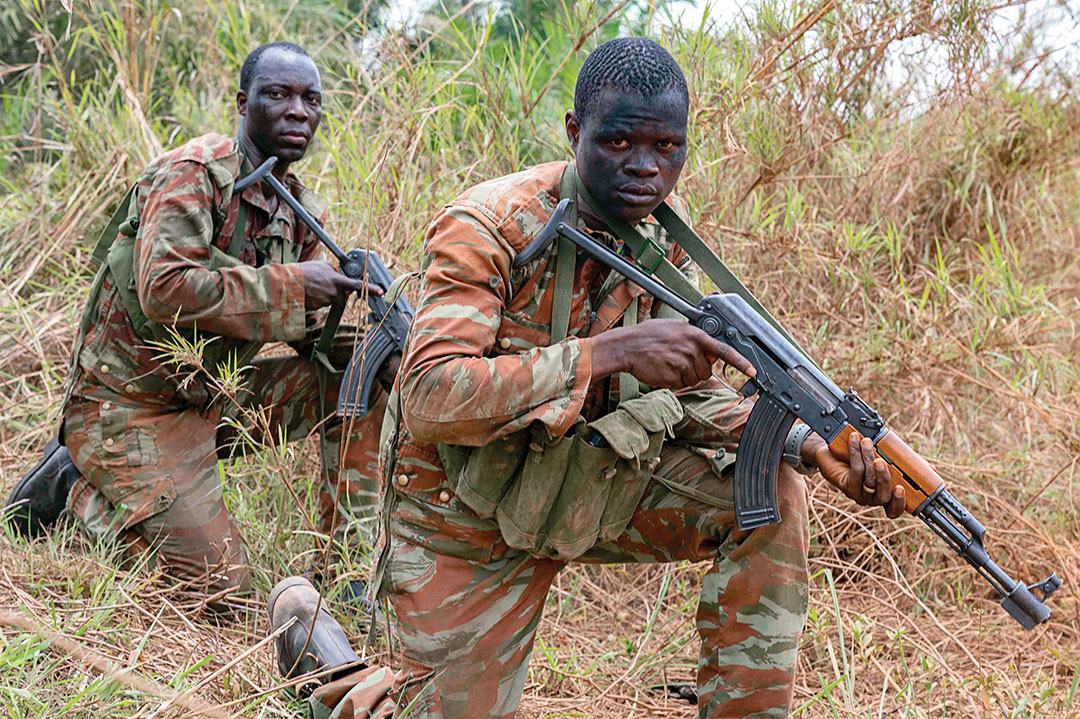
ADF: What do you think needs to be done in the coming years to further modernize and professionalize the FAB? What are your main goals?
Gbaguidi: We have several major lines of operation to build the Army we want. The first line of operation is unifying our human resources and ensuring that the units that intervene are truly specialized and experienced in the task at hand, so that we can decisively prevent the enemy from seizing the initiative.
The second line of operation is equipment. We are continuing to equip ourselves because four years ago, we weren’t at this level. We were very far from where we are today. We must continue to equip the FAB and train them on the equipment we acquire so that they can accomplish their missions.
The third line of operation is a major one. It’s the decisive role that the local population must play. And that relates to the interaction we have with them; it’s our ability to provide them with the services they need, it’s our ability to meet their needs that will prevent them from living in destitution and giving terrorists the chance to come and overthrow them. It means making them more connected, providing them with primary care, allowing them to find housing, food and health care. If these lines of operation are properly followed, I believe that terrorism has very little chance of thriving.