

Nearly three years after it began as a battle between rival generals, Sudan’s civil war has become ground zero for regional powers jockeying for control over resources, trade routes and power in the Horn of Africa.
“Numerous reports indicate that the UAE, Saudi Arabia, Turkiye, Russia, Egypt, Iran and Qatar have been involved in various ways in supporting the two competing military factions fighting for territory and influence in Sudan,” Joseph Siegle, a senior researcher at the Africa Center for Strategic Studies, recently told The Africa Report.
Without the involvement of those outside forces, Sudan’s conflict likely would have ended much earlier, according to Cameron Hudson, a senior fellow at the Center for Strategic and International Studies (CSIS).
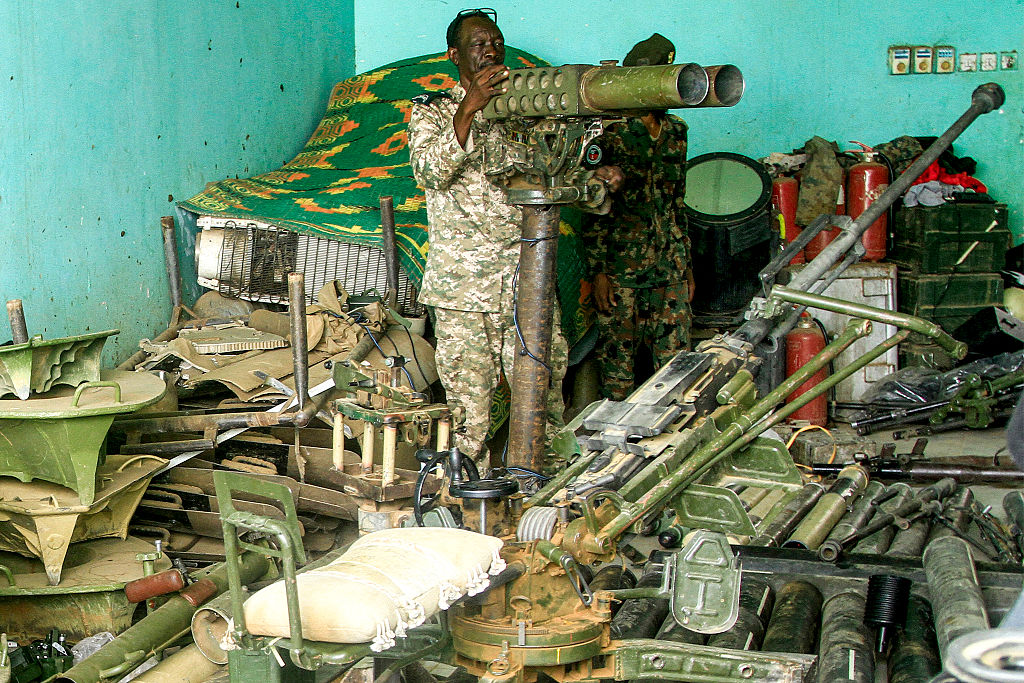
Instead, countries such as China, Turkey and the United Arab Emirates (UAE) have flooded Sudan’s battlefield with a host of modern weapons, from surface-to-air missiles and heavy artillery to commercial and military-grade drones. Drone use effectively has erased the front lines of the fight, Hudson noted.
“External actors have transformed Sudan from a 20th-century battlefield into a 21st-century one,” Hudson told Radio Dabanga.
Turkey and the UAE are chief among those external actors. Turkey has provided the Sudanese Armed Forces (SAF) with Bayraktar TB2 and Akinci drones, and the UAE supplies weapons to the Rapid Support Forces (RSF).
RSF forces took control of the northwestern corner of Sudan in June 2025, securing a key transit route from Libya’s al-Kufra region.
In addition to Libya, Sudan’s other neighbors have also become conduits for supplying the RSF with fuel and weapons. The SAF recently accused Ethiopia and Eritrea of providing the RSF with a staging area from which to attack SAF-held positions in eastern Sudan.
The UAE continues to deny involvement in the Sudanese conflict. However, the country has received nearly $2 billion in gold imports from Sudan in recent years, much of it from mines in RSF-held regions of western Sudan.
In August, SAF forces destroyed a UAE-registered cargo plane at the airport in Nyala, South Darfur, where the RSF has established its headquarters. The attack killed 40 Colombian mercenaries hired to fight for the RSF.
Another attack at the same airport in October destroyed another plane, killing 17 RSF fighters on board along with the plane’s Kenyan and South Sudanese pilots. That aircraft had been recorded previously at the Bosaso airport in Puntland, Somalia, a logistical hub for UAE-related weapons shipments to the RSF, and at the military section of Chad’s N’Djamena International Airport, according to investigators.
The UAE’s regional rival, Saudi Arabia, is supporting Sudan’s internationally recognized government led by SAF chief Gen. Abdel Fattah al-Burhan, while also hosting peace talks that have repeatedly failed to halt the fighting.
Egypt, Sudan’s northern neighbor on the Red Sea and Nile River, supports al-Burhan’s forces with intelligence, training and occasional weapons shipments.
The UAE and Saudi Arabia are deeply entwined with forces inside Sudan, although for different reasons.
“For the UAE, it’s gold; for Saudi, it’s mostly its food security,” Kholood Khair, a Sudan analyst and founding director at Confluence Advisory, told The Africa Report.
Saudi Arabia also is invested in keeping the conflict and violence in Sudan from expanding across the Red Sea to its own shores, analysts say.
For the UAE, Sudan is a bridge to the rest of Africa, particularly the resource-rich Sahel.
“The UAE has been expanding its reach into the Sahel and for that Sudan and the RSF are important as the RSF functions much more as a transnational organization than they do as a military faction,” Kholood told The Africa Report.
Ultimately, support from outside powers have helped fuel Sudan’s conflict, and there is no end in sight to the fighting, according to Hudson.
“This war would likely have ended long ago without external weapons supplies,” Hudson told The Africa Report.