

Senegal’s eastern Bakel Department has become the focal point for the government’s effort to prevent terrorist incursions from Mali.
Jama’at Nusrat al-Islam wal-Muslimin (JNIM) is trying to exploit a variety of issues confronting the region on both sides of the Falémé River to expand its reach. The problems include porous borders, crime and damage caused by gold mining. So far, however, JNIM’s cross-border activity has been sporadic.
In September 2025, JNIM fighters kidnapped six Senegalese truck drivers for 24 hours. The kidnapping was part of the group’s attempt to strangle economic activity in Bamako, which relies on trucks traveling from ports in Senegal and Côte d’Ivoire.
In October 2025, masked men blocked the road between Gabou and Sira Mamadou Bocar in the northern corner of Bakel near the tripoint border with Mali and Mauritania. The men stopped people traveling on the road, stealing money and mobile phones.
In the weeks that followed, other men attacked travelers between Samba Kontaye and Feto Golombi near the Malian border and raided a public transport vehicle in Sadatou commune in southern Bakel, a remote region with no mobile phone coverage.
JNIM’s raids into eastern Senegal have increased the overall sense of insecurity among traders but otherwise has caused few ripples among a Senegalese population that largely rejects violence and intercommunal hatred, according to the Dakar-based Timbuktu Institute.
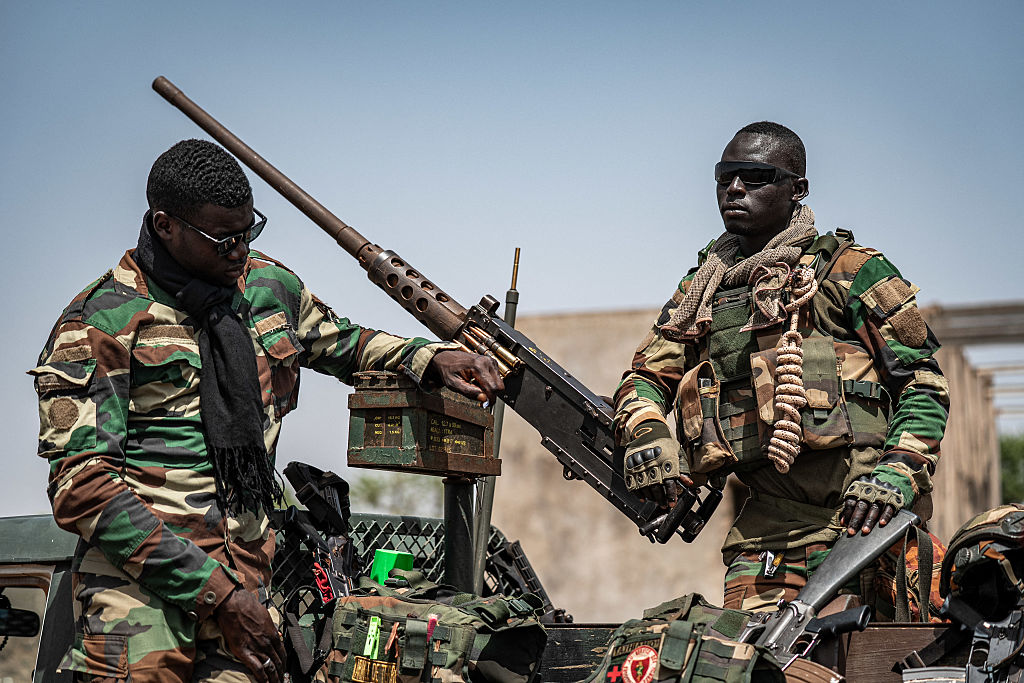
Senegal’s government also has invested heavily in security across the border region. The Rapid Action Surveillance and Intervention Group focuses on securing isolated border areas in Bakel. A military base opened in Goudiry, about 70 kilometers from the border town of Kidira, in 2022. In 2025, the military conducted “Boundou 2025,” a week-long exercise that involved land, sea, and air units in the region.
“Such maneuvers fit the larger strategy of maillage territoriale, which aims at reducing regional inequalities, boosting economic development and decentralizing the administration,” Megatrends Afrika analyst Hannah Rae Armstrong wrote recently.
Residents of eastern Senegal say there is still work to be done to improve security in the region. Porous borders and informal traffic between Senegal and Mali have allowed the terrorists to infiltrate key economic sectors, such as logging and mining, according to the Timbuktu Institute.
“Senegal’s border with Mali is already heavily exploited by smugglers, and its geography makes it more difficult to secure,” Institute researchers wrote recently.
Cattle rustling has increased, with thieves stealing livestock from Senegal to sell in Mali, costing Senegalese herders an estimated $3 million a year, according to Armstrong.
“This wave of crime has created a profound sense of isolation, with traders noting that even neighboring villages feel inaccessible due to the dangers of traveling alone,” she added.
Further complicating things in eastern Senegal, a recent gold rush in the Kedougou region has severely polluted the Falémé River with sediment and deadly chemicals such as arsenic, cyanide and mercury. The damage from both artisanal and Chinese mining operations has upended the lives of local residents, who depend on the river for watering the crops and livestock. The Senegalese government banned mining along the river until mid-2027 in an effort to reduce the pollution and protect the residents. Dredging continues from the Malian side, however.
Some observers say the poverty and sense of isolation in communities along the Falémé could put some residents of eastern Senegal at risk of being enticed by terrorists’ recruitment efforts.
“Only a few kilometers outside the town of Saraya, you won’t see electricity,” Mahamadi Danfakha, the director of the community radio station in Saraya, told Germany’s DW. “People have the impression that the state has closed its eyes to their demands.”
Others, such as Amadou Sega Keita, vice president of Kedougou’s departmental council, believe Senegal’s stability and preference for moderate Sufism over radical branches of Islam make it uninviting for terror groups.
“The terrorists will struggle to get the population on their side,” Keita told DW.