

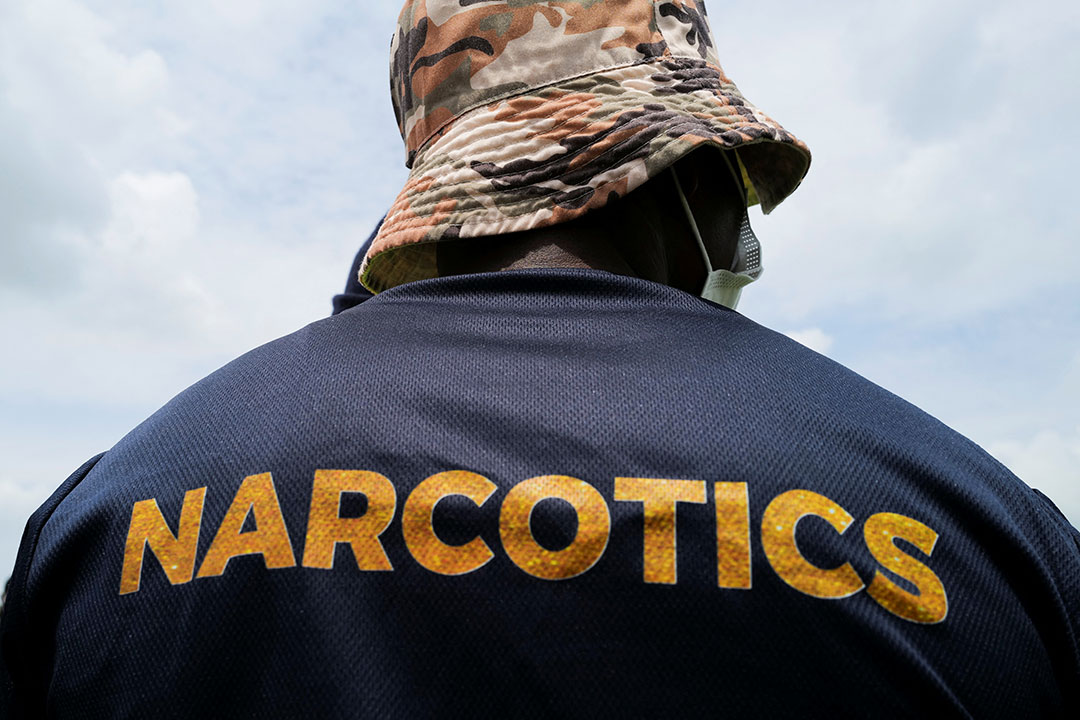
Opioids and other synthetic drugs are increasingly invading parts of Africa, attracting organized crime and overwhelming countries’ medical facilities, according to a new study.
The proliferation of synthetic drugs has become a complex threat to public health and regional security, the Global Initiative Against Transnational Organized Crime wrote in a March 2026 report. “Synthesis — Mapping Synthetic Drug Markets in West Africa,” concludes that traditional plant-based drugs, controlled by traditional criminal networks, “are gradually giving way to a fragmented and decentralized market of synthetic psychoactive compounds.”
The researchers said the synthetic drugs are responsible for overdoses, chronic illnesses, severe mental disorders and the deterioration of living conditions. Young people, generally underemployed, are the primary victims. The drugs threaten long-term stability and economic development.
The drugs are classified as opioids, powerful drugs used to treat moderate to severe pain by blocking receptors in the brain, spinal cord and body. They relieve pain and produce euphoria, but also carry high risks of sedation, severe respiratory depression, addiction and death. Their spread in West Africa and other parts of the continent is relatively recent, with locally made versions beginning to appear about 2022, according to the Global Initiative report.
Of particular concern in West Africa is the synthetic drug kush, a blend of substances that includes laboratory-engineered opioids called nitazenes that can be up to 25 times more potent than fentanyl. Such drugs also include synthetic cannabinoids, designed to mimic the effects of marijuana but with far less predictability and much greater toxicity, according to the Canadian magazine Geopolitical Monitor. A similar drug in Nigeria is called Colorado.
Researchers say that kush’s formula is constantly evolving, making it difficult to study. But in all its variations it is cheap to make, highly addictive and chemically dangerous. A dose can sell for as little as 1 cent.
“These characteristics allow kush to swiftly become entrenched in narcotic markets,” Geopolitical Monitor reported. “And once entrenched, it does not take long for societal fallout to emerge, as the incapacitating effects of kush, which range from cognitive impairment to complete loss of consciousness, lend themselves to pervasive socio-economic marginalization.”
Although kush recipes vary, the drug produced by local criminal gangs in Sierra Leone is generally a mixture of cannabis, fentanyl, tramadol, formaldehyde and some fillers. The fentanyl is believed to originate in illegal laboratories in China. Some of the processing agents also can be added to the product, cutting its strength but making it more dangerous in the process.
In Sierra Leone, the drug is taken mostly by men ages 18 to 25, according to a report published by The Conversation. Kush “causes people to fall asleep while walking, to fall over, to bang their heads against hard surfaces and to walk into moving traffic,” the news organization reported.
The Sierra Leone-produced drug has spread to Guinea and Liberia, according to news reports.
A study in Kambia District, Sierra Leone, that was published in 2023 found an 86.7% prevalence of substance use among commercial motorcyclists, the National Library of Medicine reported. Kush and marijuana were identified as the most abused substances. Another study conducted at the Sierra Leone Psychiatric Teaching Hospital examining psychoactive substance use found that 59% of the 719 admitted patients were kush users.
The Global Initiative report emphasized that West Africa’s synthetic drug markets are expanding, diversifying and “increasingly devastating public health consequences, concentrated in the youth and marginalized communities.” The report noted that the relative ease of getting into the market is creating “new criminal actors.”
“The regional response is falling behind the fast-paced evolution of the synthetic drug market, leaving security and public health officials struggling to respond,” the researchers reported, calling for coordinated regional action that draws on multistakeholder coalitions.
A study by Public Health Challenges recommended investing in mental health infrastructure, training mental health specialists and offering more rehabilitation services. Controlling such drugs will require collaboration between law enforcement agencies, health care providers and community organizations.
Researchers concluded in the study that controlling synthetic drugs such as kush will require improving border management, improving regional and international cooperation, and implementing “robust monitoring and enforcement mechanisms.”
One such cooperative enforcement operation is the Airport Communication Project, a global initiative that helps international airports detect and intercept drugs, other illegal goods, and high-risk passengers. The project’s Operation Harmattan in 2025 brought together authorities from Benin, Côte d’Ivoire, The Gambia, Guinea-Bissau, Mali, Nigeria and Togo to target the trafficking of synthetic drugs through postal shipments and air cargo. The operation resulted in 13 arrests across the participating countries, along with the seizures of fentanyl, tramadol, tobacco, cannabis, cocaine and cash.