

Coastal West African countries are strengthening counterterrorism partnerships after the 2025 rupture with Sahelian nations that crippled the G5 Sahel Joint Force and other regional security structures.
Beninese and Nigerian military leaders recently met to discuss a joint operation along their shared border with Niger, which has become a hot spot for terrorism spilling over from Niger’s Dosso province.
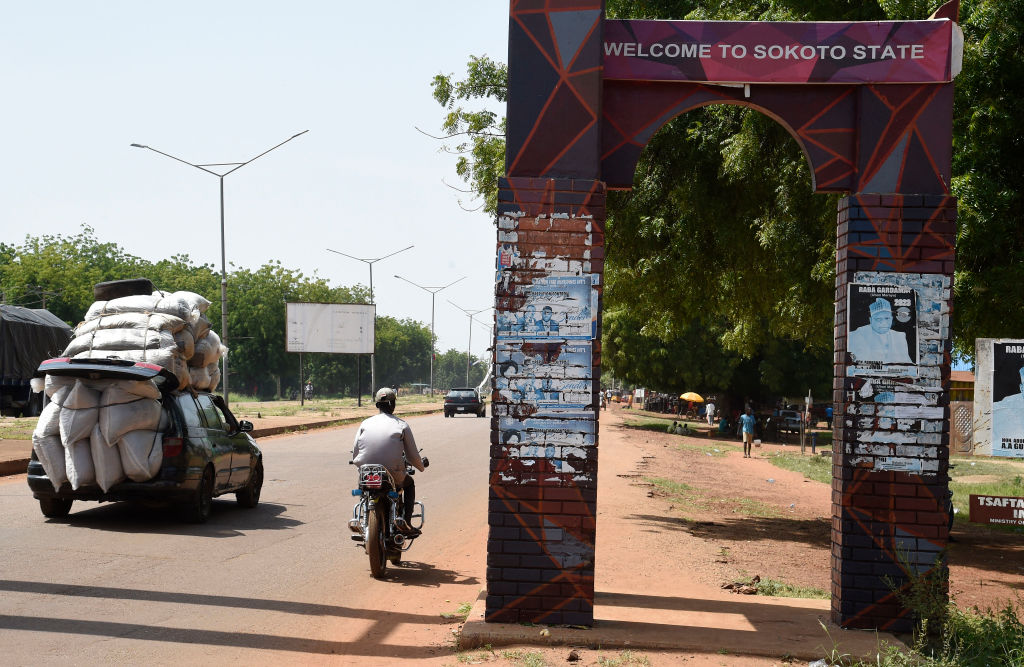
According to the Armed Conflict Location and Event Data project (ACLED), attacks by Jama’at Nusrat al-Islam wal-Muslimin (JNIM) and Islamic State Sahel Province (ISSP) across the region grew 86% from about 150 in 2024 to about 280 in 2025. Civilian fatalities during that same period jumped by more than 260% to more than 1,000. The affected area includes Benin’s northeastern Alibori and Borgou departments and Nigeria’s Kebbi, Kwara, Niger and Sokoto states.
Since 2019, JNIM has claimed terror attacks in Benin, Côte d’Ivoire and Togo. An attack on a Beninese military base in April 2025 killed 54 Soldiers. Later that year, JNIM claimed its first attack in northwestern Nigeria.
“These developments are unfolding amid geopolitical changes, weakened regional cooperation, and limited border security coordination,” Héni Nsaibia, ACLED’s senior analyst for West Africa, wrote in a recent report.
The threat from terrorists in the Benin-Niger-Nigeria border region has taken on new dimensions as extremist groups entrench themselves and use the region to expand their influence, Nsaibia wrote.
Nsaibia added that the response to terrorist expansion has been complicated by a limited government presence and weak enforcement along the porous borders between coastal states and their landlocked neighbors.
Many of the recent attacks by JNIM and ISSP have happened near the forested W-Arly-Pendjari park complex, which straddles the borders of Benin, Burkina Faso and Niger. Terrorist groups use the remote forests and nearby wooded hills, known locally as “dutses,” as havens and bases for operations.
Terror groups also are recruiting from communities around the parks by exploiting ethnic tensions, bringing bandit groups into their orbit and using transportation corridors to extend their reach beyond the border, according to Nsaibia.
“These dynamics also help explain the Sahelian militants’ expansion into Nigerian border areas, where key transit hubs are located, and supply routes serve communities and militant-held areas in the neighboring countries,” he added.
The decision by junta leaders in Burkina Faso, Mali and Niger to break away from the Economic Community of West African States (ECOWAS) and form their own security and economic bloc, known as the Alliance of Sahel States, undermined regional cooperation and reduced cross-border counterterrorism collaboration, Nsaibia noted.
Meanwhile, the three Sahelian states have seen extremist violence escalate dramatically in recent years. Together, they remain the global epicenter for terrorist violence, according to the Global Terrorism Index.
Sunday Dare, senior advisor to Nigerian President Bola Ahmed Tinubu, has said the Nigerian government is committed to strengthening cross-border counterterrorism operations with Benin and other regional partners.
The planned joint operation between Benin and Nigeria includes coordinated border patrols, intelligence sharing and more traffic monitoring across their border.
The approach combines prevention with rapid response to protect civilians and bring stability to the border region, according to analyst Enagnon Wilfried Adjovi.
“This strategic partnership between Benin and Nigeria reflects a growing awareness of cross-border threats and the need for concerted responses to ensure the safety and resilience of affected communities,” Adjovi wrote recently for the website AfricActu.