

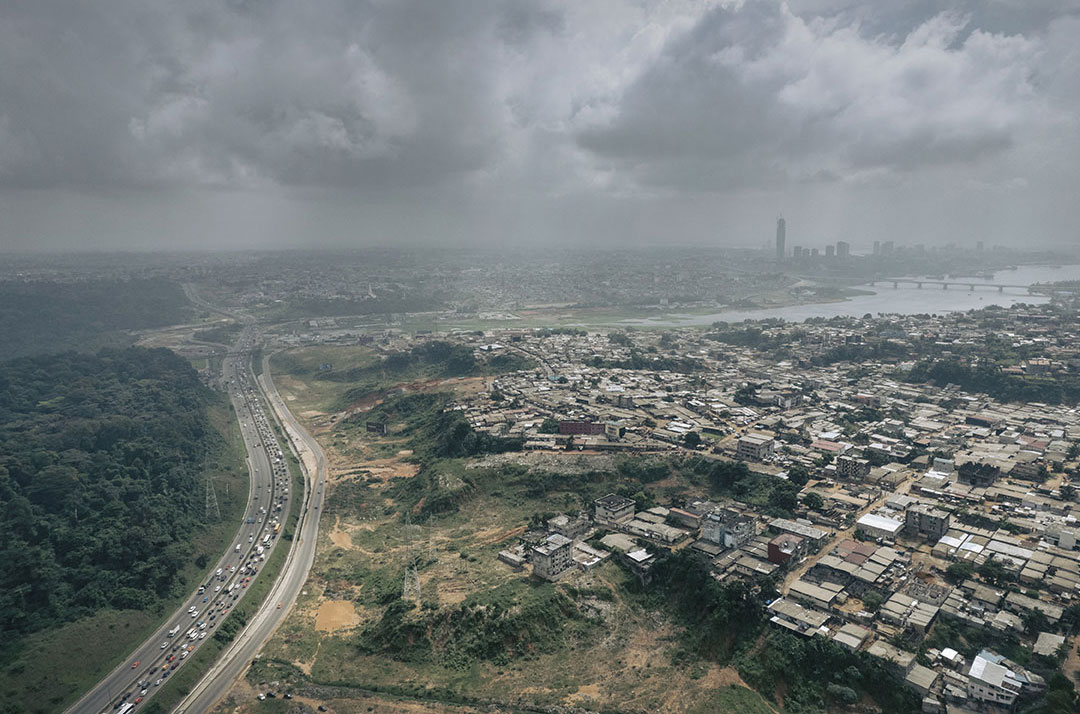
As Africa’s population continues to grow, cities could see unprecedented levels of insecurity, from within and from outside, according to a 2025 study by the Africa Center for Strategic Studies.
Africa is the world’s fastest-growing region. Researchers say that by 2050 the continent will add
1 billion people, growing to a population of 2.5 billion. “Eighty percent of this population growth will occur in cities,” according to the Africa Center report “Africa’s Unprecedented Urbanization is Shifting the Security Landscape.” Nearly half of Africans — more than
700 million people — already live in urban areas.
The continent is projected to add 900 million new urban residents over the next 25 years, which is more than the combined urban population of Europe and the United States, researcher Kurtis Lockhart wrote for Asterisk magazine in July 2025. “The scale and speed of this growth are historically unprecedented. It is a wave crashing upon a continent that currently lacks the capacity to absorb it.
“Two-thirds of the urban space that Africa is estimated to have by 2050 has yet to be built,” he added. “Entire neighborhoods, whole cities, and even major metropolitan areas and mega-regions that don’t currently exist will need to soon.”
Experts say the challenge will be in building infrastructure to keep up with growth and providing security services such as police to combat crime. If these efforts are not successful, it opens the doors for terrorists to capitalize. Some of Africa’s largest and most dynamic urban centers now have severe security problems, ranging from petty theft and armed robbery to organized crime.

UNCHECKED GROWTH, FRAGILE CITIES
The African Union has studied urban crime for years. It says that although urbanization has led to an increase in poverty and inequality, the patterns vary significantly. However, the AU said, there are common denominators. People living in dense urban areas tend to earn money outside of the formal economy. The informal sector — under-the-table income not subject to taxes or extending benefits — amounts to 85% of employment in some areas.
The AU also said that weak institutions result in poor urban policing and planning, “which has led to dysfunctional housing and land markets, which in turn has led to the growth of informal settlements.”
The World Economic Forum says African cities are not ready for the coming population explosion.
“While cities in Africa represent engines of economic growth, few are attuned to the rapidly changing demographics: the majority of people in cities are under age 35 and cities are not prepared for the rapid influx of migrating young people,” the forum reports.
OUTSIDE PROBLEMS
Outside factors in congested urban areas also can influence security. In Sudan, the ongoing civil war adds a new dimension to the congestion and poverty of its urban areas.
“Sudan may be a precursor of this emerging pattern,” the Africa Center reported. “Sudan is the epicenter of organized armed violence impacting urban centers in Africa, accounting for 38 percent of all such fatalities across the continent.”
Militant insurgencies in Burkina Faso, Mali and Niger resulted in 1,165 urban area fatalities in 2024, studies show. As terrorists step up their attacks in the three countries, more urban residents are likely to be killed or injured as terrorists advance southward and westward into more populated areas.
Somalia also suffers from outside influences. “The 644 urban-based fatalities linked to organized violence in Somalia comprises 12 percent of the total fatalities in this conflict-wracked country,” the Africa Center wrote. “These incidents — mostly in Mogadishu, Baidoa, and Kismayo — reflect al-Shabaab’s reliance on forms of remote violence in urban areas including drones, [improvised explosive devices] IEDs, and bombings, even as the group engages in battles with the military and state militias in rural strongholds.”
TAKING STEPS
In 2013, the AU established a set of 50-year goals to improve citizens’ lives across the continent. The goals, called Agenda 2063, include the establishment of “sustainable, resilient, and inclusive cities.”
“This vision can only be achieved if regional and national policies of all AU member states are aligned to this goal,” researcher Ekeminiabasi Eyita-Okon said in a 2022 report. “While noting the importance of member state buy-in, other challenges emerge, namely coordination problems, structural violence, competing external development agenda for Africa, and the challenges of policy implementation.”
She noted that the goals give the continent the opportunity to rethink its approach to development, encourage development cooperation and compliance, and categorize urban security issues as a political priority.
In their study for the Brenthurst Foundation, “Strategic Dilemmas: Rewiring Africa for a Teeming, Urban Future,” researchers Greg Mills, Jeffrey Herbst and Dickie Davis said urban security problems “cannot just be left to the security forces to solve.” They said a comprehensive approach requires whole-of-government attention.
“It needs to be underpinned by a common narrative which succinctly explains why the current situation has been arrived at, what needs to be done to sort the situation out, and how these actions are going to be achieved,” they wrote, adding that “large dollops of hands-on local leadership concerned with the detail of implementation” will be required.
The rapid urbanization of many African countries will require a reassessment of strategies to provide citizen security, the Africa Center says. Police forces, which make up nearly half of the uniformed security across the continent, will need improved training. Authorities will need to rethink force size, deployments and core responsibilities within population centers.
Although military forces and peacekeepers from the United Nations and other organizations can help with security in urban areas, they are only temporary solutions. Protecting citizens and preserving the peace in civilian communities is ultimately the responsibility of the local and regional police. Police forces have local ties, often permanent ones. They are investigators, peace officers and evidence gatherers.
At their most effective, police forces make themselves an integral part of the neighborhoods they serve, a practice known as community-based policing. It’s a philosophy and strategy in which police and community members work together to prevent crime and solve problems by addressing the causes, thus creating safer neighborhoods. It’s a critical tool in addressing inner-city problems throughout the world.
Community police forces do not attain authority and legitimacy automatically, wrote researchers for the London School of Economics and Political Science in a 2025 report on community policing in Ethiopia. They said that community policing is a way to build trust and make policing more effective and more aligned with community needs.
“Increased community involvement helps reduce the politicisation of policing,” the researchers reported. “It does so by addressing the failures of conventional police models whilst also stressing the value of partnering with communities in reducing crime and increasing public safety.” They concluded that being a genuine part of the community is critical in “communicating intelligence, reducing tensions, and enhancing police accountability.”
Kenya has a community policing model called “Nyumba Kumi,” which is Swahili for 10 households. In this system, households work together to keep watch and report suspicious matters to police. One of the group’s leaders leveraged the system to build trust and improve security by setting up a direct line so the public could reach his office, according to Saferworld, a global peace and security organization based in London. He also established direct lines to police quick response units. In the event of an attack, authorities would hold a public forum known as a barasa to identify underlying issues before responding with force.
The system replaced “a forceful approach with one that is based on trust and accountability that builds relationships with local communities to gain intelligence,” Saferworld reported.
In a 2014 resolution, the U.N. Security Council noted that community-oriented policing institutions with well-trained officers are important in “countering violent extremism, including through building trust and dialogue between state authorities and communities.”
Although community policing often is described as a soft approach to security, it has been used successfully worldwide to reduce fear of security threats, prevent crime and improve public safety, according to the Woodrow Wilson International Center for Scholars. Such policing typically can be broken into five elements: problem-solving, partnership, service delivery, empowerment and accountability. The center said community policing can be particularly useful in identifying suspicious behaviors, including radicalization and extremism, and informing police officers promptly.
The Africa Center study shows that some plans to improve urban security already are in place or are being organized. Some cities are investing in data gathering, measuring how to better govern and make decisions. The Southern African Development Community is working on Good Governance Africa, a project to develop indicators for African cities, with the intention of better informing decision-makers on priority areas for improvements.
Various levels of government in African nations are developing job training programs that serve as models for urban policymakers. In Nigeria, the EdoJobs initiative, launched by the Edo State government, offers skills training and job placement services to combat youth unemployment. In Kenya, the Kenya Youth Employment Opportunities Project, supported by the national government, provides training and business grants to young people. The Kenya project has reached more than 358,000 people, and 77% have found jobs.
In the Abobo commune of Abidjan, Côte d’Ivoire, local vigilance committees have partnered with police to address rising urban crime. These committees act as intermediaries between residents and law enforcement, building communication and trust. This approach has contributed to improved community-police relations and more effective crime prevention strategies.
A key to managing the security challenges of Africa’s urban demographic shift will be to avoid treating entire neighborhoods or populations as security threats, the Africa Center concluded. Historically, such approaches, such as cordoning off areas of the city, forced evictions and police crackdowns, have only deepened mistrust and made heavy-handedness by police one of the most damaging forms of insecurity in fast-growing cities.
“Instead, local authorities must work to understand these communities, recognize their role in urban resilience and vitality, and integrate them more fully into the city’s economic and social systems.”
African Union Sets 50-Year Goals
ADF STAFF
The African Union has long known the challenges urban areas will face. In 2013, the AU introduced Agenda 2063, a 50-year plan for the continent’s growth and progress. The expansive plan, the AU said, was to address “ongoing structural transformations,” including economic growth and social progress.
Agenda 2063 lists seven goals:
A high standard of living, quality of life and well-being for all. The plan supports job creation, an end to inequalities of income and opportunity, with particular support for young people. The AU says the continent must face rapid population growth and urbanization and improve housing and access to basic necessities such as water, sanitation and electricity while providing social security and protection.
Well-educated citizens and “skills revolutions” underpinned by science, technology and innovation.
Healthy citizens, accomplished by expanding access to health care, particularly for women and girls.
Transformed economies and jobs. The AU said the continent must properly use its natural resources and improve manufacturing and industrialization while “raising productivity and competitiveness.”
Modern agriculture for increased proactivity and production. The AU said the continent must be able to feed itself and evolve into a net food exporter.
A blue/ocean economy for accelerated economic growth, unlocking the vast potential of Africa’s maritime assets.
Environmentally sustainable policies and resilient economies. Communities must put in place measures to sustainably manage the continent’s “rich biodiversity, forests, land and waters.”