
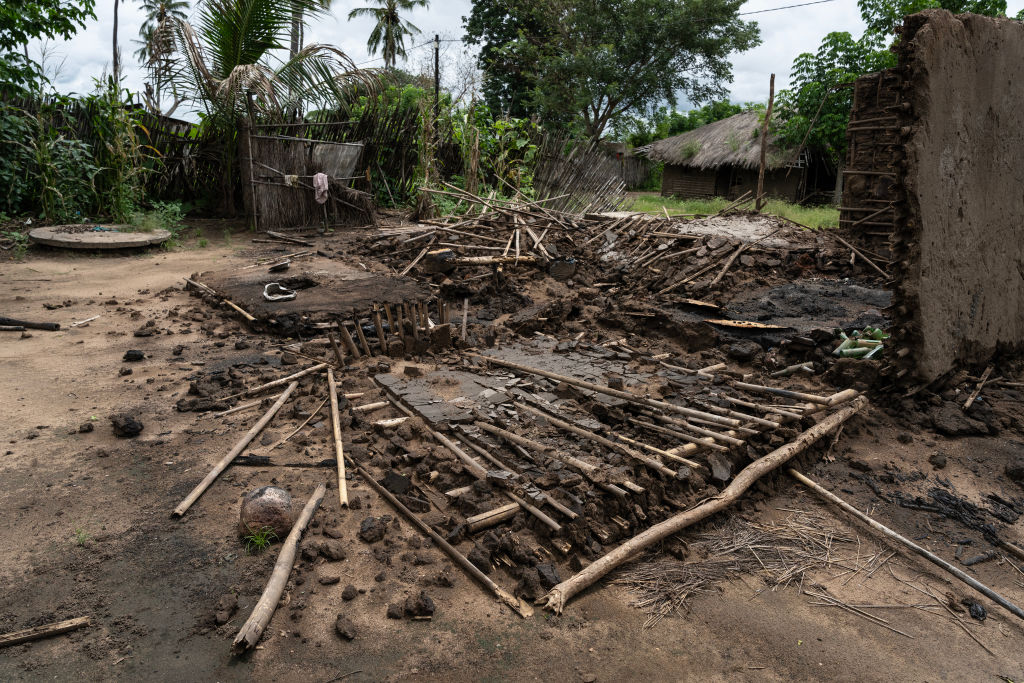
Islamic State militants approached a neighborhood on the outskirts of Mocímboa da Praia in northern Mozambique on January 25, seeking to kill a member of the Maconde local militia. Failing to find him, they abducted his young son.
Two days earlier, members of the Islamic State Mozambique (ISM) reportedly terrorized people on and around several small islands just off the coast. They looted, stole a motorboat and kidnapped fishermen, demanding a ransom of 50,000 meticais ($784) each.
“My brother was there on the islands night fishing, and he and his colleagues were taken off their boat by the insurgents,” a Mocímboa da Praia resident told news website The Mozambique Times. “They only managed to return to the district capital yesterday [January 27], coming from the island.”
ISM has developed significant new sources of income through kidnapping for ransom, extortion, and by taking over artisanal and small-scale mining operations in the Cabo Delgado province. Kidnappings for ransom by insurgents quadrupled in 2025, accounting for about 10% of all ISM activity throughout the year, according to the Armed Conflict Location & Event Data (ACLED) monitoring organization.
ISM operates on key roads for travel and commercial activity, particularly the N380, which runs from Mocímboa da Praia to Macomia and farther south. Insurgents focus on targets like passenger buses and commercial vehicles where passengers can raise money for ransom quickly through mobile money accounts.
“This typically involves a roadblock to stop traffic, demands for money for the release of vehicles and passengers, and at times, people have been taken into the bush and held for some hours while payment is arranged” ACLED Southeast Africa Senior Analyst Peter Bofin said during a January 22 webinar. “Payments can be in the thousands of dollars for commercial vehicles and hundreds of dollars for individuals, so it’s lucrative. In one week in March 2025, we estimated that ISM raised about $3,000 from kidnapping and extortion at a series of roadblocks that they put in place.”
ISM activity around small-scale and artisanal gold and gemstone mines also increased dramatically in 2025, during which time the price of gold rose by more than 60% on global markets.
On October 7, 2025, ISM fighters visited the Montepuez district, called a meeting of miners and demanded daily cash contributions and access to gold. A source in the small-scale mining community told ACLED that the insurgents threatened to burn property if their demands were not met. One week later, they launched a rare attack on a different gold mine in the district.
“It’s becoming a more significant source of income,” Bofin said. “We think that a sustained presence around mine sites suggests efforts to control the sector rather than to destroy it.”
ISM attacks that involved stealing weaponry from Mozambican security forces nearly doubled in 2025 compared to 2024. The group posted photos and videos on social media with machine guns, mortars and rocket-propelled grenade launchers with ammunition.
“It’s clear that they have resilient command and control systems that allow for the management of extensive networks managing large amounts of cash and also the control of weaponry,” he said. “If the group is able to continue raising finances domestically and is increasingly autonomous and less reliant on external transfers, it’s a worrying problem.”
ISM has been supported financially by the Islamic State group’s central authorities, specifically from its al-Karrar office based in Puntland, Somalia. ISM previously was considered part of the Islamic State Central African Province, or ISCAP, from 2019 to 2022 before establishing itself as a separate entity.
“There has long been a relationship with ISCAP back to 2017 and before … but there were some tensions over finance,” Bofin told ADF. “There are likely still contacts between individuals and groups passing through Tanzania. Both groups rely on support networks in that country to this day.”
Emílio Zeca, a researcher at the Centre for Strategic and International Studies in Mozambique, said finances flow from the al-Karrar office through Uganda, the Democratic Republic of the Congo, Mozambique and South Africa.
“South Africa plays an important role because there are ATMs where they can withdraw money converted from Bitcoin and send it to Mozambique or to Tanzania,” he said during the webinar. “Then members of the group [ISM] exchange or send it by mobile money services.”
Experts have called on the Mozambican government to crack down on terrorist financing through mobile platforms, but Zeca said the current state of oversight is weak and there is little appetite for any economic disruption.
“The law is not equipped to face the way that the group uses to send money,” he said during the webinar. “The companies protect their clients, protect their data, because that’s the law. They cannot share without authorization.”