

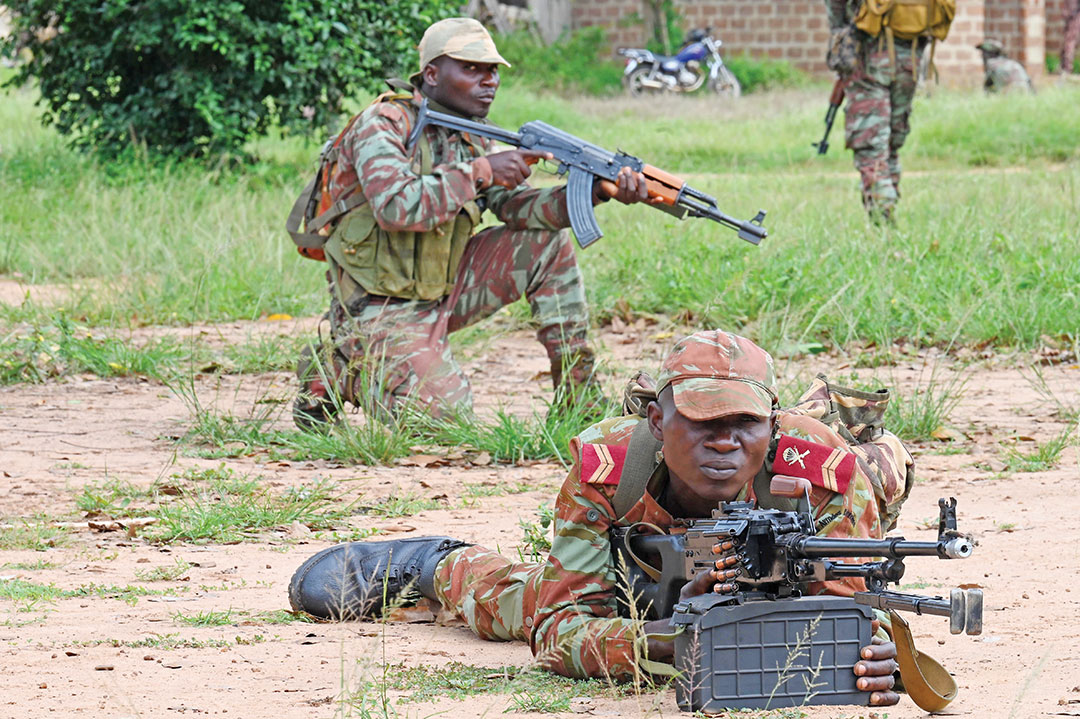
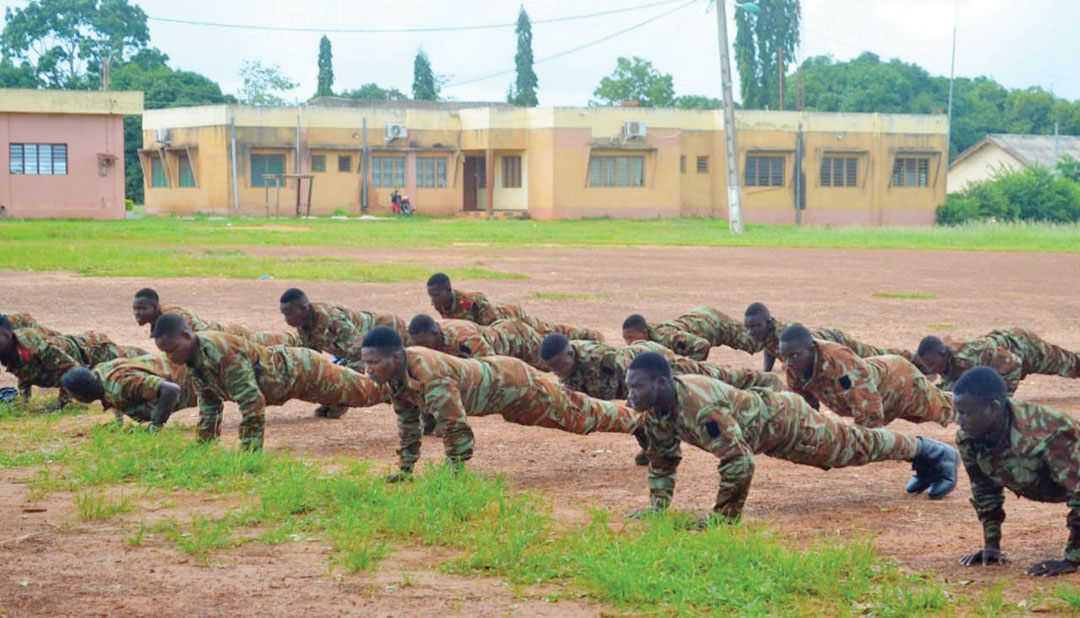
In a grueling, eight-day exercise spread across three departments in Benin’s southern zone, members of the National Guard were pushed to their limits.
They rescued hostages, put down insurrections and warded off ambushes. They rappelled from cliffs, navigated high rope courses and dropped from helicopters hovering over water.
The scenarios were fictional, but the real test was coming soon. Many of the 560 Soldiers training in July 2025 were expected to deploy to the north of the country to take part in Operation Mirador, Benin’s military mission to contain a growing terror threat.
“They are training and developing the reflexes necessary to confront incidents that we face on the ground,” Col. Faizou Gomina, head of the National Guard, said. “Naturally, this will allow personnel to be battle-hardened before their deployment to the operational zone, which is expected in the coming weeks.”
The stakes couldn’t be higher for the country, which is facing an existential threat from Sahel-based terrorism. Benin has suffered a steady rise in attacks since 2019, when terrorists kidnapped a guide and two tourists from Pendjari National Park. In 2024, the country suffered 153 fatalities linked to terrorist attacks. In 2025, that number was expected to grow, including two gruesome attacks that killed more than 80 Soldiers at military installations.
The recurring attacks made it clear that terrorists, most notably Jama’at Nusrat al-Islam wal-Muslimin (JNIM), are determined to establish a base inside the country. Benin’s coastal neighbors Côte d’Ivoire, Ghana and Togo also are facing a wave of incursions from Sahel-based groups. The violence has shaken a nation that had not experienced a terror attack for the first six decades of its existence but is now the 26th-most terror-impacted country in the world.
“The scope of the attacks and the number of deaths on the Beninese side had the effect of a shock wave because we are not accustomed to this level of violence,” Beninese researcher Oswald Padonou told Jeune Afrique. “It gives the feeling of a loss of control.”
Mirador Takes Shape
Launched in 2022, Operation Mirador is meant to strengthen the military presence along Benin’s northern borders with Burkina Faso and Niger. It is designed to restore security to the W-Arly-Pendjari (WAP) Complex of parks that straddle the three nations and are a haven for terror groups and traffickers.
Mirador is made up of about 3,000 Soldiers positioned in eight forward operating bases and advanced fortified positions across the north. Additional troops rotate through the affected regions seasonally, and there are local security guards trained to support intelligence gathering. The Beninese Armed Forces (FAB) also created a National Guard and a Special Forces unit to support the operation.
The Armed Forces has partnered with other countries to obtain equipment such as helicopters, drones and armored vehicles for the fight. Benin increased its defense budget by 60% between 2022 and 2024 and announced a special recruitment drive to grow the military’s force by 5,000.
“All these investments are with the objective of allowing a fast and easy projection of our men on the theaters requiring their intervention,” Benin President Patrice Talon said in a 2022 address to the nation. “To be clear, it means fortifying the country and guaranteeing optimal security for all.”
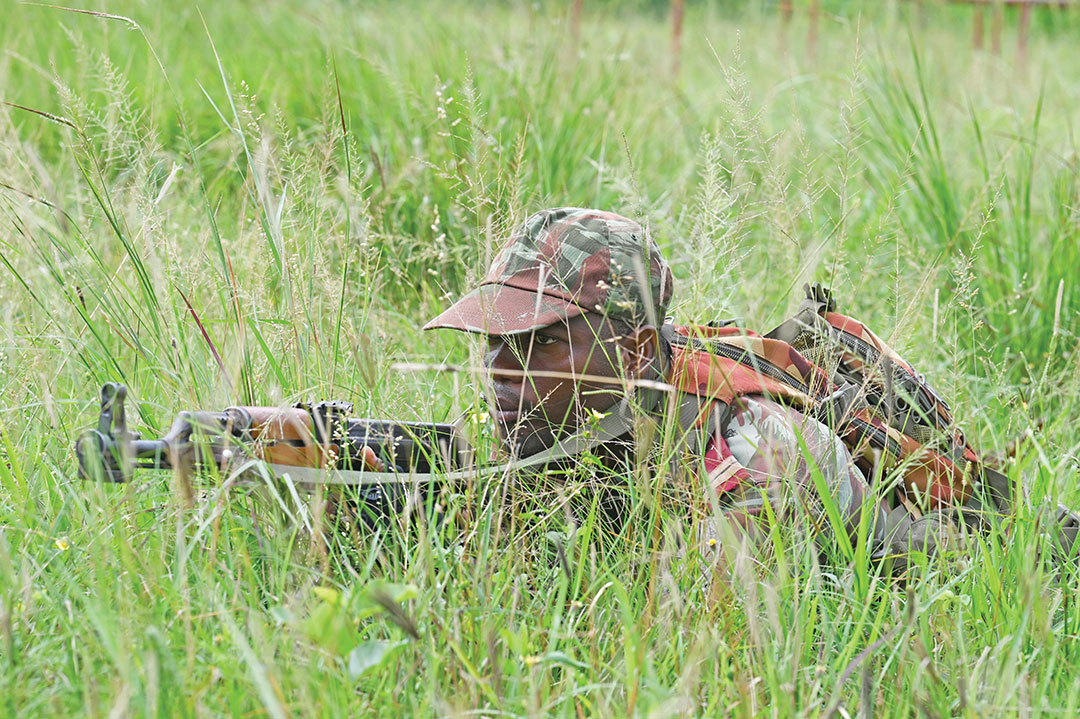
The mission has recorded some successes. In February 2025, the Army repelled an attack and killed 17 terrorists threatening the town of Banikoara. Soldiers also have dismantled terror cells operating in Pendjari National Park and confiscated weapons, bomb-making material, phones and walkie-talkies.
But the gains have come at a steep cost. By one estimate, 217 Soldiers have died in combat in the north since the operation began. The April 17, 2025, JNIM attack that killed 54 Soldiers led to an outpouring of emotion and criticism from the public.
But some say even the losses are evidence that jihadists are facing stiff resistance as they try to push south. “Our mission is not to wait for the threat to arrive,” Col. Raoufou Assouma, commander of the Joint Tactical Group in the West Zone, told Le Monde. “We must go and flush it out and neutralize it wherever it is.”
Gaining Civilian Support
From the beginning, the FAB recognized that it would not win the fight with military force alone. Benin’s remote north is underdeveloped with few roads and bridges, little industry and scant access to basic services such as medical care. People in the region are mistrustful of the central government. Terror groups, including some sharing ethnic ties with the people, try to take advantage of this.
“The sense of abandonment is so strong that the terrorists are often seen as saviors because of the masses of money they spend on, for example, a well in a village or to pay young people for their work,” sociologist Paul Affanmin told Le Point.
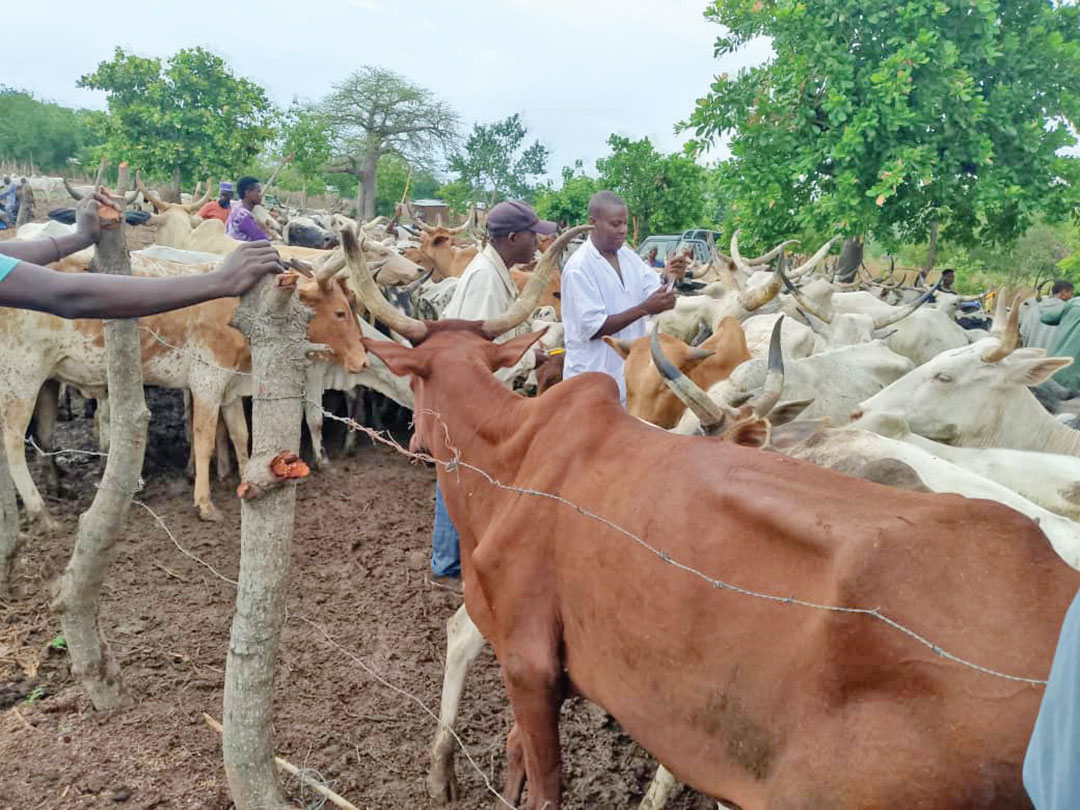
The FAB has sought to change this perception through veterinary events to treat herders’ livestock, free medical clinics and listening sessions to promote dialogue with civilians. In May 2025, veterinarians treated 4,000 cattle in several villages of Materi, and doctors offered medical care to 1,700 patients in Atacora.
“For a long time the myth of the uniform frightened people,” Fortunet Alain Nouatin, Benin’s minister of defense, said. “It is necessary for the Army to put itself at the heart of the population. With free medical events, it wins the sympathy of the population and, in an indirect way, it gives them confidence in us so they can provide useful information.”
The Armed Forces has formed civil-military committees in coordination with local officials and traditional leaders. The committees offer a venue for the public to help the military identify security priorities and allow people to voice concerns or offer advice. At the first committee meeting in the town of Atacora in June 2025, one stakeholder said the idea behind the event was to “construct security together, to listen, act and move forward collectively.”
“These projects are the expression of a desire to restore confidence between the defense forces and the communities in the spirit of complementing each other and co-constructing security,” Lt. Mardochée Avlessi, a military doctor in charge of the civil-military committee in Materi, told Le Point.
The military and government efforts undergird international programs to support the border regions, including the World Bank-funded Gulf of Guinea Northern Regions Social Cohesion Project. This $33 million program is designed to build resilience in border communities by improving services and food security, and promoting land reform. The project is estimated to support more than half a million people in Benin.
A Fractured Region
Fractured security partnerships in the Sahel have hampered Benin’s fight against terrorism. After coups, Niger and Burkina Faso left the Economic Community of West African States, leaving Benin with limited ability to collaborate or share intelligence with its northern neighbors. Beninese forces no longer have the right to pursue terrorists who flee across borders. Beninese officials fumed that terror groups have “total liberty” for more than 100 kilometers inside the territory of Burkina Faso. They can launch attacks and retreat to safety without fear of pursuit.
“Our situation would be easier if we had better cooperation with the countries that surround us,” Benin’s government spokesperson Wilfried Houngbédji told Le Point. “If, on the other side of the border, there was an effort at least like ours these attacks would not unfold like this.”
Sahel security researcher Seidik Abba believes terror groups are intentionally instigating mistrust between neighboring countries.
“The terrorists know that there are difficulties between the different countries in the region, and they benefit from that to advance their agenda,” Abba told the BBC. “It’s in the best interest of the jihadists to make the threat transnational, a challenge that goes beyond one lone border.”
The WAP complex sprawls across 27,000 square kilometers in all three countries. Data from the Armed Conflict Location and Event Data project (ACLED) shows that between 2023 and 2025, JNIM consolidated gains in eastern Burkina Faso and southwest Niger, including the park, using the area as a staging ground to push south. ACLED warned that without military cooperation and coordination the expansion could continue and “fundamentally reshape the security landscape in this subregion.”
FAB leaders know that their responsibility with Mirador is to stop this southward push of extremists at all costs. During a 2024 visit to the front line, Beninese Chief of Defense Staff Maj. Gen. Fructueux Gbaguidi exhorted the Soldiers to keep up the fight.
“Stay calm. Do the job as you’ve been doing it, if not better, in keeping with our honor as Soldiers. You are the best,” Gbaguidi said. “When we see what is happening in the sub-region, when we see your capacity for resilience, your ability to face these challenges, for me there are no better than you. We have to maintain the tempo, maintain this momentum. Bon courage. The fight continues.”