
After two decades of loaning African nations billions of dollars for infrastructure projects, China now is focused on extracting payments, straining national budgets and threatening security across the continent.
Collectively, African nations have gone from receiving nearly $30 billion in Chinese loans between 2010 and 2014 to paying out $22 billion between 2020 and 2024, a swing of $52 billion, according to a recent analysis by One Data, a group that uses open-source information to examine economic issues around the globe. The report was made for the Development Finance Observatory.
China has become a net extractor of funds from low- and lower-middle-income countries as billions of dollars in loans mature at the same time, according to the One Data report. Although the story is similar across dozens of countries that signed on to China’s Belt and Road Initiative (BRI) more than a decade ago, African countries are feeling the pinch more than others.
“Africa has experienced the most dramatic reversal in Chinese finance,” One Data researchers wrote in their report.
The shift in financial flows occurred as China has pulled back on lending to already deeply indebted African countries. That pullback began during the COVID-19 pandemic and has accelerated.
Chinese lenders feel pressure to avoid making loans that might not be repaid, Mengdi Yue, a researcher at Boston University’s Global Development Policy Center, told the Semafor news site. The center tracks Chinese lending in African nations and elsewhere.
“Chinese banks lent so much in the past decade but are becoming more risk-averse because not every sum has been repaid,” Yue said.
China’s tightening of its purse strings has produced a 90% drop in loans since BRI lending peaked in 2016.
In 2024, for example, Chinese banks loaned just more than $2 billion to African nations, with 70% of that going to Angola alone. Angola remains China’s largest borrower, having absorbed nearly $50 billion between 2000 and 2024. The vast majority of those loans went into energy projects, but some also helped to develop a showcase coastal road along the waterfront in Luanda.
Angola’s Chinese debt has been guaranteed by its oil production. Using its oil resources, Angola reported that it has paid down $1.3 billion in Chinese debt in the first half of 2025, bringing its outstanding debt down from $10.2 billion to $8.9 billion, or about 9% of its gross domestic product for that year.
Angola is one of 11 African countries among the 20 countries worldwide with the highest debt to China, according to the World Bank.
Kenya also is high on the list of nations struggling under the weight of their Chinese debt.
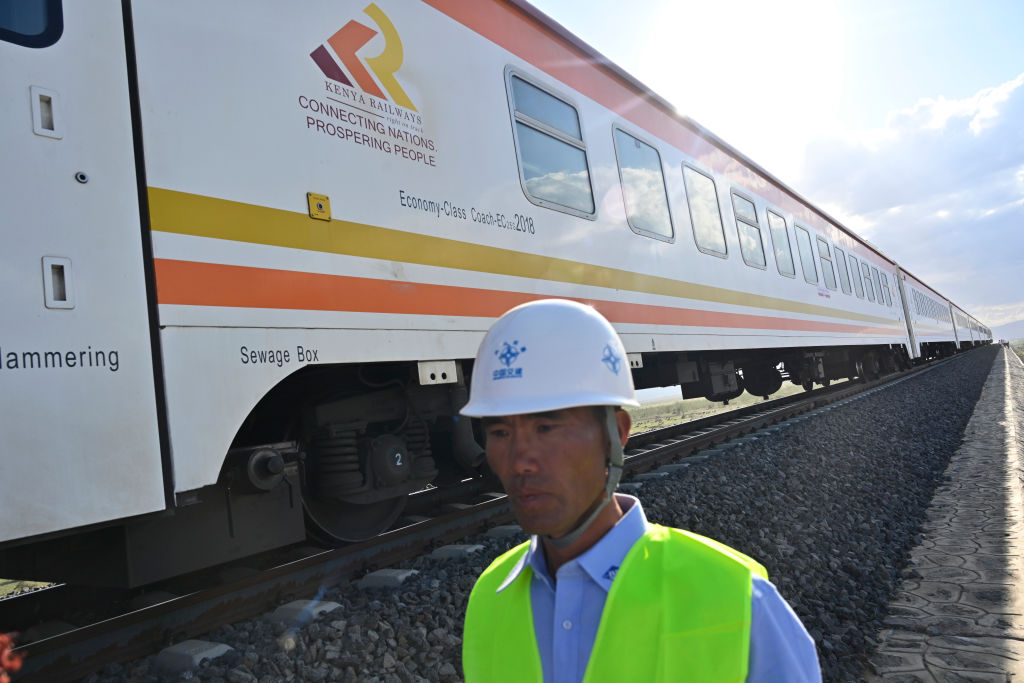
Unlike Angola, which backed its borrowing with oil, Kenya relied on profits from the Chinese-built Standard Gauge Railway to repay its $7 billion in loans on the project. The railway between Mombasa and Nairobi has failed to perform as anticipated, however, leaving the government on the hook for the debt.
As a result, Kenya pays about $1 billion a year to China in combined principal and interest on a project that came with promises of great profits but has become a major financial burden instead.
By comparison, Kenya’s national budget runs about $33 billion, and its foreign debt is equal to two-thirds of its GDP. Kenyan officials recently restructured their Chinese debt from dollars to Chinese yuan to shave millions of dollars from their annual payments.
Analysts say the debt burden will force countries to make difficult decisions that could affect spending on essential programs related to defense, health care, development and education.
“For many years, Chinese credit has fueled an infrastructure boom across the African continent,” analyst Olawale Olalekan wrote recently for the Pan-Atlantic Kompass news site. “This reversal marks the end of an era of easy credit and leaves many governments balancing the books between mounting debt obligations and the urgent need for domestic development.”