
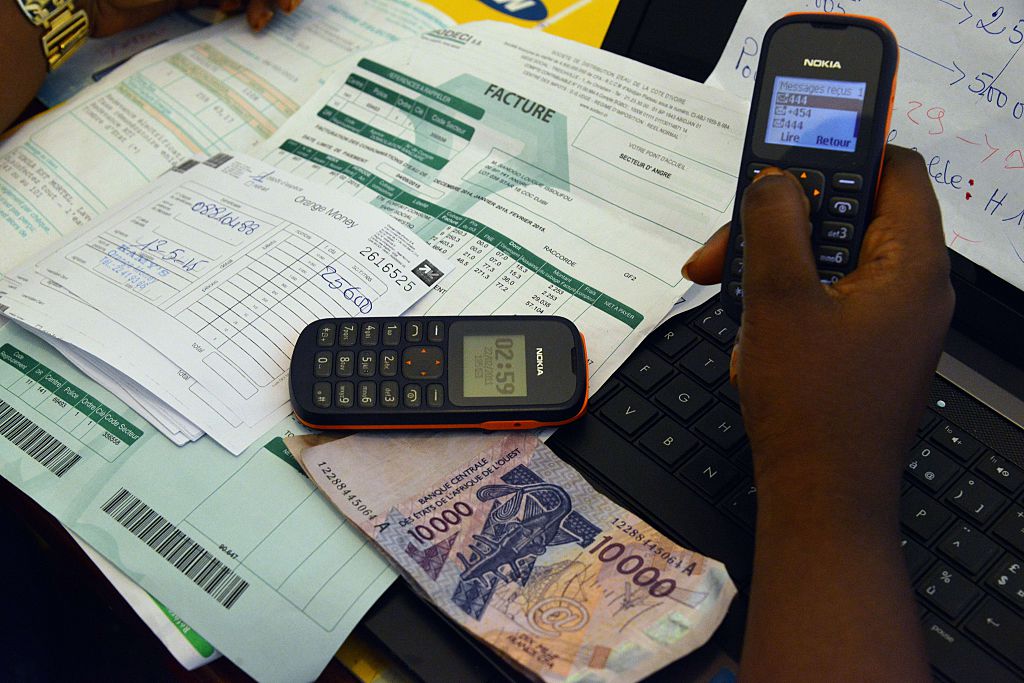
African nations lead the world in the use of mobile money, yet weak regulation and poor digital literacy leave users open to abuse by online scammers and other criminals, experts say.
Collectively, African mobile users held more than 1.1 billion of the 2.1 billion mobile money accounts worldwide in 2024, according to a recent report by GSMA, the trade organization for mobile operators.
Continentwide, mobile money users conducted nearly 900 billion transactions in 2024. Sub-Saharan Africa has become the world’s leader in using mobile finances, accounting for 74% of all mobile money transactions globally in 2024 despite having less than 40% of its population online.
West Africa reported nearly 500 million users, followed closely by East Africa. Together, those regions conducted $1 trillion in mobile financial transactions. Central, North and Southern Africa collectively produced another $99 billion in transactions, according to GSMA.
Even as Africans embrace digital currencies, such as Nigeria’s eNaira, governments are struggling to stay ahead of online criminals who are using increasingly sophisticated methods and AI technology to crack digital financial systems and steal users’ money.
Researchers estimate that online criminals siphon $4 billion a year from Africa’s economy. Kenya, where 70% of citizens use some form of digital currency, lost an estimated $883 million to online thieves in 2023.
“Cybersecurity is not merely a technical issue; it has become a fundamental pillar of stability, peace, and sustainable development in Africa,” Jalel Chelba, acting executive director of Afripol, said in a statement after the release of Interpol’s 2025 Africa Cyberthreat Assessment Report.
Afripol and Interpol have collaborated to disrupt a variety of online criminal enterprises, including many involving Chinese and other foreign actors.
Several African countries have received high marks in recent years for their efforts to protect their citizens from online predators. A different GSMA report, the Mobile Money Regulatory Index, says Ghana, Lesotho and Malawi lead the continent in regulating their mobile money networks.
Despite those cases of individual progress, African nations’ attempts at collective online security remain a work in progress. The African Union Convention on Cybersecurity and Personal Data Protection, popularly known as the Malabo Convention, came into force in 2023 but has only 15 of the continent’s 54 countries on board, making it largely ineffective.
Meanwhile, Egypt, Ghana, Kenya, Morocco, Nigeria, South Africa and South Sudan continue to fend off millions of cyberattacks each day. The goal is for one of those attacks to get through, often by tricking someone into opening a malicious email. When that happens, the results can be devastating.
Kenya’s Communications Authority recently reported that the country recorded 2.5 billion cyberthreat incidents in the first quarter of 2025, more than triple the increase from the previous quarter. Kenyan authorities estimate that cyberattacks cost the country as much as 3.6% of its gross domestic product (GDP) each year.
A 2024 cyberattack on the Bank of Uganda cost it nearly $17 million in stolen deposits.
Cybersecurity analysts say African nations’ fragmented approach to online theft leaves the entire continent vulnerable to attacks that can cripple confidence in mobile banking systems and damage their growing economies.
The continent can’t make the most of digitization without ironclad security against cybercriminals, according to Ewan Sutherland at LINK Centre of South Africa’s University of the Witwatersrand.
“The complexity and fluidity of cyberattacks means that Africa requires urgent and coordinated actions to deal with the problem,” Sutherland recently told the website World Finance. “Africa must realize that depending on the international community is a stopgap intervention. In the long term, governments must take the lead in disrupting cybercrime networks.”