
ADF STAFF
About 160 suspected members of the Jama’at Nusrat al-Islam wal-Muslimin (JNIM) terror group on January 11 attacked three factories and kidnapped four civilians, including a local official, in western Mali’s Kayes region.
JNIM, like other terror groups in the Sahel, kidnaps for ransom to fund its operations, intimidate locals and gather intelligence. Kidnapping also is a way to forcibly recruit young people and skilled workers such as doctors and nurses. The kidnapping of local civilians for ransom is an evolving trend among these groups, which once relied more heavily on the kidnapping of foreigners for ransom.
This change in tactics was identified by researchers Alexander Laskaris, a visiting scholar at the University of Florida, and Olivier Walther, an associate professor in geography at the university, who used data from the Armed Conflict Location and Event Data project (ACLED) to trace the evolution of abductions and forced disappearances in 17 West African countries over the past 24 years. They studied nearly 58,000 violent events that resulted in more than 201,000 deaths from January 2000 through June 2024.
“Our findings suggest that the kidnapping industry has experienced a major shift,” they wrote in The Conversation. “We discovered that most of the victims of kidnappings for ransom were westerners until the end of the 2010s. Since then violent extremist organizations have turned to local civilians. Both western and local hostages represent lucrative resources that ultimately fuel insurgencies in the west African Sahel.”
Terrorists have turned their attention to locals due to a marked decline in the number of foreign nationals living or traveling in the Sahel. Kidnappings there typically occur along major transport corridors and in rural areas, where terrorist groups have established an economy based on looting and ransoming civilians.
“In the central Sahel, this kidnapping economy has spread to most rural areas,” Laskaris and Walther wrote. “This includes the south of the Wagadou forest in Mali to the W National Park at the border between Burkina Faso, Benin and Niger. The brutal local economics of kidnap for ransom is also vibrant in the Lake Chad region.”
Civilians sometimes are released unharmed after their motorcycles, food, phones and animals have been stolen, or a ransom has been paid.
Terror organizations still view kidnapping foreigners as a lucrative endeavor. European countries paid an estimated $125 million to free hostages from al-Qaida in the West African Sahel from 2008 to 2014, and foreigners visiting the region still face the threat of kidnapping. The United Arab Emirates in October 2025 allegedly paid a $50 million ransom and delivered military hardware to al-Qaida-linked fighters for the release of Emirati hostages in Mali.
As the researchers noted, a common misconception is that foreign militaries rescue most hostages in the Sahel, but those instances are rare.
“Most of the time, the reason for their release has been ransom and concessions negotiated by local partners,” Laskaris and Walther wrote.
ACLED data shows that although kidnappings for ransom in the Sahel are still a threat, they are not as prevalent as in past years. Between 2022 and 2024, kidnappings for ransom in Burkina Faso, Mali and Niger decreased from more than 500 to more than 200 annually.
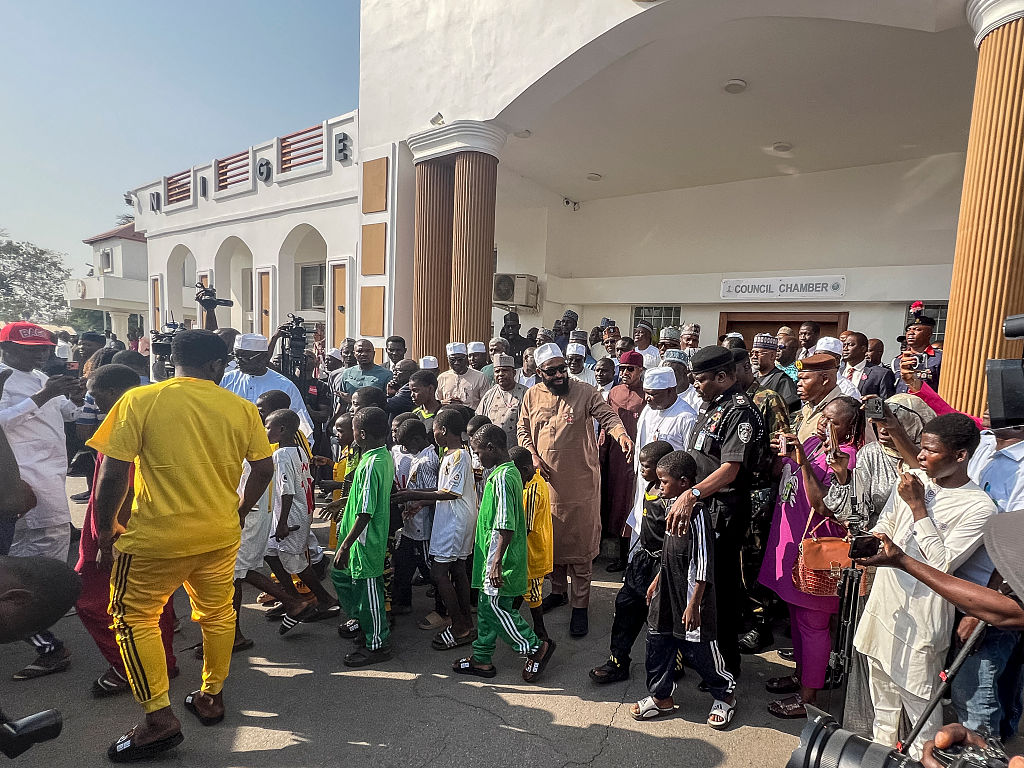
One of the worst mass abductions in Nigerian history occurred on November 21, 2025, when militants stormed a Niger State boarding school about 2 a.m. and kidnapped 303 students and 12 teachers, which is more than the 276 people kidnapped during the infamous Chibok school abductions in 2014. All the students were freed by December 22, but details about the staff are unclear.
It was not known whether the children were freed via ransoms, negotiations with their captors or in a security raid. According to the BBC, Nigeria has outlawed ransom payments.
“For Sahelian governments, acceding to ransom demands weakens their political position and provides material support for those who threaten them,” Laskaris and Walther wrote. “The same applies to foreigners in the Sahel — relief workers, missionaries, business people, tourists — for whom every ransom paid makes their position more precarious.”