

February 18 will mark one year since Zambia was hit by one of the worst environmental disasters in its history. But for activists like Nsama Kearns, the fight to fix the damage is only getting started.
At least 51 million liters of toxic waste poured from a Chinese-owned copper mine into the Mwambashi stream that day, and officials reported signs of pollution more than 100 kilometers downstream on the Kafue, Zambia’s longest river and a primary source of drinking water for much of the country.
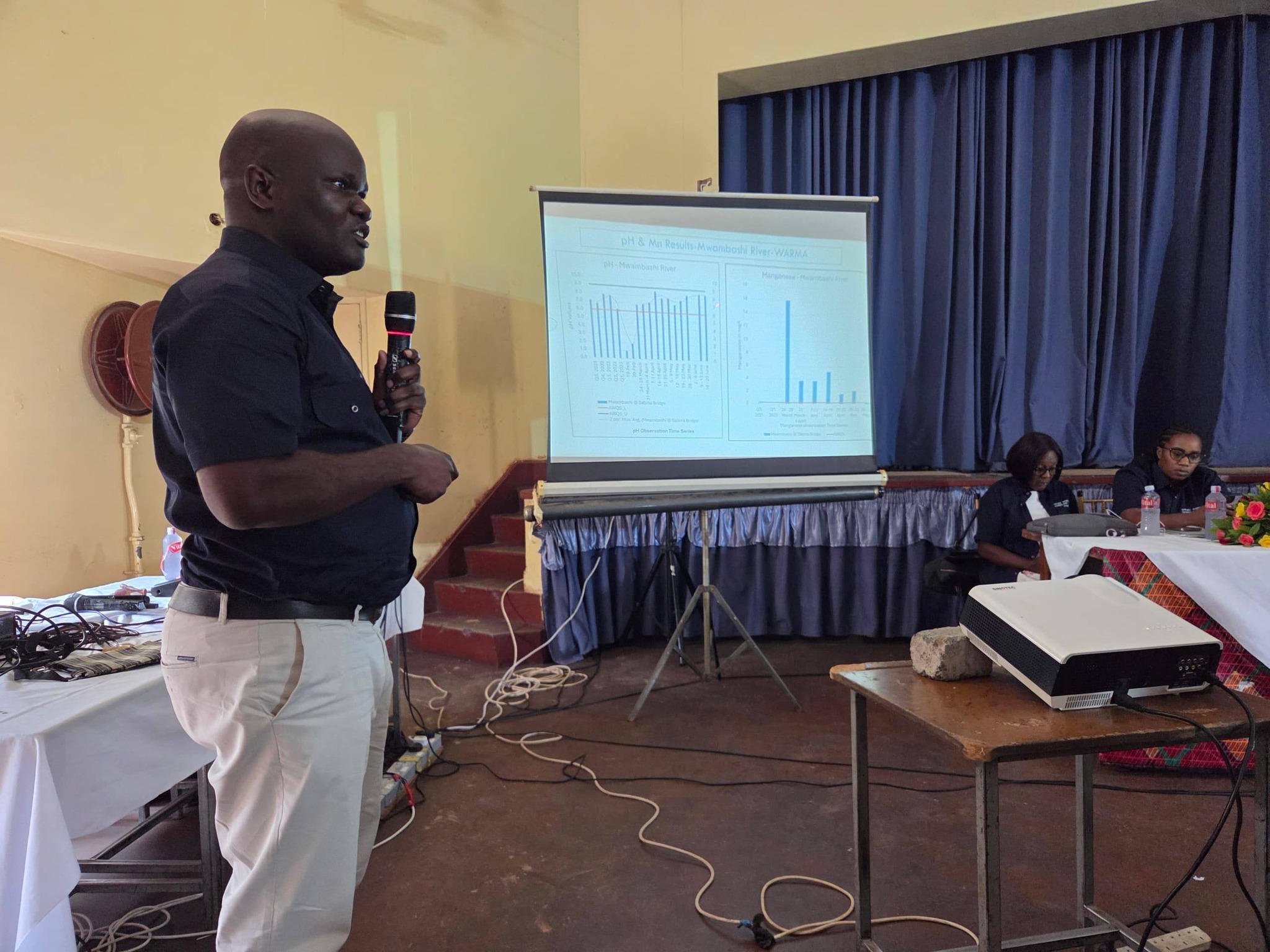
Independent experts hired by the government shared their findings of the spill’s impact at a public meeting hosted by the Zambia Environmental Management Agency on January 6 at Mukuba Secondary School in Kitwe.
“It is quite sad that this assessment took so long because that accident was worrisome,” Kearns told ADF. “We lost a lot of biodiversity, fish died, communities lost livelihoods because their crops were damaged.
“According to the report, there are still areas where soils are highly contaminated, like the Kalusale community. So, this means that they will not be able to conduct agricultural activities on that land for the next two years, maybe even more.”
One of the independent environmental experts, Titus Haakonde, disclosed during the January 6 meeting that while surface waters in affected areas are returning to normal, his company found high levels of heavy metals, including cadmium, cobalt, copper, manganese, zinc and others, still upstream of waterways around Chambishi and Kalulushi.
Agronomist Dina Mambwe recommended the immediate relocation of the Kalusale farming community away from Kalulushi with an allowance to help them settle in a new place.
The spill occurred in Chambishi at Sino-Metals Leach copper mine, which is owned by the state-run China Nonferrous Metals Industry Group. In July, the government ordered Sino-Metals to provide interim compensation to 454 farmers. It also told the company to bring down levels of pollution in the air and soil, plant trees and continue spreading lime to reduce acidity in the Kafue.
“I think this has been a learning point for Zambia, because the pollution to water bodies and soil is not just happening in the Copperbelt Province, where we have large-scale mining investments,” Kearns explained. “Zambia is experiencing serious cases of water and soil pollution in most places across the country where mining is taking place.”
In September, 176 farmers filed one of the biggest environmental lawsuits in Zambia’s history. In the $80 billion complaint against Sino-Metals, they claimed the spill affected 300,000 households. They said the collapse of the tailings dam, where mining waste was collected, was caused by multiple points of negligence, including engineering failures, construction flaws and operational mismanagement.
“All eyes are on this case,” Stephen Chan, a professor at the University of London’s School of Oriental and African Studies, told the BBC, “because of the huge extent of the damage that has been caused, the huge extent of the carelessness that was very obviously involved.”
Some have argued that the lawsuits and remediation are something of a test of Zambia’s ability to stand up to wrongdoing by foreign companies. But Douty Chibamba, permanent secretary of the Ministry of Green Economy and Environment, told Zambians not to worry about the effect of the country’s $5 billion debt to China.
“There is no treating them [China] with kid gloves here,” he told the BBC. “We don’t care whether we owe them, that’s not the issue.”
Noting the government’s stated goal to triple copper output, Kearns believes that officials must balance economic aspirations with improved oversight and accountability measures in order to protect citizens.
“As Zambia is positioning itself to be one of the largest suppliers of copper, not only in Africa but across the world, we need to see how the Chinese investments are going to be compliant to environmental laws,” she said.
“It shouldn’t just be about increasing production but also ensuring that copper production and mineral wealth extraction in Zambia also meets the people’s expectation and does not violate people’s rights.”