

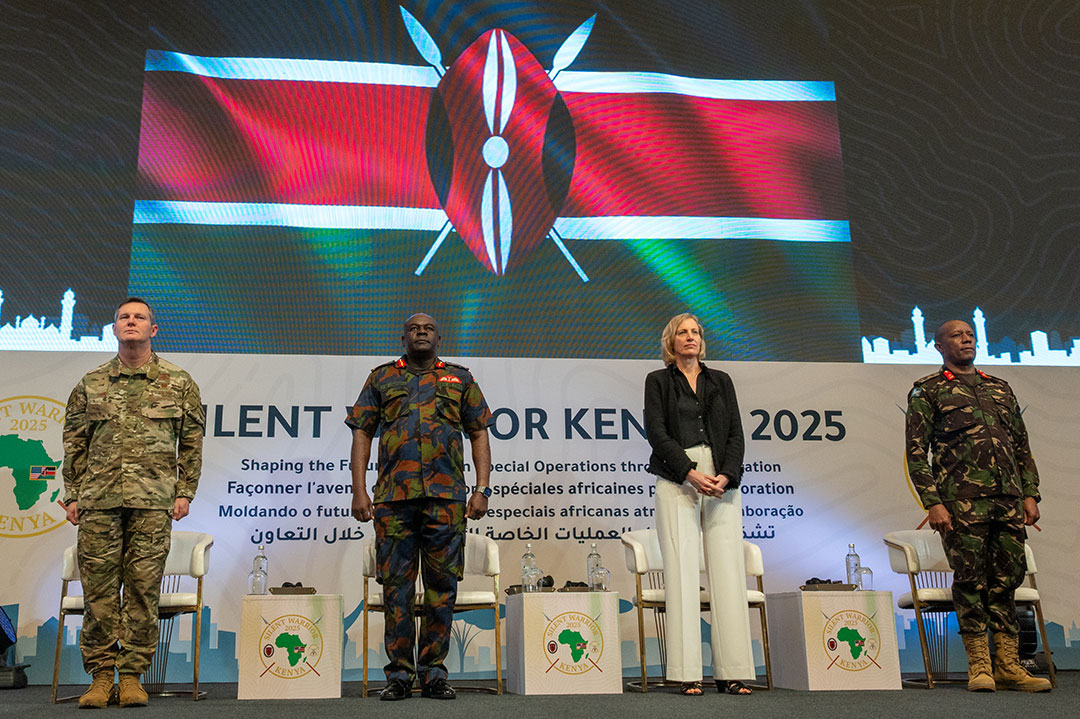
Special Operations Forces operate in small, agile units, under a shroud of secrecy and with little external support. Because of their high-risk, low-profile missions they sometimes are known as “silent warriors.”
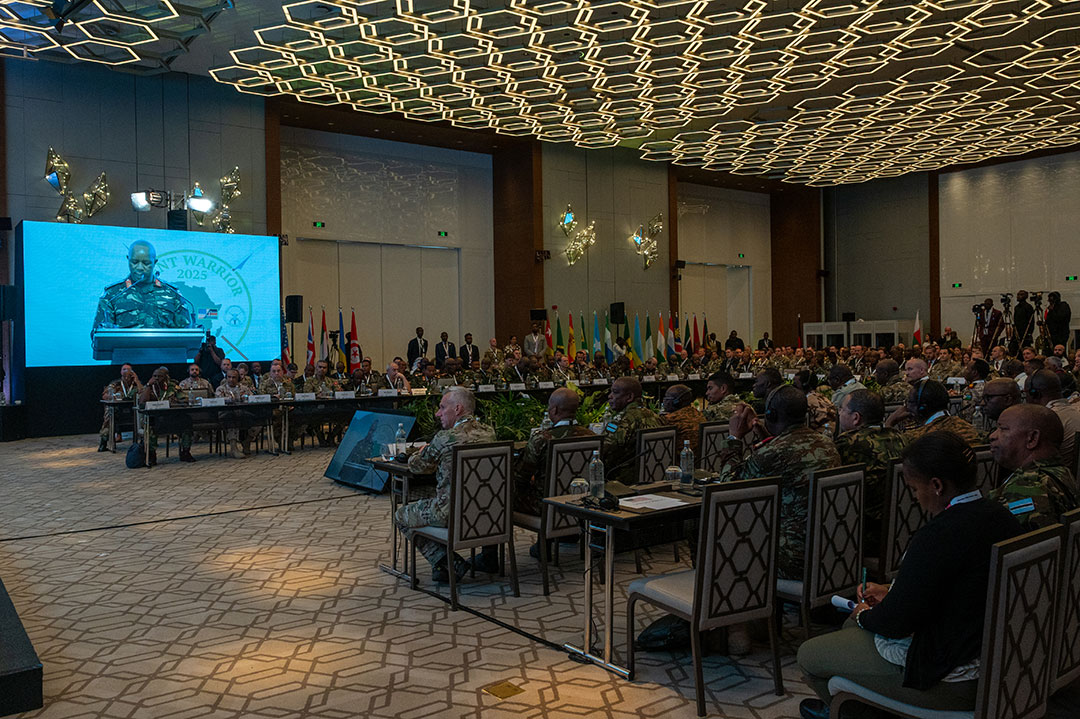
But for a week during an exercise in Nairobi, they formed a true community as SOF operators from across Africa and the globe joined to share knowledge and build a professional network. Approximately 400 attendees, including SOF commanders from 32 African nations and 14 international partners, gathered from December 8 to 11 for Silent Warrior 2025, the continent’s premier special forces conference.
They were urged to find new ways to work together and examine interconnected challenges.
“Security is a shared responsibility,” Lt. Gen. John Omenda, vice chief of the Kenya Defence Forces (KDF), told attendees during the opening ceremony. “Our greatest advantage lies in the partnerships that we build. Our adversaries are constantly evolving, and so must we.”
During the week, attendees discussed ways to improve SOF operator training and to leverage emerging technology. The 2025 iteration of Silent Warrior was the second to be held in Africa and the first to include members of the defense industry. Eighteen vendors displayed the latest SOF technology, including handheld devices to jam enemy drones, and systems to integrate intelligence, surveillance and reconnaissance (ISR) data, which provides warfighters with real-time battlefield situational awareness.
 The KDF Communications Information Systems Maintenance and Innovation Centre (CISMIC) displayed how it is placing innovation at the center of its mission. The KDF has developed a homegrown system to make a variety of radios from different manufacturers compatible and communicate over an encrypted network. The KDF conceived and built the system using locally available materials.
KDF representatives said innovation is no longer a luxury; it is a necessity.
“I believe without embracing technology we are going to be left behind,” CISMIC Director Col. Stephen Kinyanjui said. “When you innovate, you are looking for a better way to keep your troops protected, a better way to acquire information and intelligence in a way that wouldn’t have been available before.”
Another recurring theme at Silent Warrior was that “humans are more important than hardware.” Attendees stressed the need to invest in training the next generation of SOF. They discussed ways to make SOF training more relevant to the environments in which they operate, ways to incorporate lessons learned from the field, and ways to attract and retain the best and the brightest young Soldiers into a career of service.
“Above all, we agreed that the strength of SOF lies in its people,” Kenyan SOF Commander Brig. John Njeru said. “Their discipline, their judgement and their ability to act with precision under uncertainty.”
Attendees left the event with new contacts that they can call on in the future. Some expressed interest in establishing SOF centers of excellence across the continent so that collaboration can continue outside of annual conferences or exercises.
“The fact that we are coming together as SOF makes a difference,” Brig. Gaboratanelwe Tshweneetsile, Botswana’s director of special operations said. “We make friendships, we make contacts, and we know what others can do and are capable of. We are going to operate in the future together, so we need to know what the tactics and procedures are across the continent.”
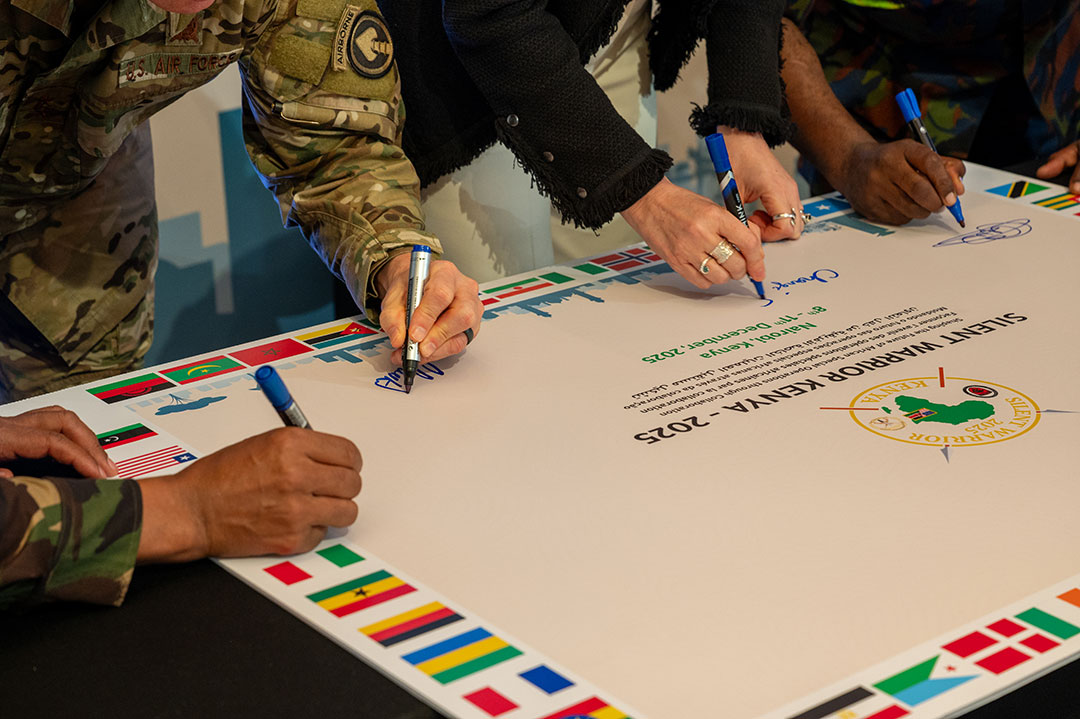 As threats continue to evolve, leaders said events like Silent Warrior reinforce SOF partnerships built on high standards of performance and professionalism.
“Silent Warriors operate in areas where complexity is greatest and the margins for error are very small,” Omenda told attendees. “It is in this demanding environment where discipline, integrity, respect for human rights and adherence to international norms must remain uncompromised. Tools may shift, but character remains.”