
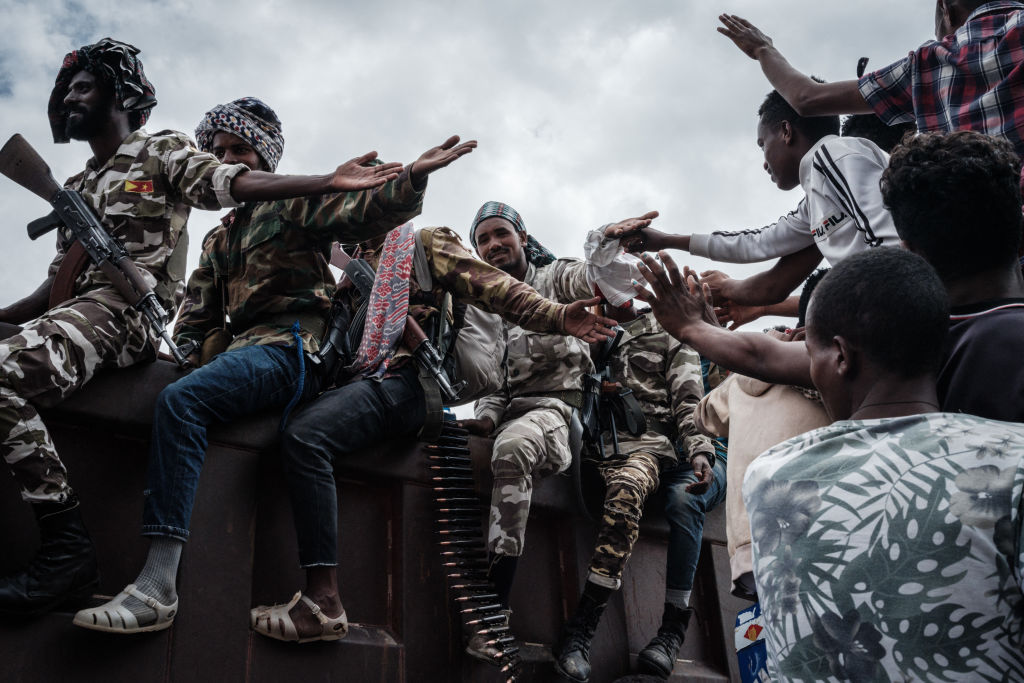
A new Tigrayan rebel group is clashing with the Tigray People’s Liberation Front (TPLF), conducting raids on civilians in the Afar region and renewing tensions along the front line of the nation’s civil war.
This is stoking fears that Ethiopia’s fragile peace, which began in 2022 with the Pretoria peace agreement, is under threat.
According to The Africa Report magazine, the rebel group known as the Tigray Peace Force (TPF) was established by disgruntled former Tigray Defense Forces (TDF) members and mid-level TPLF commanders who felt abandoned after the peace deal.
“They saw no future under the TPLF leadership,” an anonymous source familiar with the group told the magazine. “These were fighters who believed they were defending Tigray’s freedom, not preserving the same old elite.”
The TPF reportedly wants an end to the TPLF’s political dominance in Tigray and for the Tigrayan military to be neutral. The TPF opposes senior Tigrayan generals’ support for TPLF. The TPLF and Tigray military accuse the Ethiopian government of backing the rebels, according to a newaddis.com report. The rebels have accused the TPLF of allying with Eritrea to reignite conflict in Tigray.
Operating from the southeastern Tigray-Afar borderlands, the TPF has declared parts of this area “hara land,” meaning free land in the Tigrinya language, a symbolic zone beyond the TPLF’s authority. Its rhetoric demonstrates frustration with the political hierarchy in Mekelle, Tigray’s capital, and demands for a “new Tigray” founded on justice and inclusion. Tigray’s interim administration has insisted there will be no breakaway enclaves.
“The [so-called] free land is inside the Afar Regional State, not Tigray,” Lt. Gen. Tadesse Werede, Tigray’s interim president, told The Africa Report. “Any provocation from [rebels in] Afar will be considered aggression from the Afar government or the federal government.”
The TPF began organizing operations in Afar in 2025. On July 2, dozens of armed TPF fighters entered the Wajerat district in southern Tigray. There, the rebels fought the Tigrayan military, although the extent of losses suffered by both sides is unknown. On September 30, the TPF was accused of attacking TPLF forces in Milazat and killing one fighter.
Tensions increased on November 5 when the TPLF was accused of crossing into Afar, seizing six villages and attacking civilian herders with mortars in the Megale district. The Afar Regional Administration characterized the onslaught as “acts of terror,” vowed to defend its territory and said the fighting “openly destroys the Pretoria peace agreement,” Al Jazeera reported.
However, TPLF-aligned units insisted they were responding to raids from “a federal-backed armed group.” Gen. Weldegiorgis Teklay of the TDF said troops entered Afar “to repel attacks carried out by the Tigray Peace Force.”
“The clashes have transformed Afar’s border into a proxy battleground for Tigray’s internal feud, one that risks dragging the federal government back into the northern crisis,” analyst Michael Musrie wrote for The Africa Report.
Analysts say a bitter political power struggle underlies the violence. Local observers see it as part of an unfolding realignment among Tigray’s power brokers.
“This chaos is between TPLF and TPF inside Afar,” Adem Ummer Adem, a resident of Kemisse, near Afar, told The Africa Report. “The TPLF tried to open an office at Deqemehari near Eritrea, but locals resisted. Many TPLF fighters have already joined the TPF, and the old TPFL fears losing its grip.”
Adem alleged that powerful TPLF leaders maintain ties with Eritrean President Isaias Afwerki, while the TPF has gained sympathy among leading federal actors.
“Though these claims remain unverified, they underscore the complex web of old loyalties, new ambitions and external interference shaping Tigray’s post-war politics,” Musrie wrote.
Analysts view the unfolding crisis as a symptom of Ethiopia’s unresolved post-war fractures.
“Ethiopia is at a critical crossroads,” Negalegne Mequanint, a Washington, D.C.-based conflict analyst, told Musrie. “The crisis in Amhara continues to inflict unbearable pain, and now Tigray risks sliding back into chaos. Opening a new front in Afar amid nationwide instability is an act of national self-destruction.”