
In the wake of a surge of refugees from neighboring Mali, Côte d’Ivoire is adding security forces along its northern border. The refugees are fleeing terrorist attacks and economic blockades in their home country.
Côte d’Ivoire’s National Security Council said it was beefing up border security, including taking steps to register all Malians seeking asylum. GhanaWeb described the situation as “several unusual flows of refugees.”
The latest refugee swell stems from renewed aggression by the terrorist group Jama’at Nusrat al-Islam wal-Muslimin (JNIM), an al-Qaida affiliate that has imposed a fuel blockade in Mali. The group has been expanding operations westward and southward. Malian officials have dismissed suggestions that the terrorists could threaten Bamako, Mali’s capital, in the immediate future, Africanews has reported.
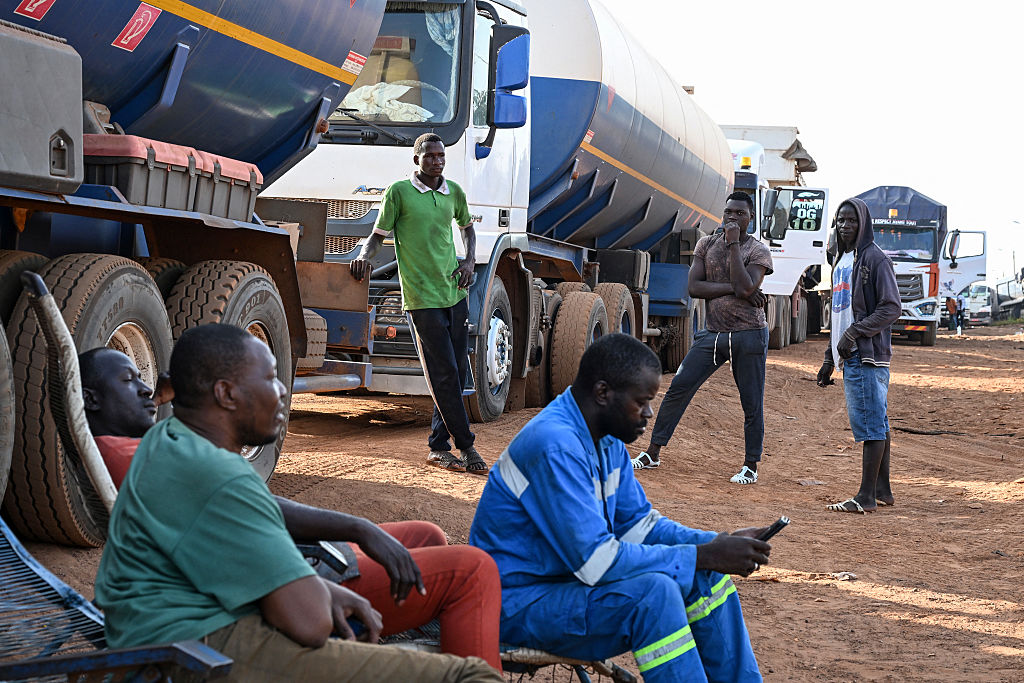
The fuel blockade, now in its third month, is paralyzing the country. In the blockade, which the BBC describes as “economic warfare,” terrorists have kidnapped tanker drivers and destroyed more than 100 trucks headed for the capital. Terrorists are focusing on tankers coming in from Senegal and Côte d’Ivoire, through which the majority of Mali’s imported goods move, Agence France-Presse (AFP) reported.
Although the terrorists have used similar tactics in other parts of the country, this is the first time they have specifically targeted the capital, AFP reported. The blockade has been devastating, with schools and businesses closing, food prices tripling, and hospitals that depend on diesel generators dealing with power cuts. In addition to crippling the economy, the blockade advances JNIM’s expansion plans as terrorists target highways linking Mali to its neighbors to the west and south, the BBC noted.
Some countries have urged their citizens to leave Mali immediately, fearing for their safety. Other countries have evacuated their nonessential personnel, according to news services.
Since a 2021 coup, Mali has been ruled by a military government that vowed to stop the terrorists. The coup initially was expected to strengthen the military but only has served to deepen its divisions, “splitting the army between privileged loyalists of the regime and those sent to the front lines,” the Atlantic Council reports. The military fragmentation has led to abandoned positions, weapons falling into the hands of separatists, and terrorists expanding their hold over the rural north.
Mali’s problems now are the region’s problems, as terrorists plunder unprotected stretches of the Sahel in their quest to establish a government that would rule through strict Muslim law. The terrorists already have displaced millions of people and crippled regional economies, forcing countries such as Côte d’Ivoire to step up their border security.
Côte d’Ivoire, with its thriving economy and five major ports, long has been a target of terrorist expansion. The Port of Abidjan is the economic hub of the region and handles 80% of the country’s commercial exchanges. The ports are crucial for domestic trade and as shipping points for landlocked neighbors Burkina Faso, Mali and Niger.
Côte d’Ivoire has been preparing for the terrorist threat for years. It developed its national counterterrorism strategy in 2018. The country stepped up its efforts in 2020 when extremists from Burkina Faso began crossing the border and launching attacks. The invasions were backed with propaganda campaigns and threats against civilians.
In 2021, Côte d’Ivoire opened its International Academy for the Fight Against Terrorism, which includes a training center for special forces and a research institute. The facility trains police, the military, customs officials and prison administrators. The country also has organized programs to educate and employ young people.
Observers say that although the terrorists have been expanding their operations and advancing toward Gulf of Guinea countries, they don’t appear to be capable of threatening Bamako in the near future. Charlie Werb, an analyst with Aldebaran Threat Consultants, said the region’s security crisis is “complex,” with “no quick fixes,” AFP reported.
“I do not believe JNIM possesses the capability or intent to take Bamako at this time, though the threat it now poses to the city is unprecedented,” he said.
Conditions in Mali have been aggravated by ethnic tensions in the central and northern regions, military abuses, and a lack of intercommunity trust, the Atlantic Council reported. That has led to the formation of self-defense militias, with entire villages refusing to cooperate with the Malian Armed Forces.
“For the time being, the urgent task is to mend the national fabric, restore constitutional order within a renewed governance framework, and rebuild alliances,” the council reported. “To that end, the army must return to its primary role: defending the homeland, not governing it.”